You need stable chips. But AI takes all the market money. This leaves your supply chain at risk. I will show you how to understand this problem.
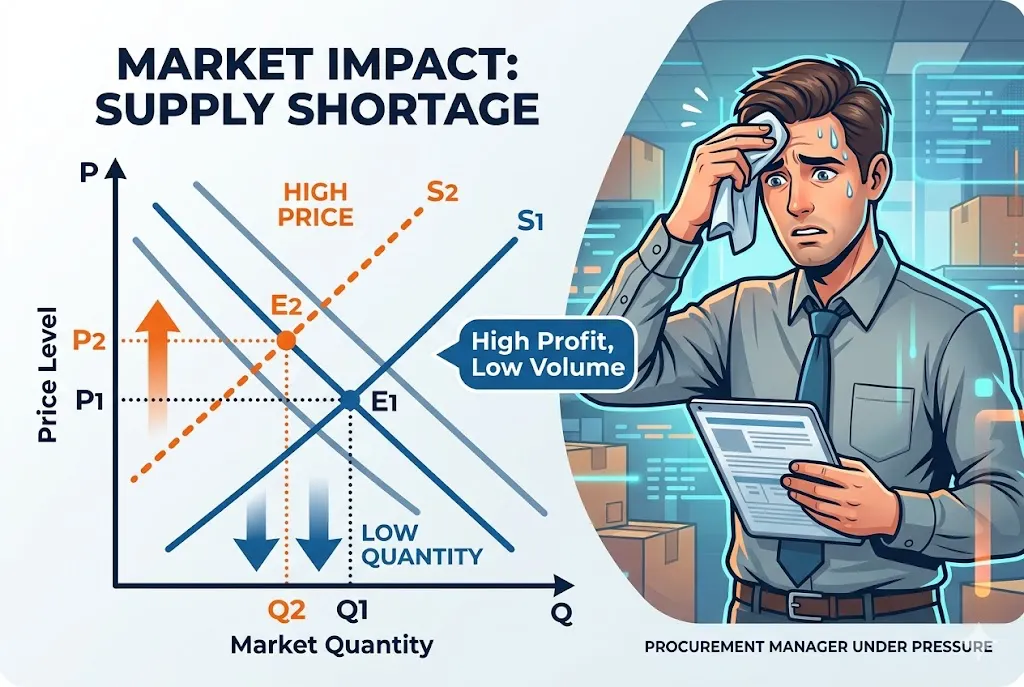
The structural imbalance in mature nodes1 happens because AI investments take market money2. This causes standard home appliance and industrial chips3 to face shrinking orders and falling profits. Makers then raise prices on low volumes to keep their profits.
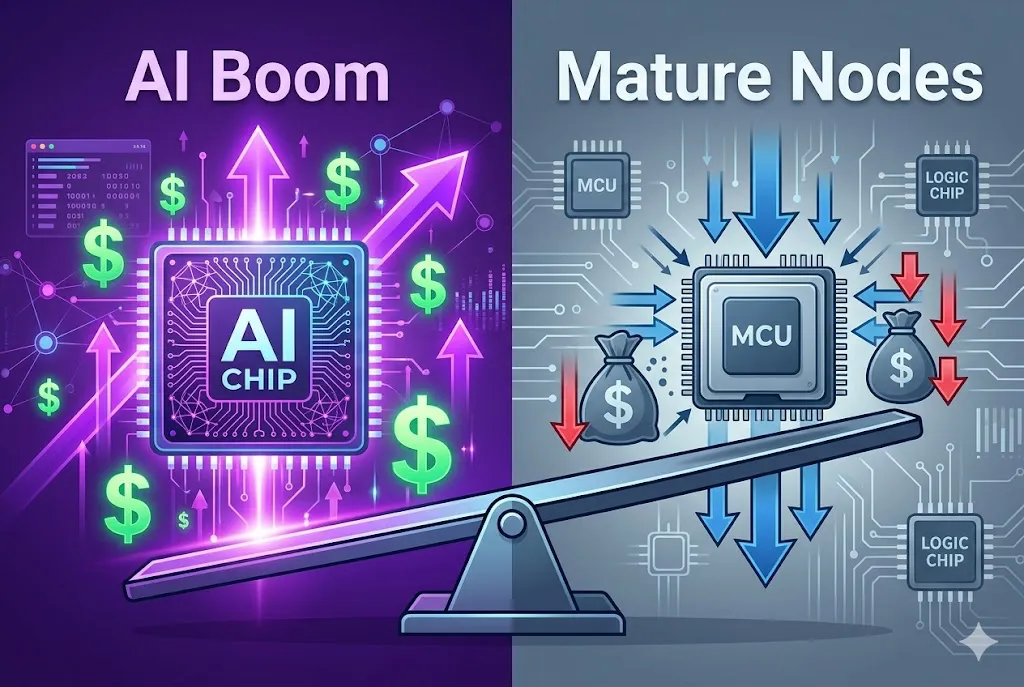
You might ask why this matters to your daily buying tasks. The market changes fast. AI gets all the attention today. You still need reliable components for your production lines. I see this struggle every day when I talk to our OEM and ODM clients at Nexcir. We need to look at the exact reasons behind this shift. Then we can find a good way to keep your supply chain safe. Let us look at how AI changes the money flow first.
How Does the AI Boom Drain Capital from the Semiconductor Market?
You watch chip prices change. You feel stressed about your budget. Big companies pour billions into AI chips. I will explain how this leaves less money for you.
The AI boom takes money4 because investors want fast cash. Factories move their money and production lines to new AI chips. This leaves standard chips with little money. The lack of money stops factory upgrades for basic parts.
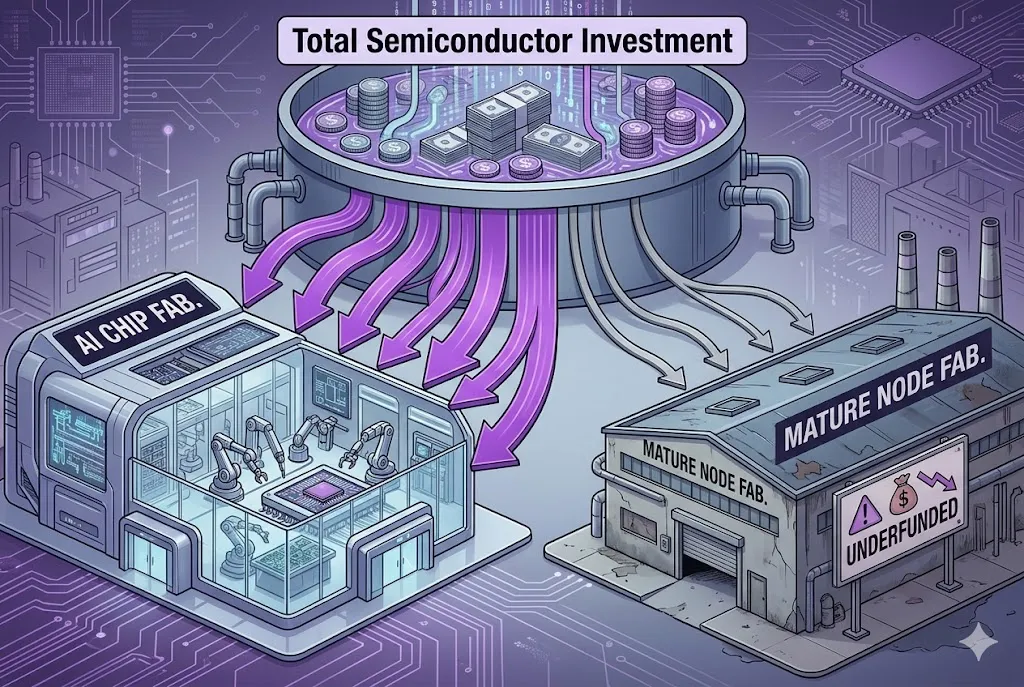
The Shift in Factory Focus5
I remember a meeting with a factory manager last month. He told me his production line could not get enough standard parts. The reason is simple. Factories want to make AI chips. AI chips bring huge profits. Standard chips do not. So, factories put all their money into new technology. They ignore the older technology. This creates a big gap in the market. You can see this gap when you try to buy standard parts. Our team has 20 years of experience. We saw this kind of shift before. New tech always takes the money first. But standard parts run the real world. We know how to plan for this. We talk to makers early. We secure stock before the prices go too high.
The Money Flow Problem6
Money always goes to the most profitable place. Right now, that place is AI. Investors give billions of dollars to AI companies. These companies pay top dollar to factories. Factories then use their space for AI. This leaves standard chip buyers in a bad spot. You have less space available for your parts. You also face higher prices because the supply is low.
Comparing Investment Impacts7
We can look at how money moves in the market. I made a simple table to show this difference.
| Market Sector | Investment Level | Profit Margin | Production Volume | Impact on Buyers |
|---|---|---|---|---|
| New AI Chips | Very High | Very High | Growing Fast | Long wait times for high-tech parts |
| Standard Chips | Very Low | High | Dropping | High prices for basic parts |
This table shows a clear picture. The money goes to AI. The standard chips suffer. You get stuck with high prices and low volumes. This is the high profit, low volume trap8. Factories keep prices high to make money on fewer sales. This hurts your budget. It also puts your production schedule at risk. We see this every day at Nexcir. We work hard to find you the right parts at fair prices.
Why Are Home Appliance and Industrial Chips Facing Shrinking Orders?
Your production line needs steady parts. But your standard chip orders get delayed. Consumer demand drops while costs go up. We must find out why this happens.
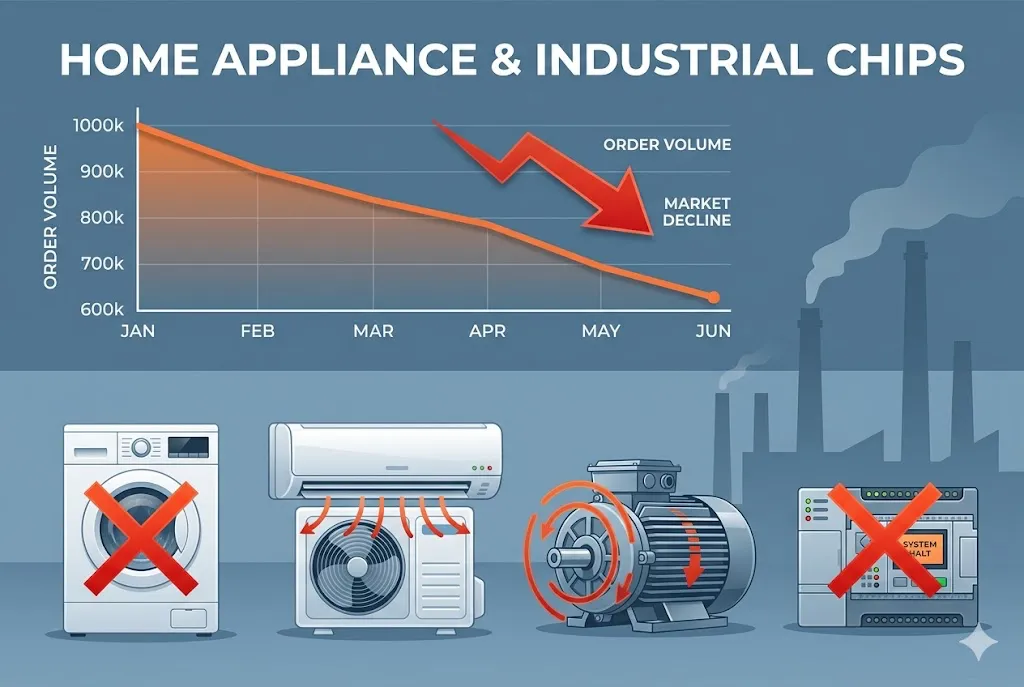
Home appliance and industrial chips face shrinking orders because buyers want fewer goods right now. Factories build fewer machines. At the same time, AI takes the supply chain focus. This forces standard chip makers to cut their output.
The Drop in Consumer Spending9
People spend less money today. I see this trend in the news. I also hear it from my clients who make home appliances. When people do not buy new washing machines or TVs, the demand for chips drops. The factories that make these chips get fewer orders. This is a basic rule of supply and demand. You cannot sell chips if no one buys the final product. OEM buyers feel a lot of pain right now. Your boss wants lower costs. But the market gives you higher prices. This is a very hard job. You must explain these market shifts to your boss. You can use our data to show them the truth. The market is broken right now. But you can still find good deals if you know where to look.
Industrial Control Slowdown10
The industrial sector also has problems. Factories do not want to buy new machines right now. They want to save money. This means industrial control chips also face a drop in orders. I talked to a hardware engineer recently. He said his company stopped three new projects. They just want to maintain their old machines. This directly cuts the demand for industrial chips.
The Squeeze on Profits11
When orders shrink, chip makers face a hard choice. They sell fewer chips. But their fixed costs stay the same. To survive, they must raise the price per chip.
| Chip Type | Demand Trend | Volume Trend | Price Trend | Reason for Change |
|---|---|---|---|---|
| Home Appliance Chip | Going Down | Low | High | Weak consumer spending |
| Factory Sensor | Going Down | Low | High | Factory budget cuts |
| Power Chip | Flat | Medium | High | High factory costs |
This table explains the squeeze. Chip makers sell fewer items. They raise prices to keep their profit margins high. This is the high profit, low volume reality. It hurts buying managers. You have to pay more for less. You also worry about fake parts when the official supply is unstable. At Nexcir, we help you avoid these traps. We find you real parts without the crazy price hikes.
You face high prices and low stock. This puts your job at risk. You need a solid plan to get parts. I will share some practical steps today.
Buying managers can beat this squeeze by finding good global partners. You should look for stable prices and real parts. You also need to plan your stock early. Finding good backup parts will protect your production lines from shocks.
Build a Global Supply Network13
You cannot rely on just one local supplier anymore. The local market changes too fast. I always tell my clients to look globally. At Nexcir, we use channels in North America, Europe, and Asia. This global reach helps us find parts when local markets run dry. You need a partner who can see the whole world. This lowers your risk of missing key parts. We want to be your long-term partner. We do not just sell parts. We give you advice. We help you lower your risks. We want to grow with you. This is our vision at Nexcir. We believe in building a smarter future together. You need a trusted friend in this crazy market.
Focus on Real Parts14
When parts are hard to find, fake parts appear. Fake chips can ruin your product. They can damage your brand. You must ensure every part is real. You should only buy from trusted partners or original makers. We make sure every shipment has full tracking. This gives you peace of mind.
Plan for Backup Parts15
You need a backup plan. Sometimes, the exact part you want is too expensive. Sometimes, it is just gone.
| Strategy | Action Required | Benefit to Your Company | Risk if Ignored |
|---|---|---|---|
| Global Sourcing | Use international partners | Better prices and stock | Production stops |
| Quality Check | Demand tracking | Safe and reliable products | Fake parts cause failures |
| Backup Parts | Find matching parts | Keep production moving | Huge delays and costs |
You must work with your hardware engineers to find backup parts early. Do not wait until the line stops. Our team at Nexcir has deep knowledge of part options. We help you find the right substitute quickly. We want to help you lower your buying costs. We want to improve your supply chain speed. This is how you beat the high profit, low volume problem. You stay prepared. You work with trusted partners.
Conclusion
The AI boom causes a high profit, low volume imbalance in standard chips. You can overcome this by using global sourcing, finding backup parts, and partnering with experts like Nexcir.
Understanding the structural imbalance in mature nodes helps you grasp why standard chips face shrinking orders and rising prices. ↩
Exploring AI investments' impact on market money reveals why standard chips struggle with reduced orders and profits. ↩
Learn why standard home appliance and industrial chips face shrinking orders, affecting your production line's stability. ↩
Discover how the AI boom drains capital from the semiconductor market, impacting your budget and chip availability. ↩
Understanding the shift in factory focus towards AI chips helps you navigate the challenges in securing standard parts. ↩
Explore the money flow problem caused by AI investments, leading to higher prices and limited availability of standard chips. ↩
Comparing investment impacts between AI and standard chips reveals why you face high prices and low volumes for basic parts. ↩
Understanding the high profit, low volume trap helps you navigate the challenges of securing affordable standard chips. ↩
Learn how the drop in consumer spending affects chip orders, leading to higher prices and fewer available parts. ↩
Understanding the industrial control slowdown helps you anticipate challenges in securing industrial chips for your production. ↩
Explore why chip makers face a squeeze on profits, leading to higher prices for fewer chips and impacting your budget. ↩
Learn practical steps for procurement managers to navigate the squeeze in mature nodes and secure essential parts. ↩
Discover the importance of building a global supply network to ensure stable prices and availability of essential chips. ↩
Learn how focusing on real parts prevents damage to your products and brand, ensuring reliable production. ↩
Understand why planning for backup parts is crucial to keep your production line moving despite market fluctuations. ↩