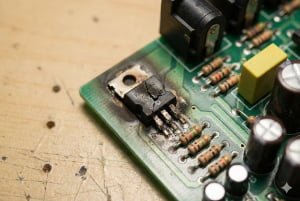
You struggle with power loss in your circuit designs. Heat builds up and destroys your expensive boards. I will show you how NMOS transistors solve this exact problem.
An NMOS transistor is a semiconductor device that uses electrons to control electrical current. It offers high switching speeds1 and low resistance2. Modern power management relies on NMOS to build efficient DC-DC converters3, reduce power waste, and keep electronic components running cool.
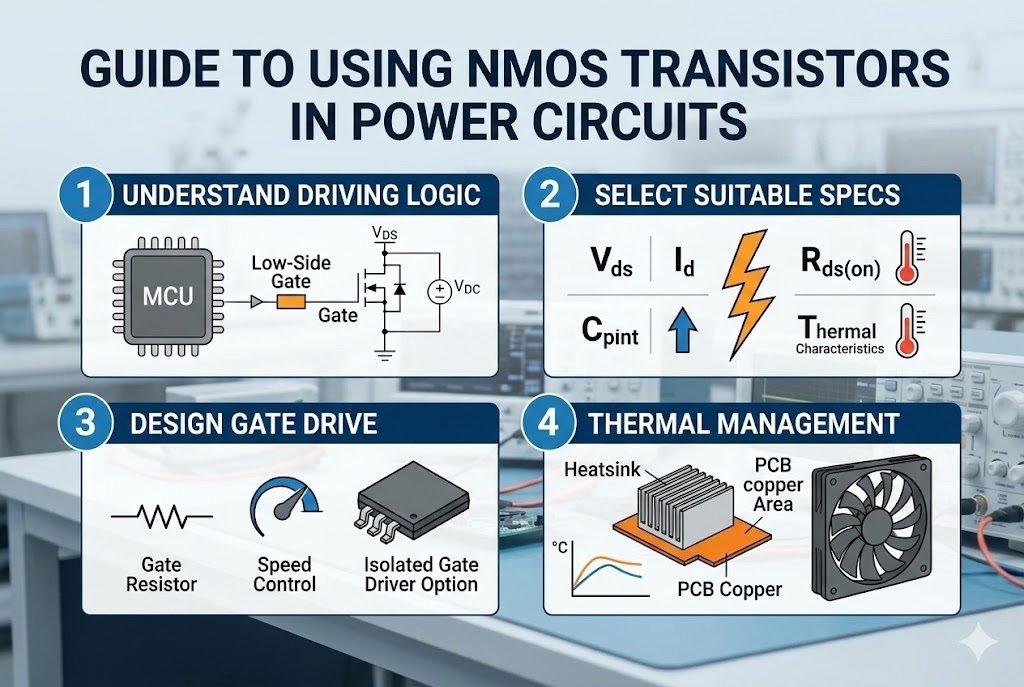
You might think all transistors do the exact same job, but that is a costly mistake. Let me break down exactly how these parts work so you can stop wasting money on the wrong components.
What is the basic structure and working principle of an NMOS transistor?
You find transistor datasheets confusing and hard to read. You pick the wrong part and your circuit fails. Understanding the basic NMOS structure stops these expensive design errors.
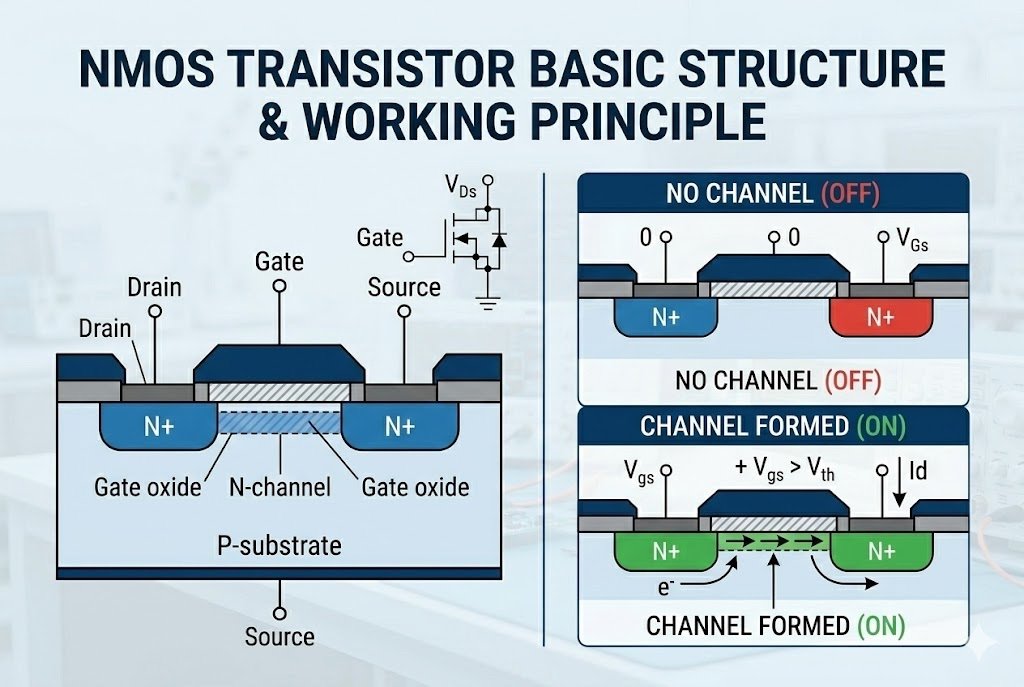
An NMOS transistor consists of a p-type substrate with n-type source and drain regions. When you apply a positive voltage to the gate, it creates a channel of electrons. This channel allows current to flow easily from the drain to the source.
I remember testing a motor drive circuit early in my career. I did not fully understand the gate threshold voltage4. The motor barely turned, and the chip got extremely hot. I learned the hard way that you must control the gate voltage correctly to make the NMOS work efficiently.
The Three Key Terminals
Every NMOS transistor has three main terminals. You must understand how they interact to design good circuits. The gate acts like a control valve. The drain is the point where the electrical current enters the device. The source is the point where the current exits the device. There is also a thin layer of silicon dioxide. This layer insulates the gate from the rest of the body.
How the Electron Channel5 Forms
When you put zero voltage on the gate, the transistor stays completely off. No current flows between the drain and the source. When you apply a positive voltage to the gate, an electric field forms across the oxide layer. This electric field pulls free electrons from the substrate toward the gate. These electrons group together and create a conductive bridge between the source and the drain. We call this bridge the n-channel.
Operating Regions6
You can operate the NMOS in three different ways depending on your exact needs.
| Operating Region | Gate Voltage Status | Current Flow | Application |
|---|---|---|---|
| Cut-off | Below threshold voltage | Zero current | Switch turned off completely |
| Linear (Ohmic) | Above threshold voltage | Varies with drain voltage | Variable resistor |
| Saturation | High above threshold | Maximum steady current | Switch turned on, Signal Amplifiers |
This physical structure makes the NMOS very fast and reliable. I always check the gate threshold voltage4 first when I source these parts for our clients at Nexcir7. You must match the threshold to your microcontroller logic level to avoid heating issues.
Why are NMOS transistors preferred over PMOS in DC-DC converters3?
You lose battery life in your portable devices. PMOS switches cause too much power drop. NMOS devices fix this issue because they move electrons much faster.
NMOS transistors are preferred over PMOS in DC-DC converters3 because electrons have a higher mobility than holes. This higher mobility gives NMOS a much lower on-resistance. Lower resistance means less heat, faster switching, and higher efficiency for power circuits.
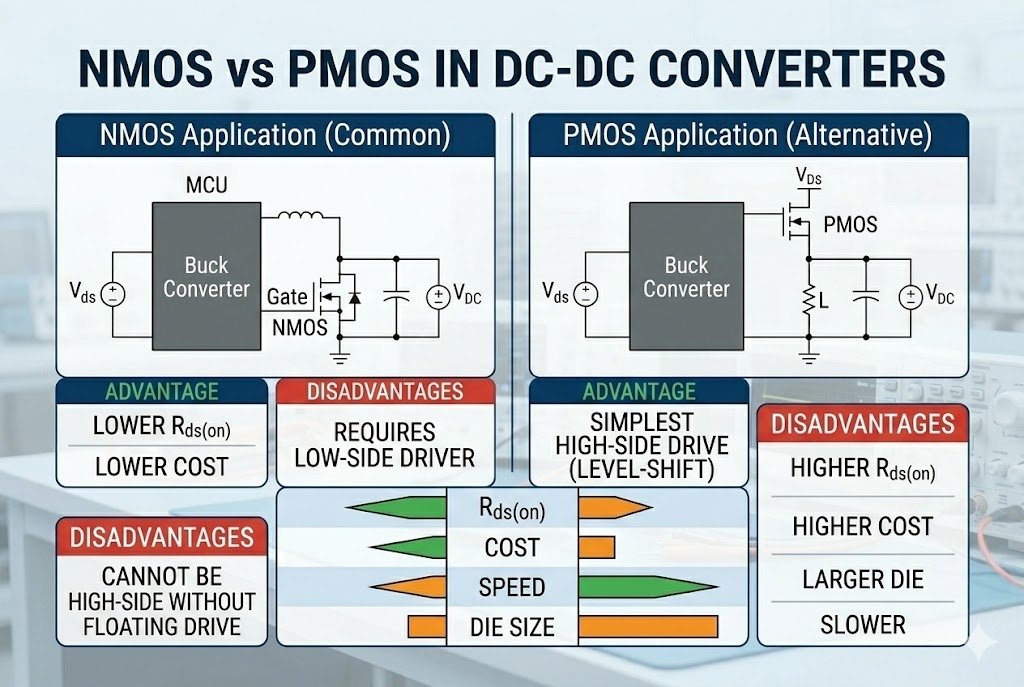
A client once asked me to review their new power supply board. They used PMOS devices for all their main switches. The board failed its thermal tests in the lab. I gave them a quick guide-to-using-nmos-transistors. We swapped the PMOS parts for NMOS parts, and the board temperature dropped instantly.
The Science of Electron Mobility
You must look at how electrical current moves inside the silicon material. In an NMOS device, the current moves via free electrons. In a PMOS device, the current moves via "holes" which are simply missing electrons. Physics tells us that electrons move about two to three times faster than holes. We call this concept electron mobility8.
Why On-Resistance9 Matters
Because electrons move much faster, an NMOS transistor has a much lower on-resistance than a PMOS of the exact same physical size. We call this resistance Rds-on. Lower resistance means the component wastes less power as heat. Your battery lasts longer. Your circuit board stays cooler.
Impact on DC-DC Converters
DC-DC converters3 step battery voltages up or down. They switch on and off millions of times per second. You need fast switches for this to work well.
| Feature | NMOS | PMOS |
|---|---|---|
| Primary Charge Carrier10 | Electrons | Holes |
| Carrier Mobility Speed | Very High | Very Low |
| Typical On-Resistance9 | Extremely Low | Much Higher |
| Silicon Size Required | Small footprint | Large footprint |
You save valuable board space when you use NMOS. You also save money because smaller silicon chips cost less to manufacture. NMOS is perfect for low-side switching in these converters. At Nexcir7, we supply millions of original NMOS parts to OEM managers who need to build highly efficient DC-DC converters3 for industrial devices.
How do you choose the right NMOS transistor for power management?
Fake components flood the electronic market today. You buy cheap parts and your production line stops. Sourcing the right NMOS from authorized distributors removes this massive risk.
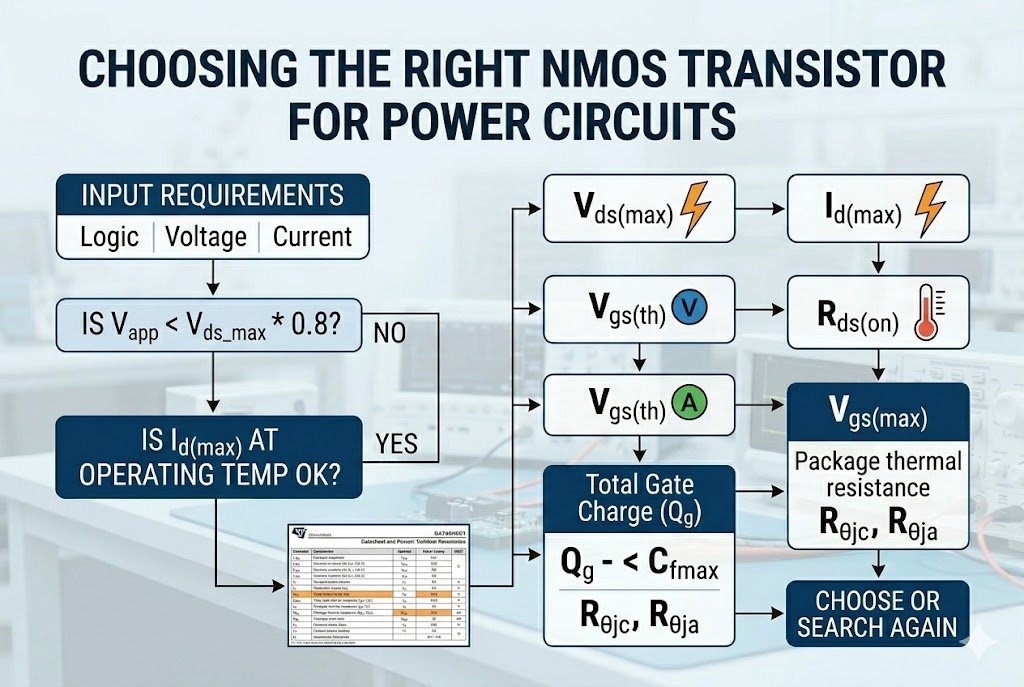
You choose the right NMOS by checking the maximum drain-to-source voltage, continuous drain current, and on-resistance. You must also ensure you buy 100% original components from a reliable distributor to avoid counterfeit parts and costly production delays.
I talk to hardware engineers and procurement managers every day. They often face intense pressure to buy the cheapest parts available on the market. One engineer bought parts from an unknown online broker to save a few cents. The NMOS chips turned out to be completely fake. His company lost thousands of dollars in ruined boards and missed production deadlines.
Key Electrical Specifications
You must match the transistor to your specific circuit needs. You cannot just guess the values.
Voltage and Current Ratings
First, look at the Drain-to-Source Breakdown Voltage11. The NMOS must handle more voltage than your main power supply provides. Second, check the Continuous Drain Current12. The transistor must carry your full load current without burning up.
The Danger of Counterfeits
Even if you pick the perfect specifications, a fake chip will destroy your entire design. Counterfeit chips13 often have much higher resistance than the official datasheet claims. They overheat and catch fire.
Managing Supply Chain Risks14
You must also think about component lifecycles15. Manufacturers stop making older chips.
| Selection Step | Action Required | Expected Result |
|---|---|---|
| Check Voltage Limit | Verify Vds rating | Prevents voltage spikes from breaking the chip |
| Check Current Limit | Verify Id rating | Stops the chip from melting under heavy load |
| Check Rds-on Value16 | Find the lowest value | Keeps the circuit cool and highly efficient |
| Verify Source Channel | Use authorized partners | Ensures 100% original and authentic components |
We built Nexcir7 to solve this exact trust issue in the global market. We only source parts from authorized channels and original manufacturers. We give you stable pricing and stop counterfeit parts from entering your supply chain. We also help you find safe alternatives when your chosen NMOS reaches its end of life.
Conclusion
NMOS transistors offer high efficiency and fast switching for modern power designs. You must understand their structure and buy authentic parts to keep your production running smoothly.
High switching speeds in NMOS transistors enhance performance in power circuits, making them ideal for efficient and fast electronic applications. ↩
Low resistance in NMOS transistors reduces power loss and heat generation, ensuring cooler and more efficient circuit operation. ↩
NMOS transistors are crucial in DC-DC converters for their efficiency and ability to minimize power waste, extending battery life in devices. ↩
Understanding gate threshold voltage is vital for NMOS efficiency, preventing overheating and ensuring optimal performance in circuits. ↩
The electron channel in NMOS transistors allows current flow, crucial for their operation and efficiency in electronic designs. ↩
Knowing NMOS operating regions helps in selecting the right mode for specific applications, enhancing circuit functionality. ↩
Nexcir provides trusted sourcing of authentic NMOS transistors, ensuring quality and preventing counterfeit risks in production. ↩
Electron mobility in NMOS transistors leads to faster switching and lower resistance, improving efficiency in power circuits. ↩
Lower on-resistance in NMOS transistors reduces heat and power loss, making them ideal for efficient power management. ↩
Electrons as primary charge carriers in NMOS transistors enable faster current flow, enhancing circuit efficiency. ↩
Ensuring the NMOS transistor can handle voltage spikes prevents damage, maintaining circuit integrity and performance. ↩
Continuous drain current rating ensures NMOS transistors can handle load without overheating, crucial for reliable circuit operation. ↩
Counterfeit chips can lead to circuit failure and financial loss, making sourcing authentic NMOS transistors essential. ↩
Managing supply chain risks ensures authentic components, preventing counterfeit issues and ensuring production stability. ↩
Understanding component lifecycles ensures availability and reliability, preventing production delays and design issues. ↩
A low Rds-on value in NMOS transistors minimizes power loss and heat, crucial for efficient and cool circuit operation. ↩