Why a Parameter Checklist Belongs on the Requisition
A requisition for the A3212ELHLT-T is only as good as the values written on it. Six parameters decide whether an order matches the design the part is meant for: operating voltage, quiescent current, supply current, operating temperature, package and pin count. Each one is a discrete, checkable field, and each one can be recorded as a line with a value beside it rather than folded into a free-text description.
That structure is the point. A description such as "small three-pin part, low power" cannot be verified by anyone downstream, and it cannot be compared against the board it has to sit on. A checklist can. When the requisition is later set beside the engineering bill of materials, the packing documentation or a supplier's confirmation, every line is either matched or not matched — there is no middle state and no room for interpretation.
The checklist also fixes the order of work. Identity first, then the electrical window, then the current figures, then the environmental range, then the mechanical fit. Doing it in that order means a mismatch is caught at the line where it occurs, instead of being discovered after the requisition has already been released.
Part Identity: Matching the Exact Orderable Number
Every other parameter on this checklist hangs off one string: A3212ELHLT-T. That is the orderable number, and it is the first line of the requisition.
The rule for this line is simple and absolute: write the complete number, exactly as documented, with no truncation, no shorthand and no house abbreviation. Two part numbers that differ by a single character are two different parts, and the documented values for one do not transfer to the other. A number assembled from memory or from a partial note is not an identity — it is a guess with a plausible shape.
On the receiving side of the quotation, the same discipline applies in reverse. Ask for the full number to be quoted back. If a response arrives carrying a different suffix, a different orderable code or an "equivalent" device, treat it as a different part until engineering has reviewed it against the six parameters. Near-matches are the most expensive kind of error in this process, because they pass every visual check and fail only in the application.
Record who confirmed the number and when. A verified part identity with a name and a date attached is auditable; an unverified one is not.
Operating Voltage: Defining the Supply Window the Board Must Deliver
The documented operating voltage for the A3212ELHLT-T is 2.5 to 3.5 V. Both endpoints belong on the requisition. A single nominal figure does not describe a window, and a supplier cannot confirm a design against one.
The buyer's job here is to obtain the real supply range from the hardware engineer — the minimum and maximum the board's rail can present at the device, including the tolerance of the regulator and everything else that moves that rail — and then to compare it with the documented window. The test is containment, not overlap. A rail whose extremes fall outside 2.5 to 3.5 V does not become acceptable because its nominal value sits comfortably in the middle.
Where the board's range is not yet fixed, the line stays open. An open line is a known item awaiting input; a line filled with an assumed nominal value is an unknown item disguised as a decision. Keep the difference visible on the record.
If the comparison fails, stop the requisition there. No amount of quoting, sourcing or paperwork reconciles a supply rail with a device window it cannot meet — that is an engineering change, not a purchasing one.
Current Budget: Quiescent Draw Versus Operating Draw
Two current figures are documented for this part, and they answer two different questions.
Quiescent current is 8.0 µA. This is the figure that matters for a design that keeps the device powered continuously, because it sets the standing drain on the rail whether or not anything else is happening.
Supply current is 2.0 mA. This is the figure that matters while the device is active, and for a duty-cycled design it is the one that feeds the average-current calculation alongside the time spent in each state.
Which one drives the power budget depends entirely on how the board uses the part. That is why both belong on the requisition rather than the one that happens to look more important. Writing only the quiescent figure hides the active draw; writing only the supply figure misstates a continuously powered design.
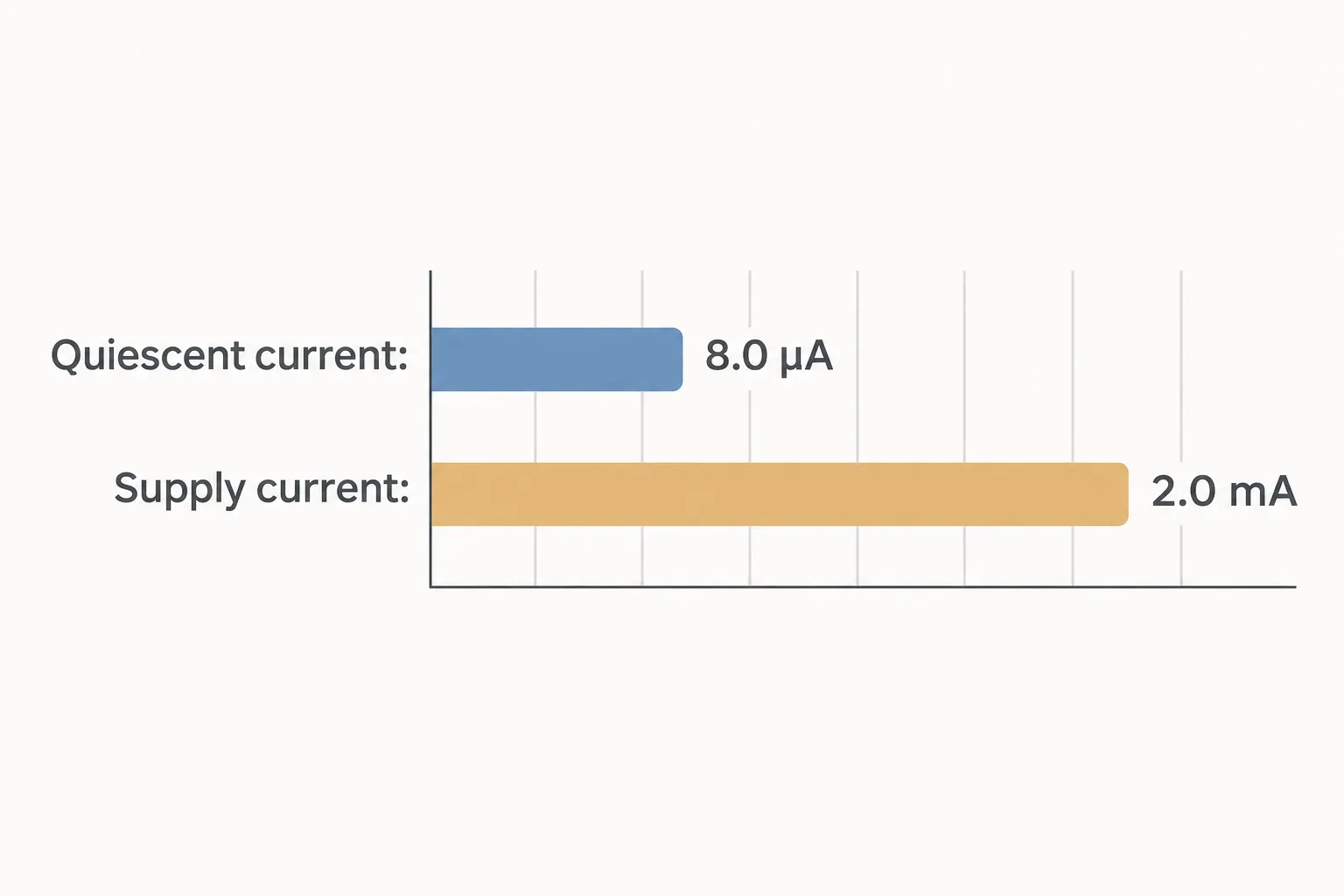
The two values are also expressed in different units — microamps and milliamps — so transcribe them with the unit attached and check them twice. A value copied without its unit is the easiest error in this section to make and the hardest to spot later.
Operating Temperature: Checking the Range Against the Application
The documented operating temperature range for the A3212ELHLT-T is –40 to 85 °C.
Comparing that range with an application is not a matter of checking the room the product sits in. The relevant numbers are the temperatures the board itself will see: inside the enclosure, next to other heat sources, during warm-up, at the coldest point of the operating profile and at the hottest. The comparison is made against the extremes of that profile, never against a comfortable middle.
Write the range on the requisition with both endpoints, the minus sign and the unit, and record the application extremes beside it, together with who supplied them. When those extremes are not yet known, the line is open — not passed. A temperature line marked complete on the basis of a room-temperature assumption is worse than a blank one, because it stops anyone from asking the question again.
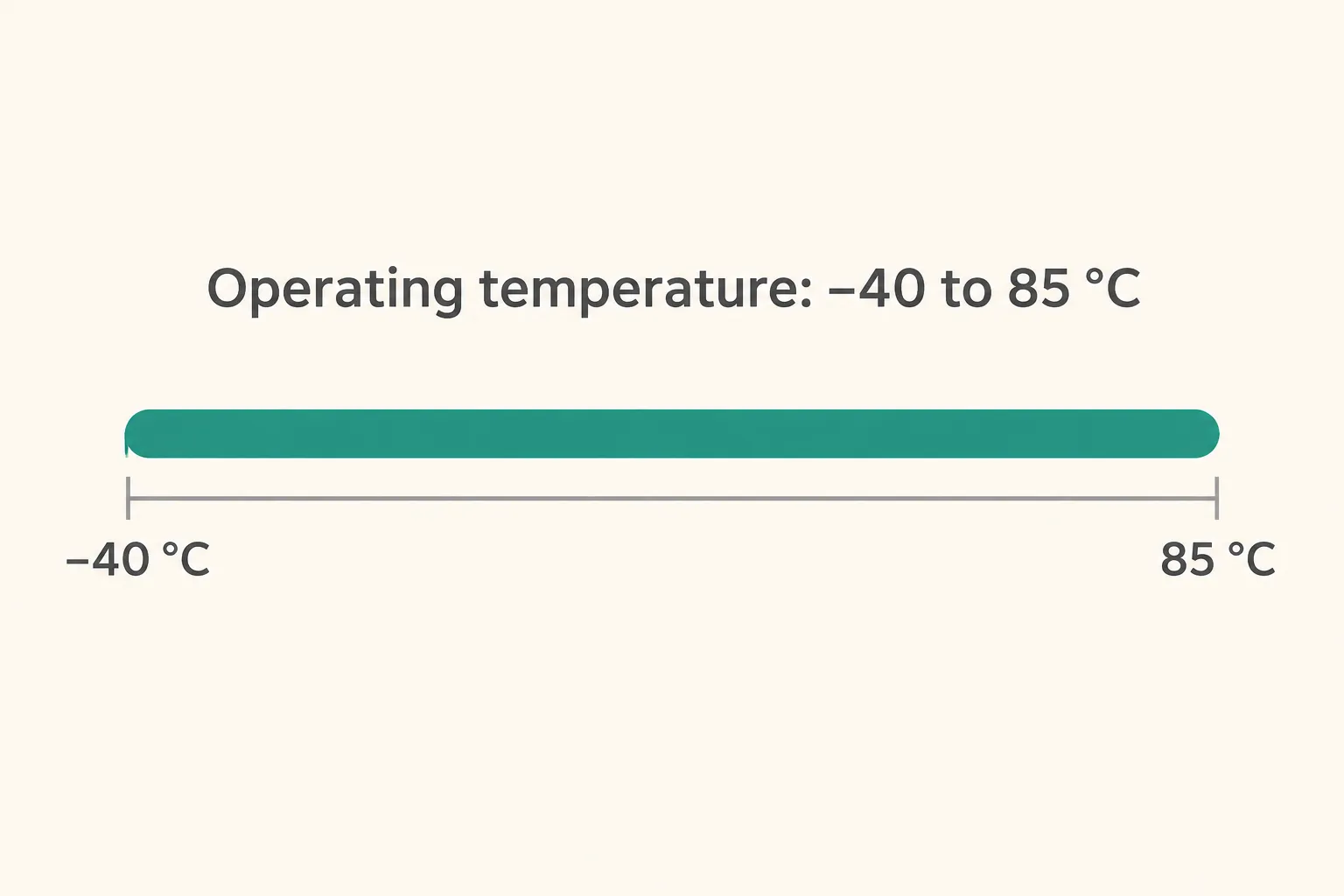
If an application extreme falls outside –40 to 85 °C, the mismatch goes back to engineering as a design question. Purchasing cannot resolve it by selection.
Mechanical Fit: Package Type and Pin Count
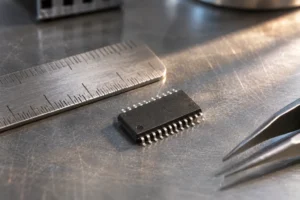
The device is supplied in a SOT23W package with 3 pins. Both details belong on the requisition, and both are checked against the board layout before the order is released.
Pin count is the fastest cross-check available. A three-pin land pattern accepts a three-pin package; it will not accept anything else, whatever the package name suggests. Confirming the count takes seconds and eliminates a whole class of mismatch on its own.
The package name should be recorded exactly as documented — SOT23W — rather than shortened or paraphrased. The engineer checking the footprint needs the correct designator to open the correct drawing, and an abbreviated name sends that check to the wrong place. Record the package and the pin count as two separate lines, so a correction to one does not silently rewrite the other.
Where the layout is not final, note the date the footprint was last reviewed. That single note tells the next person whether the mechanical check is current or needs repeating.
Consolidating the Six Parameters Into One Requisition Line
Once each parameter has been confirmed, the values come together into a single record. This is the version that goes to the supplier and the version that stays on file.
| Parameter | Value to record |
|---|---|
| Orderable part number | A3212ELHLT-T |
| Operating voltage | 2.5 to 3.5 V |
| Quiescent current | 8.0 µA |
| Supply current | 2.0 mA |
| Operating temperature | –40 to 85 °C |
| Package | SOT23W |
| Pin count | 3 |
Two practices keep the record usable. First, keep the values in the documented form — both endpoints for the window and the range, both current figures with their units, the package designator spelled out. Second, note beside each line who confirmed it and when, and mark any line that is still open as open. A consolidated record with three verified lines and three visible gaps is a working document; the same record with three guessed values is a liability.
How to Request a Quote
Send the completed parameter set to NexCir and ask for a quotation against it. Include the orderable part number, the six confirmed values and a clear note of anything still open, so the request can be read the same way it was written.
The confirmed record is what the request is measured against. A complete set of values produces a clear question; a partial one produces a question that has to be answered twice.
Contact NexCir with your consolidated A3212ELHLT-T parameter list to request a quotation.