Semiconductor manufacturing creates a massive carbon footprint1. Strict ESG rules2 force companies to find green solutions fast or lose business. Recycled silicon carbide from agricultural waste3 offers a clear fix.
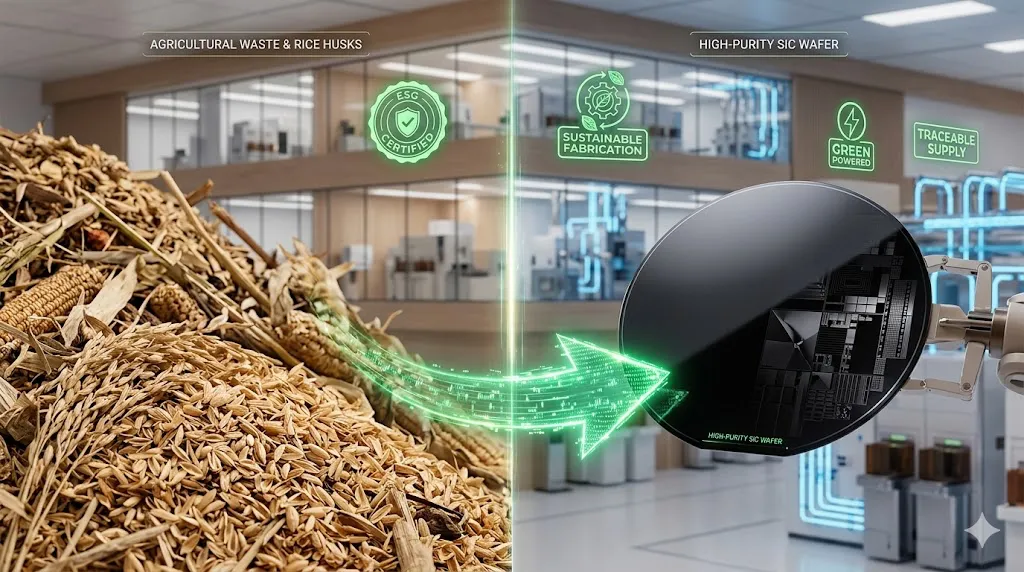
Yes, agricultural waste3 like rice husks4 contains high levels of silica and carbon. By extracting these elements, we can produce high-purity recycled silicon carbide5 (SiC). This process gives semiconductor manufacturers a green material that lowers their carbon footprint1 and boosts their ESG scores without losing performance.
I remember talking to a procurement manager last month. He was very stressed about new carbon taxes6. He asked me if there was any real way to make chips greener without breaking the budget. Let us look at how farm waste is solving this exact problem right now.
Why Do We Need Recycled Silicon Carbide from Rice Husks?
Buying standard SiC components adds heavy carbon emissions to your supply chain. If you fail to cut these emissions, your company faces harsh penalties. Rice husks solve this safely.
We need recycled SiC from rice husks4 to cut down the heavy carbon footprint1 of semiconductor manufacturing. Using this biomass waste replaces traditional high-energy mining. It helps companies pass strict ESG tests, avoid carbon taxes6, and win green contracts7 in the global electronics market.
The Real Cost of Traditional SiC
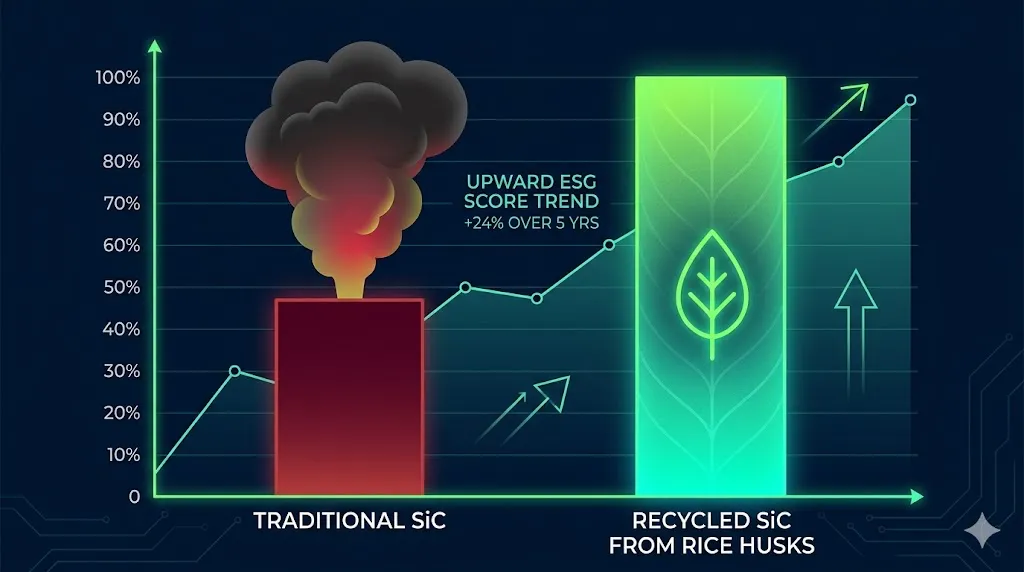
When I look at normal supply chains, I see a big problem. Making traditional SiC8 needs extreme heat. The heat often reaches over 2000 degrees Celsius. This uses huge amounts of electricity. Most of this power comes from fossil fuels. This means high carbon emissions for every chip you buy.
How ESG Rules Push for Change
Today, our clients face tough rules. Car makers and industrial buyers demand lower carbon footprint1s. If an OEM cannot prove they are green, they lose orders. We must treat ESG scores as a hard rule, not just a nice idea.
Comparing Carbon Footprints
Let us break down the difference between the two sources.
| Feature | Traditional SiC | Recycled SiC (Rice Husks) |
|---|---|---|
| Raw Material Source | Mined silica and petroleum coke | Agricultural waste (rice husks4) |
| Production Energy | Very high (fossil fuels) | Much lower (biomass conversion) |
| Carbon Footprint | High emissions | Carbon neutral or negative |
| ESG Impact | Poor | Excellent |
By switching to recycled materials, procurement managers can solve a major compliance pain point instantly. This shift protects your business from future carbon taxes6. It also keeps your supply chain safe and reliable.
How Does Biomass Turn Into High-Purity Carbon Sources?
You might worry that farm waste is too dirty for high-tech chips. Using impure materials leads to failed components and stopped production lines. However, modern extraction technology makes it pure.
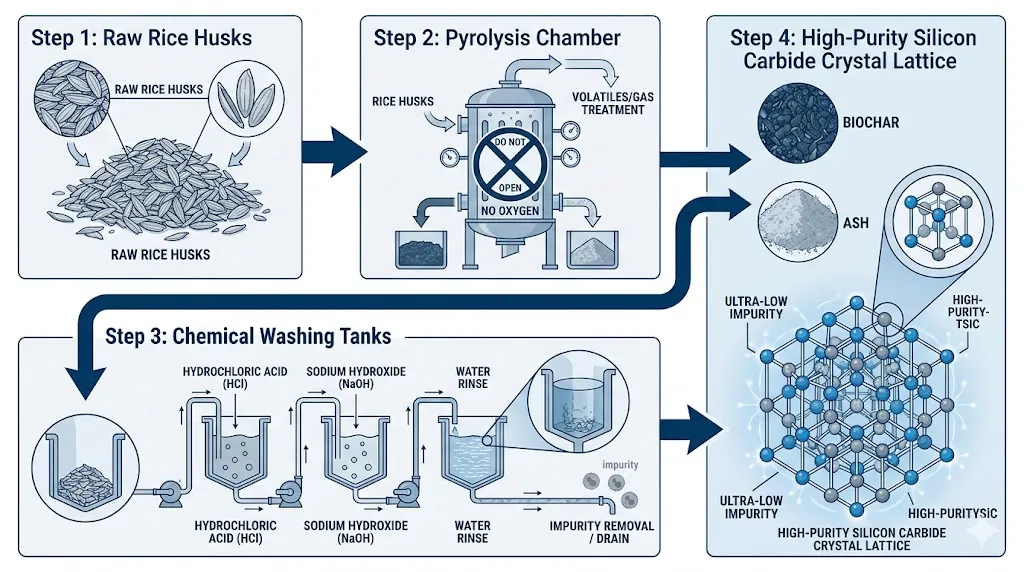
Biomass like rice husks4 naturally holds a perfect mix of carbon and silicon dioxide. We burn the husks in a controlled space without oxygen. This leaves behind a very pure ash. We process this ash to extract high-purity carbon and silica to make semiconductor-grade silicon carbide.
The Natural Secret of Rice Husks
I always find it amazing how nature works. Rice plants pull silica from the soil as they grow. They store this silica in their husks. When farmers harvest the rice, they throw the husks away. But engineers found out that these husks have the exact raw materials needed for chips.
The Step-by-Step Extraction Process
You cannot just melt the husks. You need a strict process to get the right purity. First, we use pyrolysis9. This means heating the waste without air. It stops the material from burning away. Next, we use chemical washing. This removes bad metals like iron or potassium.
Purity Levels and Yields
Let us look at how the materials change during this process.
| Process Step | Material State | Impurity Level | End Use |
|---|---|---|---|
| Raw Rice Husk | Biomass waste | High (dirt, metals) | None |
| Pyrolysis | Biochar and Ash | Medium | Basic industrial |
| Acid Washing | Purified Ash | Very Low | Advanced materials |
| Thermal Reduction | High-Purity SiC | Less than 1 ppm | Semiconductors |
This method proves that we can turn trash into treasure. Hardware engineers do not need to worry about dirty materials ruining their designs. The final carbon source is just as clean as anything made in a lab.
Can Recycled SiC Match the Quality of Traditional Materials?
Fake or weak parts are a buyer's worst nightmare. If a recycled chip fails in an electric car, the recall costs are huge. Thankfully, recycled SiC passes all strict tests.
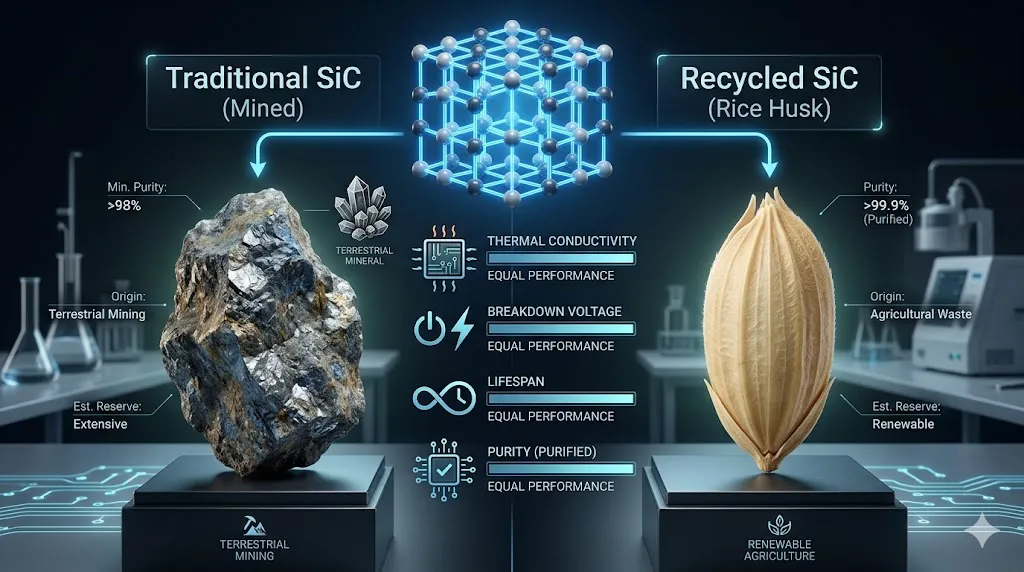
Yes, recycled SiC matches the quality of traditional materials perfectly. The extraction process removes all impurities. It creates a molecular structure10 that is exactly the same as mined SiC. It handles high voltages and extreme heat perfectly, making it safe for automotive and industrial electronics.
Breaking Down the Molecular Structure
When I talk to hardware engineers, their first question is always about quality. They want to know if the crystal structure is strong. The truth is, silicon carbide is just silicon and carbon atoms locked together. It does not matter if the carbon comes from oil or a rice husk. Once it forms a crystal, the physical traits are completely identical.
Performance in Harsh Environments
Our clients build things like power supplies and motor drives. These parts get very hot. Recycled SiC handles heat exactly like standard SiC. It moves electricity fast and stops thermal breakdowns. We only source parts from trusted makers who test every single batch.
Testing the Two Materials
Here is a simple look at how they compare in the lab.
| Test Metric | Traditional SiC | Recycled SiC | Result |
|---|---|---|---|
| Thermal Conductivity | High | High | Equal |
| Breakdown Voltage | Excellent | Excellent | Equal |
| Crystal Defects | Low | Low | Equal |
| Material Lifespan | 20+ Years | 20+ Years | Equal |
By looking at the data, we see there is no risk. Procurement teams can buy these green parts. They can still guarantee 100% original, top-tier performance for their factory lines.
How Does This Green Material Change the Supply Chain?
Relying on a few mines for raw materials causes major delays. When shortages hit, prices jump and your production stops. Biomass sourcing creates a new, stable, and local supply chain.
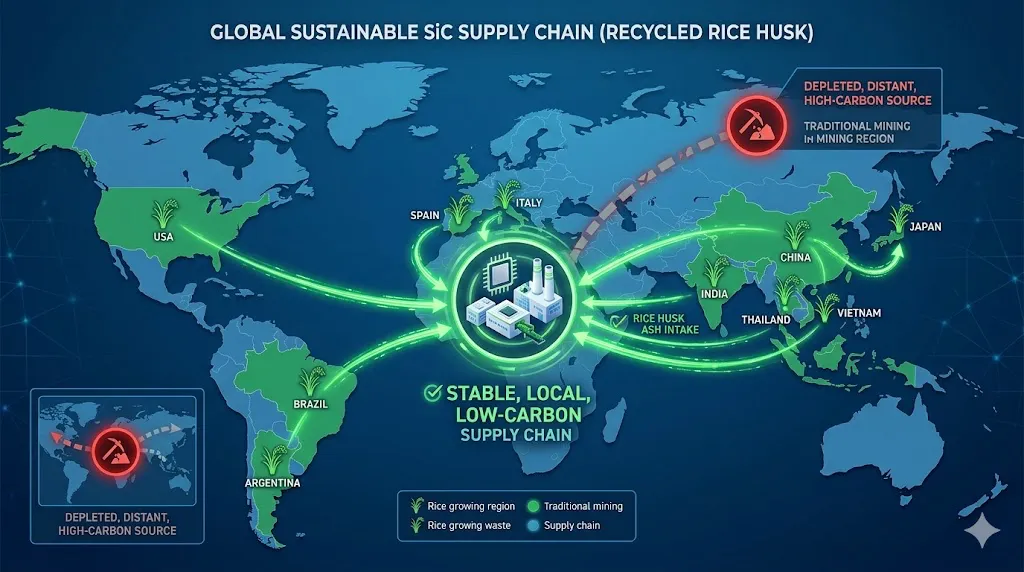
This green material changes the supply chain by adding a steady, endless source of raw materials. Farmers grow rice everywhere, so factories do not rely on a few specific mines. This lowers procurement risks, stabilizes prices, and ensures on-time delivery for electronic component buyers worldwide.
Moving Away from Mining Risks
In my 20 years of experience, I have seen many supply shocks. A mine closes, and suddenly no one can get raw materials. Prices go crazy. Using farm waste changes this completely. Rice is a global crop. The waste is always there, every single year. This gives us a supply chain that never runs out of basic inputs.
Stabilizing Component Prices
Procurement managers hate sudden price changes. You need stable costs to plan your budgets. Recycled SiC helps fix this. Because the raw material is cheap waste, the base cost does not jump up and down like oil or mined minerals.
Supply Chain Benefits
Let us map out the clear advantages for your business.
| Supply Chain Factor | Traditional Sourcing | Biomass Sourcing (Recycled SiC) |
|---|---|---|
| Raw Material Cost | High and changes often | Low and very stable |
| Geographic Risk | High (few mine locations) | Low (farms are everywhere) |
| Lead Times | Subject to mining delays | Faster and more predictable |
| Environmental Taxes | High risk of future fees | Zero risk, potential tax credits |
For an OEM, this means true peace of mind. You get the parts you need, exactly when you need them. You protect your company from fake parts and build a supply chain that is ready for the future.
Conclusion
Recycled silicon carbide from agricultural waste3 solves major ESG challenges. It offers high-quality, stable, and green semiconductor parts that protect supply chains and build a smarter, connected future.
Understanding the carbon footprint of semiconductor manufacturing can highlight the importance of green solutions like recycled silicon carbide. ↩
Exploring ESG rules can help businesses understand the pressures to adopt sustainable practices and avoid penalties. ↩
Discovering the use of agricultural waste in manufacturing can showcase innovative ways to reduce environmental impact. ↩
Exploring the value of rice husks can demonstrate their role in creating eco-friendly semiconductor materials. ↩
Learning about the production of recycled silicon carbide can reveal its benefits in reducing carbon emissions and enhancing ESG scores. ↩
Understanding carbon taxes can emphasize the need for greener solutions to avoid financial penalties. ↩
Learning about green contracts can show how companies can benefit from sustainable practices in the global market. ↩
Examining traditional SiC production can highlight the advantages of switching to recycled materials. ↩
Understanding pyrolysis can reveal its role in transforming agricultural waste into high-purity materials. ↩
Understanding the molecular structure can assure buyers of the quality and reliability of recycled SiC. ↩