Upgrading network hardware is hard. When soldered components fail1, you must replace the whole board. It wastes time and money. Pluggable silicon photonics2 offer a simple, cost-saving fix.
Pluggable silicon photonics2 modules are standardized optical transceivers3. They convert electrical signals into light for fast data transfer4. You can plug and unplug them easily, just like a computer memory stick. This design makes network upgrades fast, simple, and cheap for hardware engineers and procurement teams.
You might wonder how this simple change impacts your daily production line. I have seen many engineers struggle with fixed optical components. Let us look closer at why this plug-and-play design5 is changing the electronics supply chain.
What Exactly Is a Pluggable Silicon Photonics Module?
You need fast data speed. But traditional copper wires are too slow and bulky. They limit your system performance. A pluggable silicon photonics module solves this speed problem perfectly.
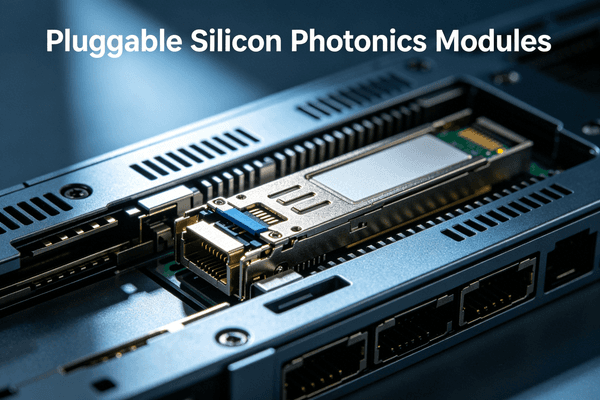
A pluggable silicon photonics module is a small, swappable device. It uses silicon chips to send and receive data as light instead of electrical currents. Because it follows strict industry standards, you can insert it into any compatible port to upgrade your system instantly.
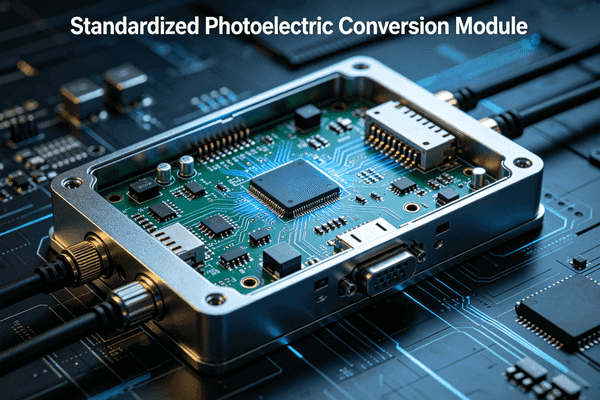
I remember a project from five years ago. My client needed to upgrade their server racks. They used old, fixed optical parts. When one part broke, the whole board went to the trash. It was a nightmare for their procurement team. Now, things are different. The core logic here is simple. We standardize the photoelectric conversion module6. Think about how you add RAM to a computer. You just open the case and push the memory stick into the slot. Pluggable silicon photonics2 work the exact same way.
This standard design brings huge benefits to hardware engineers. You do not need to solder complex optical chips directly onto the motherboard. Instead, the motherboard just needs a standard cage and connector. We can break down the advantages into a few key areas.
Benefits of Standardized Modules
| Feature | Traditional Fixed Optics | Pluggable Silicon Photonics |
|---|---|---|
| Installation | Hard, requires soldering | Easy, just plug it in |
| Replacement | Replace the whole board | Replace only the module |
| Upgrades | Very slow and expensive | Fast and cost-effective |
| Standardization | Low, custom designs | High, follows global rules |
This table shows why the industry loves pluggable designs. As a distributor at Nexcir, I always advise clients to choose standard parts. They give you flexibility. If you need a faster module next year, you just pull the old one out. Then you push the new one in. You keep the same base hardware. This saves money and reduces waste.
Why Do Data Centers Need Standardized Optical Modules?
Data centers7 face massive traffic jams. Slow data transfer causes system delays. These delays make your customers angry. Standardized optical modules clear this traffic jam quickly and easily.
Data centers7 need standardized optical modules to handle heavy data traffic without downtime. These modules allow fast, hot-swappable repairs8. If a module fails, a technician can replace it in seconds. This keeps the network running smoothly and cuts maintenance costs for the facility.
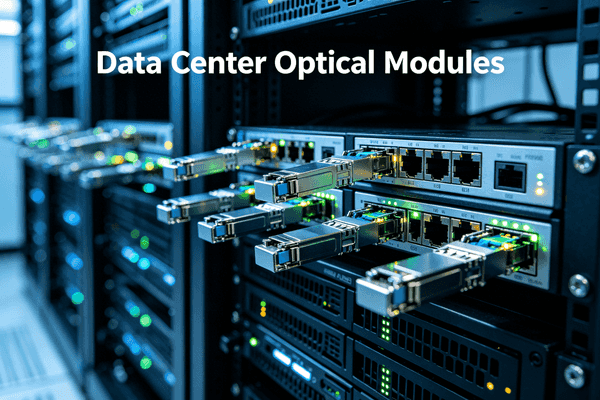
Let me share a story about a data center client of ours. They run thousands of servers. Two years ago, they suffered a major network failure. Their non-standard optical links burned out. It took them three days to find custom replacement parts. Their production stopped. They lost a lot of money. After that, we helped them switch to standardized, pluggable silicon photonics modules.
Data centers7 must operate 24 hours a day. They run 7 days a week. They cannot afford long repair times. Standardized modules act like universal spare parts9. If a laser dies, the system flags the error. A worker walks over and pulls a small latch. The worker removes the bad module and slides in a new one from our Nexcir stock. The system comes back online instantly.
Key Needs for Data Centers
| Problem | Solution with Pluggable Modules |
|---|---|
| Downtime | Hot-swappable design allows zero-downtime fixes. |
| Heat issues | Modern silicon photonics run cooler than old tech. |
| Space limits | Small form factors fit more ports on one switch. |
This shift is vital for OEM and ODM procurement managers. If you buy standard parts, you avoid vendor lock-in. You can buy from multiple authorized distributors. This keeps your pricing stable. You do not have to worry about market fluctuations or counterfeit products. We ensure 100% original components for these critical applications.
How Does Pluggable Design Reduce Procurement Risks?
Buying custom electronic parts is risky. A single supplier might stop making your part. Your production line will halt. Pluggable designs lower this risk by using common industry standards.
Pluggable design reduces procurement risks10 by relying on universal standards. Multiple manufacturers produce these identical modules. If one supplier runs out of stock, you can easily buy the exact same module from another trusted brand. This guarantees a stable supply and prevents production delays.
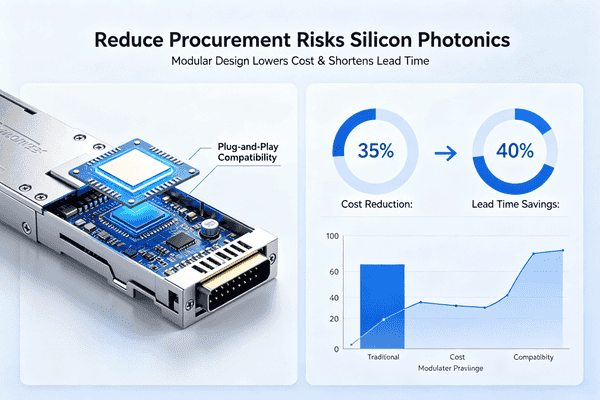
Procurement managers have a tough job. I talk to them every day. They always worry about End-of-Life notices11. They worry about supply chain shocks. When you use highly customized optical chips, you tie your fate to one factory. If that factory has a problem, you have no parts. I saw this happen during the global chip shortage. Many companies could not ship their products. They missed just one custom chip.
Pluggable silicon photonics2 change this rule completely. The form factor and electrical interfaces are standard. So, the market is full of options. You treat these modules like basic commodities.
Risk Reduction Breakdown
| Risk Factor | Custom Solder Optics | Pluggable Standard Optics |
|---|---|---|
| Supplier Dependency | High (Single source) | Low (Multiple sources) |
| Price Stability | Poor (Monopoly pricing) | Excellent (Market competition) |
| Availability | Hard to find stock | Easy to find global stock |
At Nexcir, we use our global supply network12 to find these standard modules. We source them from North America, Europe, and Asia. Since they are standard, we can easily verify their authenticity. We protect our customers from counterfeit parts. You get a reliable, high-quality module every time. This makes the procurement process much less stressful. You can plan your budget better. You can keep your production schedule on track.
Will Future Networks Rely Entirely on Pluggable Silicon Photonics?
Data demands grow faster every year. Old hardware cannot keep up with this growth. You will face massive bottlenecks soon. Pluggable silicon photonics2 will build our future high-speed networks13.
Future networks will heavily rely on pluggable silicon photonics. As data speeds push past 800G and 1.6T, copper cables fail. Pluggable optical modules provide the necessary speed and flexibility. They allow networks to scale up easily, making them the standard choice for future telecommunications and computing.
I am very excited about the future of electronics. Our core team at Nexcir has watched the industry evolve for over 20 years. We went from slow copper wires to fast fiber optics. Now, we see the rise of silicon photonics. The future is all about speed and flexibility. Pluggable modules offer both.
Think about the rise of Artificial Intelligence14 and the Internet of Things15. These technologies generate massive amounts of data. Hardware engineers must design systems that can handle this data tomorrow. They cannot just think about today. If you build a system with pluggable ports, you make it future-proof.
The Future Landscape
| Technology Trend | Hardware Requirement | Pluggable Module Benefit |
|---|---|---|
| AI Machine Learning | Massive data bandwidth | High-speed optical data transfer |
| IoT Expansion | Connect millions of devices | Easy scaling by adding modules |
| Green Energy16 | Lower power consumption | Silicon photonics use less power |
We will see these modules in more places. They will move from large data centers to edge computing devices17. They will even go into cars and industrial machines. As a trusted partner, we are ready for this shift. We will continue to supply these authentic, high-quality modules to our clients worldwide. We want to help you build a smarter, more connected future.
Conclusion
Pluggable silicon photonics2 modules act like memory sticks for optical data. They make upgrades easy, reduce procurement risks10, and ensure your hardware is ready for the future.
Understanding the drawbacks of soldered components can highlight the benefits of pluggable solutions. ↩
Exploring this technology can reveal how it simplifies network upgrades and reduces costs. ↩
Learning about optical transceivers can explain their role in fast data transfer and network efficiency. ↩
Fast data transfer is crucial for performance; understanding its importance can guide better network decisions. ↩
Discovering the plug-and-play design can show how it simplifies hardware upgrades and maintenance. ↩
Understanding this module can clarify its role in converting electrical signals to optical for data transfer. ↩
Data centers rely on efficient modules to handle traffic; learning about this can improve data management. ↩
Hot-swappable repairs minimize downtime, crucial for maintaining continuous network operations. ↩
Universal spare parts ensure quick replacements, reducing downtime and maintenance costs. ↩
Reducing procurement risks ensures a stable supply chain, vital for uninterrupted production. ↩
Understanding End-of-Life notices helps in planning for component replacements and avoiding disruptions. ↩
A global supply network ensures access to authentic parts, reducing risks of counterfeits and shortages. ↩
Exploring this role can show how networks will evolve to meet growing data demands. ↩
AI increases data demands; understanding this can guide network infrastructure planning. ↩
IoT connects devices, increasing data flow; learning about it can help in designing scalable networks. ↩
Silicon photonics use less power, aligning with green energy goals and reducing environmental impact. ↩
Edge computing processes data closer to the source, enhancing speed and efficiency in networks. ↩