Scope: What This Ordering-Code Guide Covers
The ATmega64A is an AVR 8-bit microcontroller from Microchip Technology Inc., offered with 64 KB of in-system self-programmable Flash, 4 KB of internal SRAM and 2 KB of EEPROM. This article is a suffix-reading aid for that device family only. It explains what the dash suffixes and the R-suffixed codes in the ordering data mean, and which parameters the source data explicitly ties to each code.
It is not a cross-reference to other parts and not a substitute for the device datasheet. Where the ordering data does not state a link between a suffix and a package, this guide says so rather than guessing.
Base Part Number vs Ordering Suffix
The device identity is carried by the base part number. Everything after the dash describes how that device is ordered — temperature group, package, and shipping format. Two line items that differ only in their suffix should not be read as two different microcontrollers.
The ordering data lists four dash suffixes for this family: -AU, -AN, -MU and -MN, plus four R-suffixed tape-and-reel codes. Only two of those relationships are stated outright:
- -AU and -MU are described as industrial order codes.
- -AN and -MN are described as extended order codes.
- ATmega64A-AU is the only code explicitly tied to a package type: 64A, a 64-lead TQFP.
The document does not map each remaining letter to a package. Treat that mapping as something to confirm against the manufacturer's current document before a purchase order is released, and never infer it from the shape of the code.
Decoding ATmega64A-AU: Confirmed Package and Temperature
The -AU suffix is the one code in the ordering data with a complete, explicit description. It combines package type 64A with the industrial temperature group.
| Parameter | Value confirmed for ATmega64A-AU |
|---|---|
| Package | 64-lead TQFP, package type 64A |
| Pin count | 64 |
| Body size | 14 x 14 mm |
| Thickness | 1.0 mm |
| Lead pitch | 0.8 mm |
| Operating temperature range (TA) | -40 to +85 °C |
| Speed grade | 0 to 16 MHz |
| Throughput at 16 MHz | 16 MIPS |
| Operating voltage range (VCC) | 2.7 to 5.5 V |

For a buyer, the pin count and lead pitch are the numbers that decide whether an existing board footprint and stencil set can take the part without a layout change. The 64-lead TQFP at 0.8 mm pitch is a different land pattern from the 64-pad QFN/MLF listed elsewhere in the ordering data, so the package type — not the pin count — is what should be checked against the assembly drawing.
Temperature Suffix Groups: -AU/-MU vs -AN/-MN
Two temperature groups appear in the ordering data, and the difference is a specification difference, not a shipping preference.
| Order-code group | Suffixes | Operating temperature range (TA) |
|---|---|---|
| Industrial | -AU, -MU | -40 to +85 °C |
| Extended | -AN, -MN | -40 to +105 °C |
Both groups carry the same speed grade: 0 to 16 MHz.
The practical consequence for procurement is that a requisition which only says "ATmega64A, industrial" is not specific enough to place on a line item. State the suffix. If the enclosure or the thermal study calls for operation above the industrial upper limit, the extended codes are the ones to quote; if the design is qualified to the industrial range, ordering the extended code changes the specification on the line item without changing the device family.
The speed grade applies to both groups, so a frequency requirement does not narrow the choice between them. Only the temperature range does.
Package Options in the Ordering Data: 64A TQFP and 64M1 QFN/MLF
Two package descriptions appear in the ordering data. Both are 64-pad or 64-lead devices built on the same die; they differ in body size and lead pitch.
| Package type | Description | Body | Lead pitch | Suffix linkage stated |
|---|---|---|---|---|
| 64A | 64-lead TQFP | 14 x 14 mm, 1.0 mm thickness | 0.8 mm | ATmega64A-AU |
| 64M1 | 64-pad QFN/MLF | 9 x 9 x 1.0 mm | 0.50 mm | Not stated |
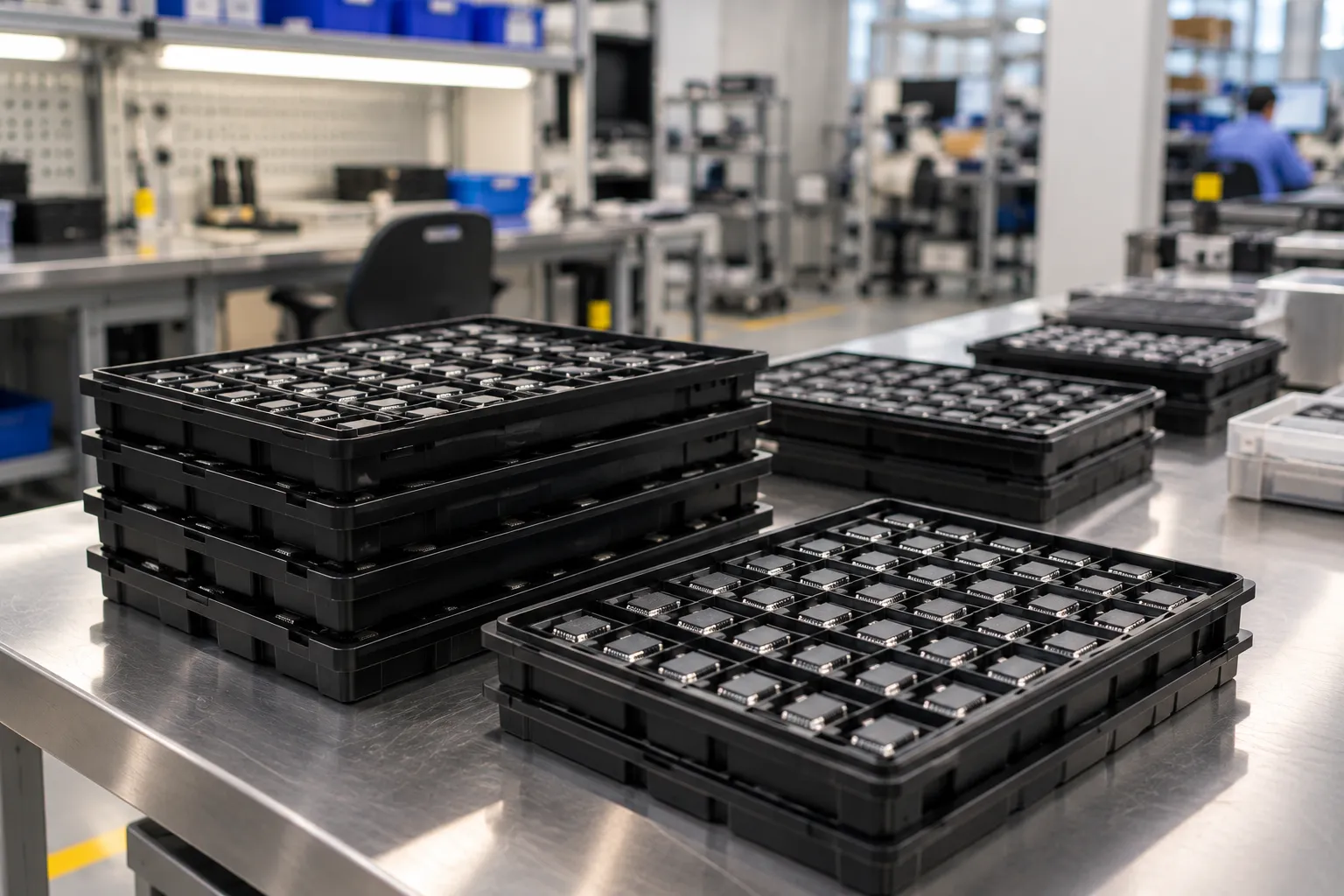
The QFN/MLF body is smaller and uses a finer lead pitch than the TQFP. That affects board area, paste deposition and inspection method, so the package choice is normally fixed by engineering before purchasing becomes involved. The role of the order code is to make sure the chosen package is the one that actually arrives: because the ordering data explicitly ties only ATmega64A-AU to the 64A TQFP, treat the package for any other suffix as a field to verify rather than assume.
Tape-and-Reel Suffixes: -AUR, -ANR, -MUR and -MNR
The ordering data lists four tape-and-reel order codes. Each is the corresponding base suffix with an R appended.
| Base suffix | Tape-and-reel order code |
|---|---|
| -AU | ATmega64A-AUR |
| -AN | ATmega64A-ANR |
| -MU | ATmega64A-MUR |
| -MN | ATmega64A-MNR |
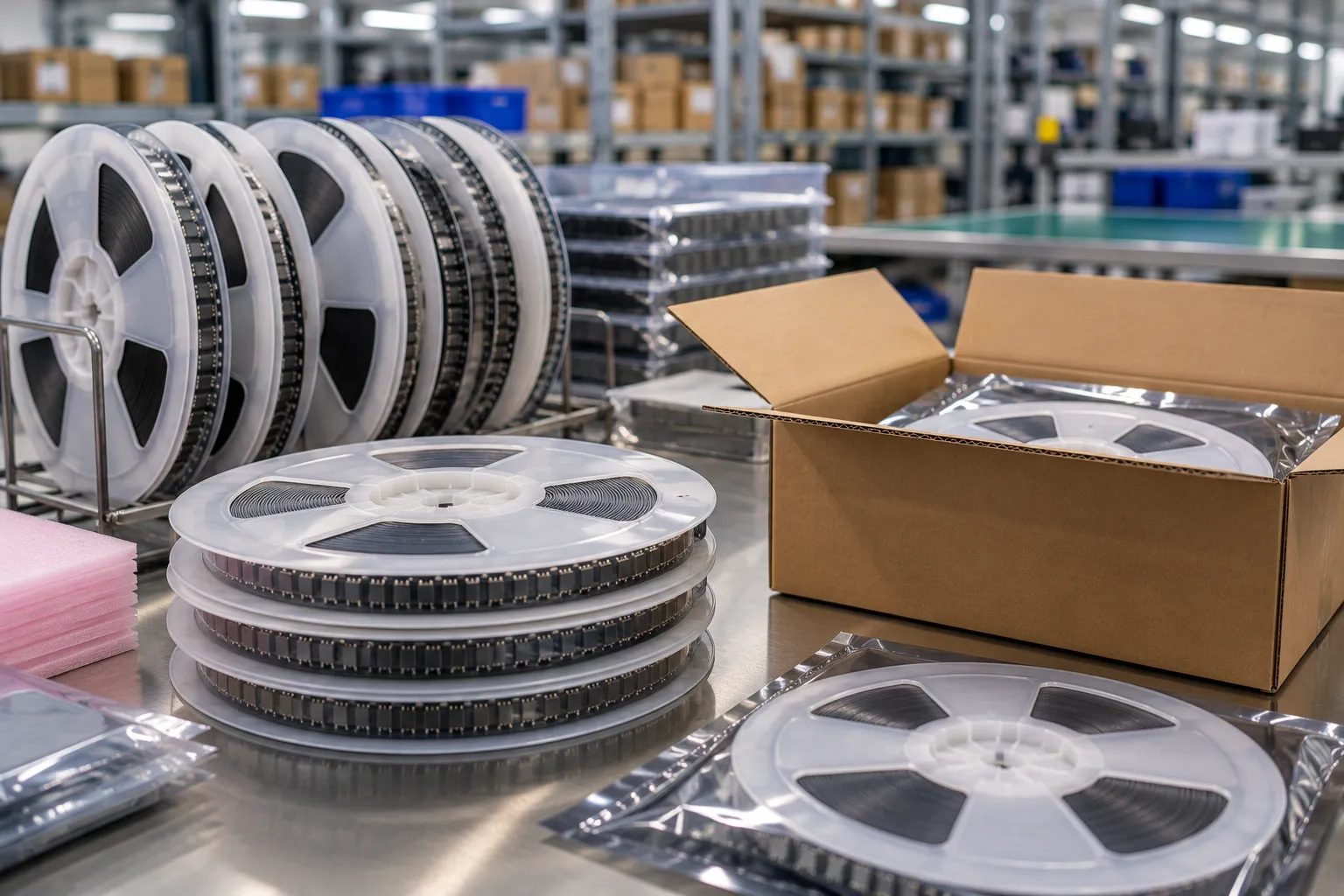
This matters because the R is part of the order code, not a note about how the parts are packed. A purchasing document that lists ATmega64A-AU when the line will run on automated placement equipment is asking for the wrong format, and the reverse is equally true: an R-suffixed code describes a reel, which is normally what a placement machine consumes.
When you build the request, take the base suffix from the engineering approved vendor list and then decide whether the R is required for that build. Keep both characters visible in the document — collapsing them into a shortened reference is how the two formats get mixed up on a repeat order.
Operating Ranges vs Absolute Maximum Ratings
The ordering data contains two different kinds of numbers, and they are frequently confused on requisitions. Operating ranges describe conditions the device is specified to work in. Absolute maximum ratings are stress ratings: values the device can be subjected to without damage, but which are not operating conditions.
| Parameter | Operating range | Absolute maximum (stress rating) |
|---|---|---|
| Supply voltage (VCC) | 2.7 to 5.5 V | 6.0 V |
| Ambient temperature (TA) | -40 to +85 °C (-AU, -MU)<br>-40 to +105 °C (-AN, -MN) | -55 to +125 °C |
The absolute maximum DC current per I/O pin is 40.0 mA. That figure is a stress rating as well, not a design target for a driven output.

For procurement the distinction is straightforward but consequential. A specification that quotes the absolute maximum supply voltage or the absolute maximum temperature as if it were the operating condition overstates what the part is qualified to do in the application, and the error usually surfaces late — during qualification, not on the order. Quote the operating ranges when you describe the requirement, and leave the stress ratings to the engineering document that cites them.
Packaging Compliance Text on the Order Line
The ordering data carries an environmental statement for the device: it is listed as Pb-free, RoHS compliant, Halide free and fully Green.
That wording is what appears attached to the order code, so it is the wording to check when a compliance file, a customer questionnaire or an internal restricted-substances list has to be matched against the part. Reproduce the statement as listed rather than paraphrasing it into a shorter form; the individual terms are distinct claims and dropping one changes what has been asserted.
If a compliance record is required for a build, request it together with the order code so the two documents reference the same part.
How to Request a Quote
To have NexCir quote the ATmega64A in the format your build needs, send the exact order code as it should appear on the purchase order. Where you need a temperature group or package other than the one named by the code you have, say so explicitly and let the code follow from it, rather than starting from a suffix and assuming the package.
Useful details to include with the request:
- The full order code, including the R if reel packing is required.
- The temperature group you need — industrial or extended.
- The package type required by the board, 64A TQFP or 64M1 QFN/MLF.
- The quantity per build and whether the requirement is a one-off or repeating.
Our team will confirm the code you have specified and respond with a quotation.