Car designs are getting too complex. Managing hundreds of separate chips causes delays and bugs. A central computing architecture1 solves this by acting as a single brain for your car.
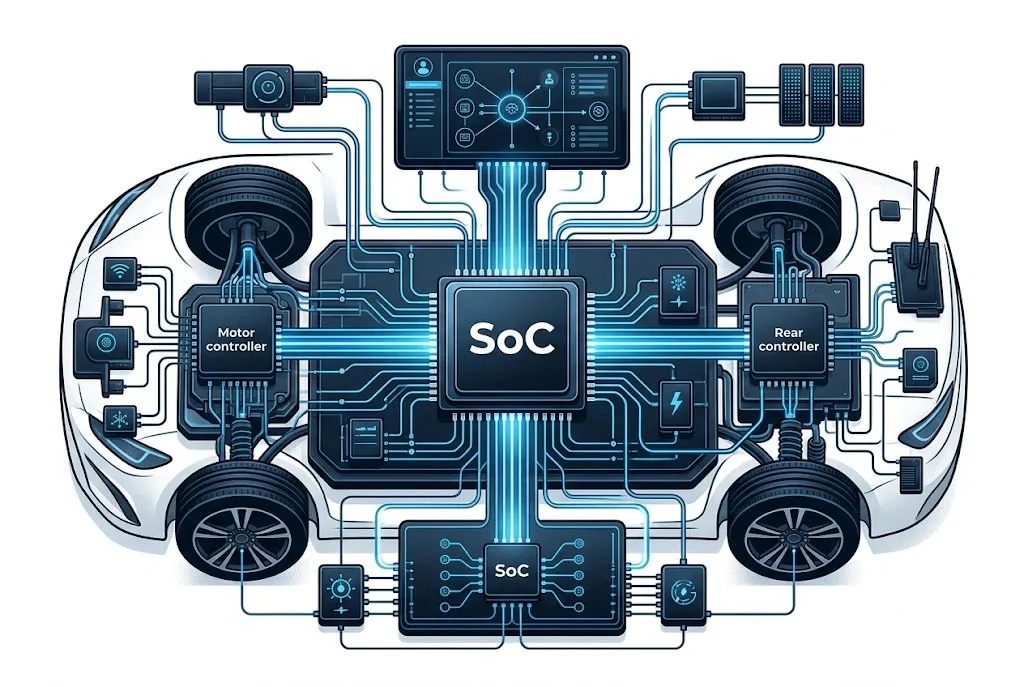
Central computing architecture in SDVs replaces discrete Electronic Control Units (ECUs)2 with a centralized system. It uses two or three powerful System-on-Chips (SoCs)3 to control everything. This brain-like model processes data faster, supports continuous software updates4, and simplifies the overall electronic design of the vehicle.
I remember working on an old car project where just fixing a radio meant changing three different parts. That old way is dead. Let me show you how central computing changes everything, and why you must care about this shift today.
Why Are Cars Moving From Discrete ECUs to Super SoCs?
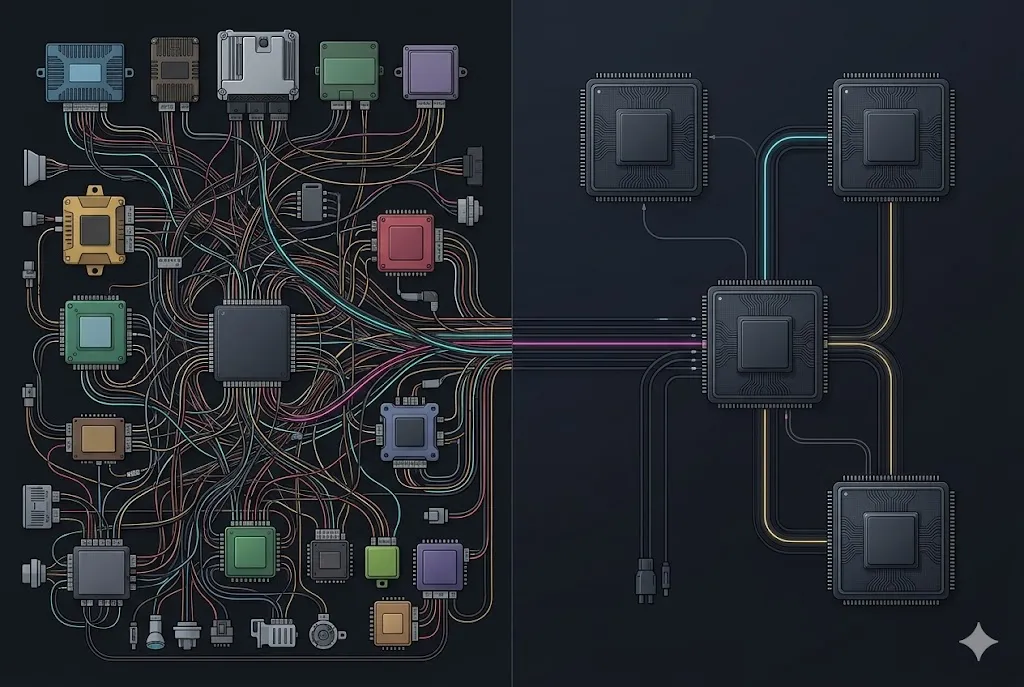
Old cars use over 100 ECUs. This creates a heavy, messy wiring problem. Moving to super SoCs cuts this weight and stops the system from failing under heavy data loads.
Cars are moving to super SoCs because discrete ECUs cannot handle modern data needs. A few super SoCs replace dozens of small chips. This change cuts wiring weight5, speeds up data sharing, and allows the car to act as one smart device rather than many disconnected parts.
The Problem with the Old Setup
In the past, every new car feature needed a new ECU. Want automatic wipers? Add an ECU. Want lane assist? Add another ECU. I saw a customer struggle with a supply chain crisis6 because they needed 150 different chips for one car. This method is slow. It also makes the car heavy. More weight means less battery range for electric cars. You also face huge risks when you buy so many different parts from many different places.
The Power of the Brain Model
Now, the industry uses a brain model7. Two or three super SoCs handle all tasks. They manage the engine, the screens, and the self-driving features. This makes the car much lighter. It also makes the car smarter. Data moves instantly within one main chip instead of traveling across long wires. This fast data movement8 is exactly what modern cars need to stay safe on the road.
Comparing the Architectures
Here is a simple look at how they compare:
| Feature | Discrete ECUs | Super SoCs (Centralized) |
|---|---|---|
| Number of chips | 100+ per car | 2 to 3 main chips |
| Wiring weight | Very heavy | Much lighter |
| Data speed | Slow, long paths | Fast, direct paths |
| Software updates | Very hard | Very easy |
This change is huge for hardware engineers. You no longer buy hundreds of simple parts. You now buy a few very complex, expensive parts. This changes how you manage your supply chain and your procurement risks.
Has the Software-Defined Vehicle Reached Full Industrialization in 2026?
Many people think SDVs are just a future concept. Waiting for the technology to mature puts you behind competitors. The truth is, full industrialization9 is already happening right now.
Yes, the Software-Defined Vehicle reached full industrialization9 by CES 2026. Automakers are no longer just testing SDV concepts. They are actively producing cars built on central computing architecture1s. The focus has shifted from making single smart functions to building complete, software-first vehicle platforms on a massive scale.
The Message from CES 2026
I attended CES 2026, and the message was very clear. The testing phase is over. Every major car maker showed real production cars using central computing. They are not just showing off one cool feature anymore. They are showing entire platforms ready for the road. The whole industry agrees that software now leads hardware.
What Industrialization Means for You
Full industrialization means high volume. Car makers need millions of these super SoCs. For procurement managers, this brings a new challenge. You need a stable supply of very advanced chips. At Nexcir, we see this shift every day. Customers no longer ask for small test batches. They want long-term supply programs for high-end central processors. They need a partner who can guarantee delivery without any delays.
The Shift in Focus
The industry focus has changed. Look at this breakdown:
| Era | Main Focus | Production Scale |
|---|---|---|
| Pre-2024 | Testing single features | Small, proof of concept |
| 2024-2025 | Integrating systems | Medium, early adopters |
| 2026 Onward | Platform stability | Massive, full industry |
Because the scale is now massive, you must avoid counterfeit parts10. If one super SoC fails, the whole car fails. You must buy from trusted global networks11 to keep your production lines moving without any stops.
How Does OTA Update Extend Hardware Lifespan to 15 Years?
Car hardware usually gets old and useless in five years. Customers hate buying outdated cars. OTA updates fix this by keeping the hardware fresh and useful for 15 years.
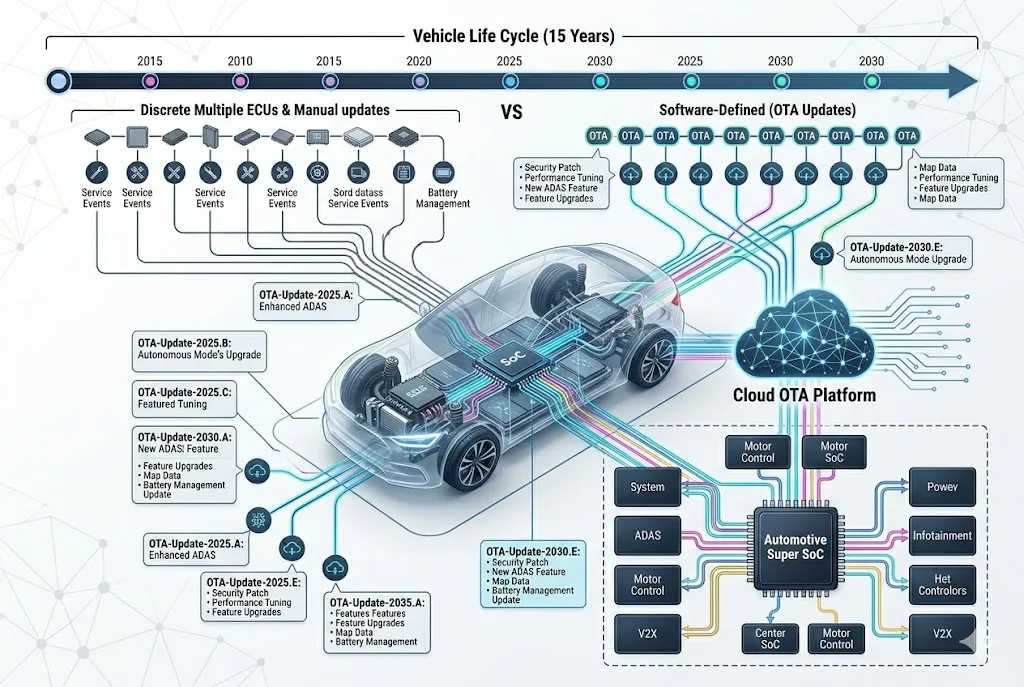
Over-The-Air (OTA) updates12 extend hardware lifespan by separating software from hardware. A central super SoC has extra computing power built in from day one. As years pass, OTA updates send new features and fixes to the car. This keeps the 15-year-old hardware acting like a brand-new vehicle.
The Magic of Software Decoupling
In the past, hardware and software were locked together. If you wanted a new radio interface, you bought a new radio. Now, they are separate. The central SoC acts like a smartphone. You just download the new app. I have a friend who got a new self-driving mode in his car while he slept. This is the power of OTA. It changes how we think about car ownership.
Planning for the Next 15 Years
To make a car last 15 years, engineers must plan ahead. They put in hardware that is too powerful for today. We call this hardware over-provisioning13. The SoC might only use 30 percent of its power in year one. By year ten, new software updates will use 90 percent of its power. This is the only way to manage a long hardware life.
Lifecycle Value Breakdown
This strategy changes how cars hold their value.
| Car Age | Software State | Hardware Usage | User Experience |
|---|---|---|---|
| Year 1 | Basic launch features | Low (30%) | Modern |
| Year 7 | Major feature upgrades | Medium (60%) | Still Modern |
| Year 15 | Final optimizations | High (95%) | Functional and Safe |
This 15-year lifespan means the original chips must be perfect. If a chip breaks in year five, the OTA model fails. This is why OEM procurement teams must source 100 percent original, high-quality components. You cannot risk using fake parts when the car must last 15 years.
How Do You Secure the Supply Chain for SDV Architectures?
Buying advanced SoCs is hard. Market prices jump up and down, and fake parts ruin projects. You need a safe supply chain to keep your SDV production running smoothly.
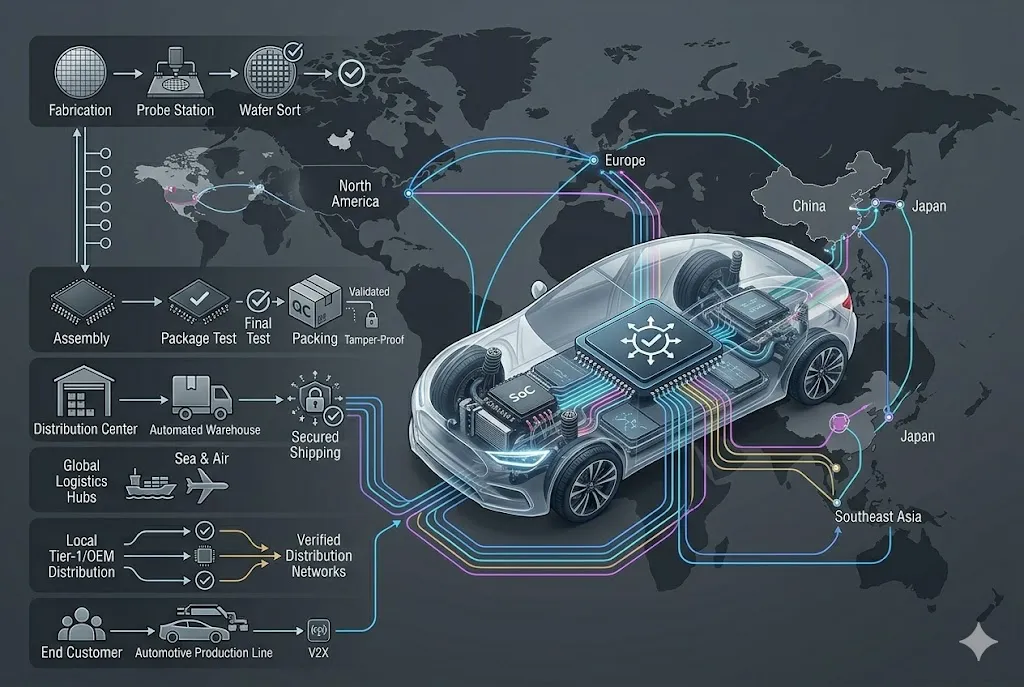
You secure the SDV supply chain by working with trusted global distributors. You must buy only from authorized channels and original manufacturers. This guarantees authentic parts14. It also locks in stable pricing and ensures on-time delivery, which protects your 15-year vehicle lifecycle from early failures.
The High Risk of Counterfeits
When cars move to central computing, the risk of fake parts grows. A fake super SoC will crash the entire car system. I once helped a client who bought parts from an unknown broker. The parts failed, and their production line stopped for two weeks. The cost was massive. You must avoid this pain. You need real parts for real results.
Building a Stable Supply Network
To succeed in the SDV era, you need stability. You cannot rely on local markets alone. You need a global supply network. At Nexcir, our team has 20 years of experience doing exactly this. We only source from authorized distributors and original makers. This means every part is tracked and safe. We help you find exact matches and safe alternatives when needed.
Supply Chain Solutions
Here is how a good supply partner solves your problems:
| Your Pain Point | The Right Solution | The Final Result |
|---|---|---|
| Price changes | Long-term supply programs | Stable costs |
| Fake parts | 100% original sourcing | Zero quality failures |
| Slow delivery | Global logistics network | On-time production |
Hardware engineers and procurement managers must work together. You need a partner who understands market trends and offers technical support. This reduces your risks and makes your supply chain a strong advantage against your competitors.
Conclusion
The shift to central SoCs15 and OTA updates defines modern cars. Secure your supply chain with authentic parts14 to ensure your software-defined vehicles succeed for the next 15 years.
Understanding central computing architecture helps you see how modern cars are becoming more efficient and reliable. ↩
Discover why the automotive industry is moving away from discrete ECUs to improve vehicle efficiency. ↩
Learn how SoCs streamline car functions, reducing complexity and improving performance. ↩
Explore how continuous updates keep your car's software current and enhance its features over time. ↩
Find out how lighter wiring contributes to better performance and efficiency in electric vehicles. ↩
Understand the challenges in automotive supply chains and how they impact production. ↩
Learn how the brain model centralizes car functions for smarter and faster performance. ↩
See how quick data transfer enhances safety and functionality in today's vehicles. ↩
Find out how SDVs are now fully industrialized and what this means for car production. ↩
Discover the risks of counterfeit parts and how they can disrupt automotive manufacturing. ↩
Explore how reliable networks ensure the authenticity and quality of automotive components. ↩
Learn how OTA updates keep your car's hardware relevant and functional for many years. ↩
Understand how over-provisioning ensures your car's hardware remains useful over time. ↩
Understand the importance of using genuine parts to maintain quality and reliability in vehicles. ↩
Explore how central SoCs revolutionize car design by integrating multiple functions into fewer chips. ↩