Are factory machines breaking down without warning? High cloud costs make AI seem out of reach. TinyML brings smart solutions directly to your factory floor without breaking the bank.
TinyML in the Industrial Internet of Things (IIoT)1 runs artificial intelligence directly on cheap, low-power microcontrollers2. This allows factories to process data locally. It cuts down cloud costs, reduces delay, and keeps data safe, making smart factory upgrades affordable and fast.
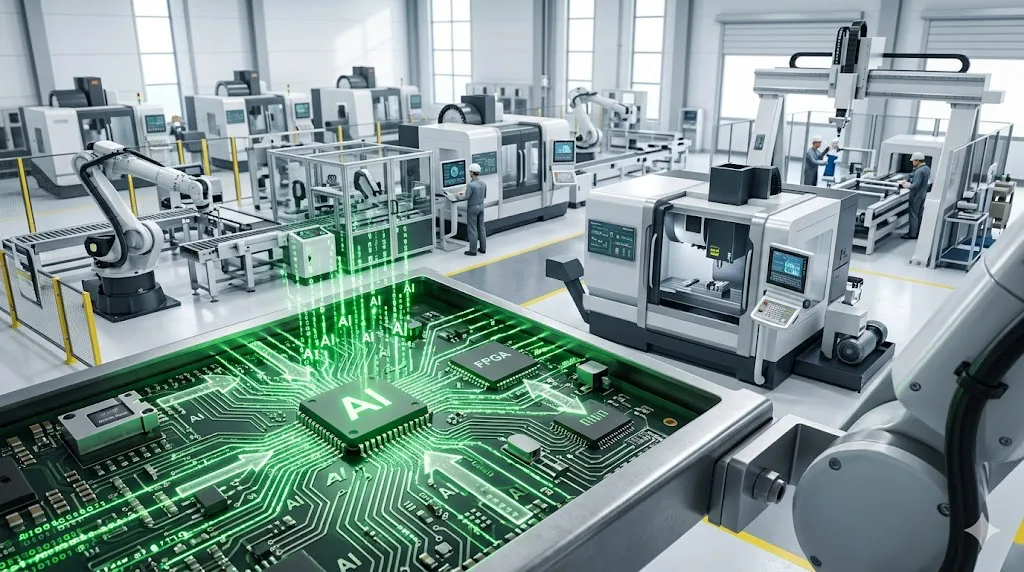
You might think AI needs huge servers and endless budgets. I used to think the same way. But let me show you why small chips are the real future of smart factories.
Why Run AI on Cheap and Low-Power Microcontrollers?
Sending machine data to the cloud is slow. It also costs a lot of money. If the network drops, your smart factory stops working immediately and you lose production time.
Running AI on low-power microcontrollers2 solves network delays3 and cuts cloud fees4. These cheap chips process data right on the machine. This means instant decisions, higher security, and zero reliance on a constant internet connection.
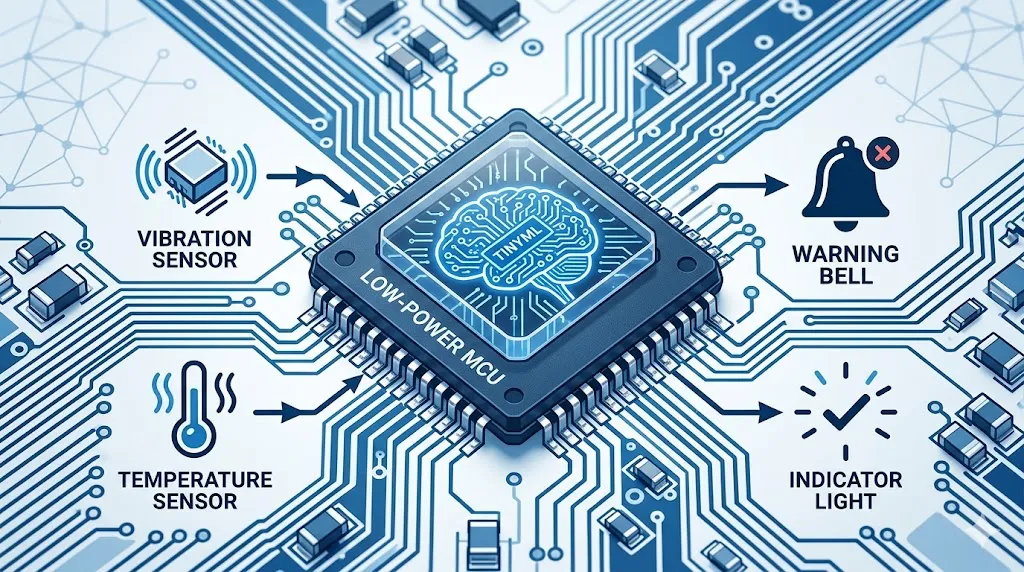
I remember a client who tried to build a smart factory. They sent all their sensor data to the cloud. Their monthly cloud bill was huge. They used huge servers. The servers got hot. They had to pay for extra cooling. Their network also crashed often. They asked me for help. I told them about TinyML. The core logic of TinyML is simple. We run AI inference on extremely cheap, low-power microcontrollers2 (MCUs).
The Real Cost of Cloud AI
Cloud AI looks great on paper. But in real factories, it brings hidden problems. You pay for data transfer. You pay for cloud storage. You also face big security risks because your data leaves the building.
The Edge Computing Advantage5
When you put AI on a cheap MCU, everything changes. The machine knows when it will break. It does not need to ask the cloud. It just stops and sends an alert. The battery on these small chips can last for years.
Cloud AI vs. TinyML on MCUs6
| Feature | Cloud AI | TinyML on MCUs |
|---|---|---|
| Hardware Cost | High (Servers, Gateways) | Very Low (Cheap MCUs) |
| Power Use | Very High | Extremely Low (Battery runs for years) |
| Response Time | Slow (Depends on network) | Instant (Real-time) |
| Data Security | Low (Data leaves factory) | High (Data stays on machine) |
This shift is massive for hardware engineers. You do not need expensive processors. You just need a reliable supply of standard MCUs. At Nexcir7, our team has over 20 years of experience. We see many OEM companies8 moving to these low-power chips. They want to avoid expensive server parts. They want standard parts that are easy to buy in bulk. We help them find 100% original MCUs from authorized makers. We also help them find the right sensors. This keeps their production lines moving without unexpected stops. We make sure they never have to worry about fake components.
Will No-Code AI Replace Custom Development by 2026?
Hiring AI experts takes months. Custom software projects often fail. Your factory needs smart tools now, but you do not have the time or money to build them.
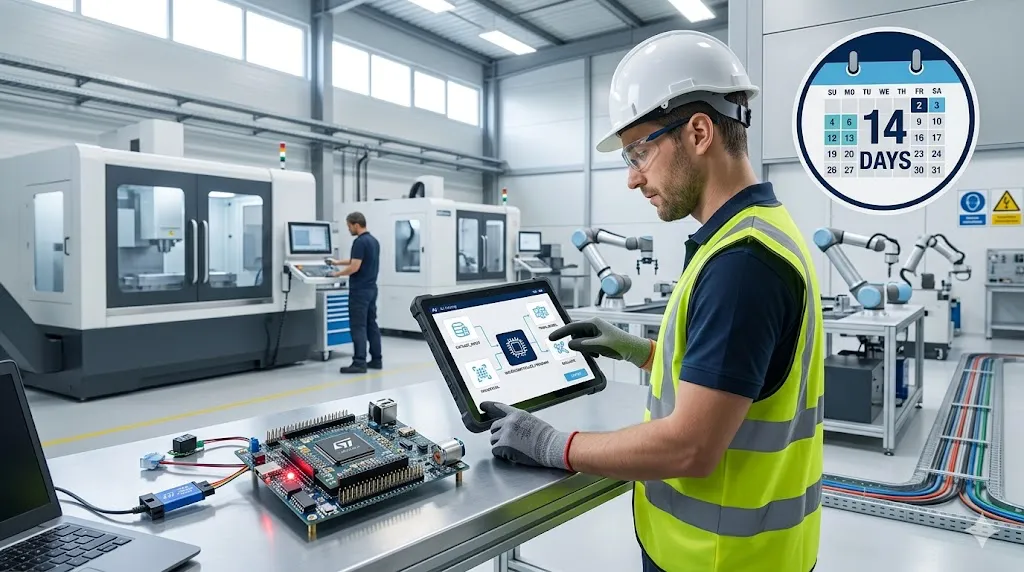
Yes, by 2026, factories will choose no-code AI solutions9 over custom development. These tools allow 14-day rapid deployment10. Factory workers can train AI models without writing code, making smart upgrades faster and cheaper.
A few years ago, building an AI model took a whole team of data scientists. I saw many OEM companies8 waste millions of dollars on custom AI. The projects took a year to finish. By the time they finished, the factory needs had changed. The custom software was useless.
The 2026 Factory Observation
My observation for 2026 is clear. Factories will stop paying for long AI projects. They will focus on a "14-day rapid deployment10" model. This relies entirely on no-code AI platforms.
Why No-Code Wins
No-code AI changes the game. A hardware engineer or a factory manager can collect machine data. They upload it to a simple program. The program creates a TinyML model. They put this model onto an MCU. They can test the AI on one machine. If it works, they copy it to fifty machines. This all happens in two weeks, not two years.
Custom AI vs. No-Code TinyML11
| Metric | Custom AI Development | No-Code AI Deployment |
|---|---|---|
| Setup Time | 6 to 12 months | 14 days |
| Required Skills | Data Scientists, Coders | Factory Techs, Engineers |
| Total Cost | Hundreds of thousands | A fraction of the cost |
| Flexibility | Hard to change later | Easy to retrain and update |
This speed brings a new challenge for OEM procurement managers. Procurement managers12 must buy electronic components fast. They cannot wait 50 weeks for a microcontroller. They need trusted global logistics to move parts quickly. If an MCU goes out of stock, the whole 14-day plan fails. At Nexcir7, we solve this exact pain point. We offer stable pricing and fast delivery across the globe. We make sure you get authentic parts right when you need them. We also help you find alternative parts if the original choice is not available. This lets your production team focus on quick AI deployment instead of chasing parts.
How Can Procurement Managers Secure the Right Components for TinyML?
Fake chips ruin good products. Market prices jump up and down every day. You worry about buying bad parts and missing your strict production deadlines.
Procurement managers12 can secure the right components by partnering with a specialized distributor like Nexcir7. We provide 100% original microcontrollers and sensors. We offer stable pricing, global logistics, and material alternatives, keeping your TinyML projects on track.
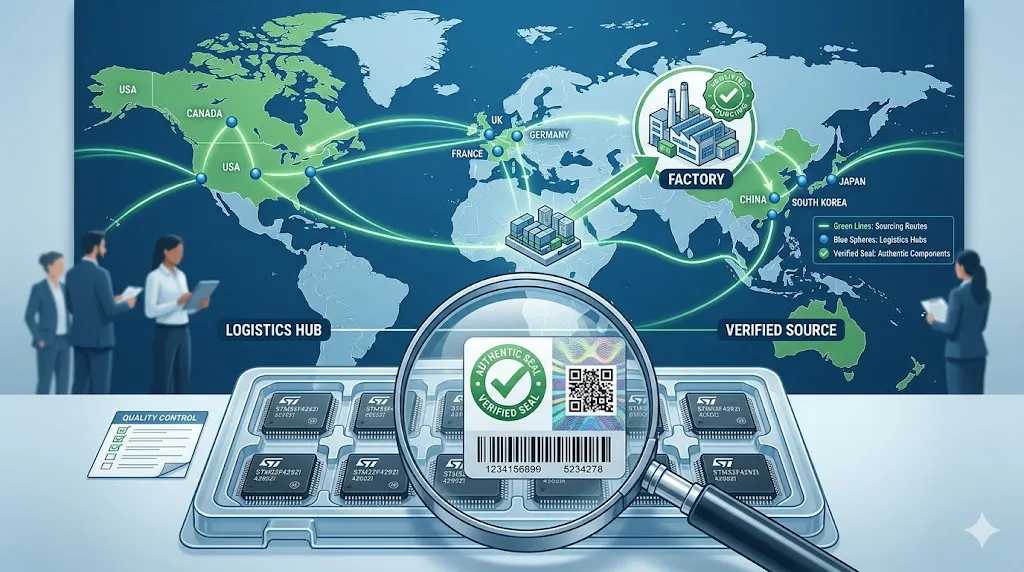
TinyML needs very specific parts. You need MCUs, PMICs, and sensors. The biggest fear I hear from clients is getting fake parts. I once saw a company buy cheap sensors from an unknown broker. The sensors stopped working after one month. The company had to recall all their products. They lost a lot of money and customer trust.
The Threat of Counterfeit Parts13
Counterfeit chips look real. But they fail in the factory. One fake sensor can ruin a whole batch of smart machines. This causes huge losses. You need a supply chain you can trust. Trust is hard to find in the open market.
Ensuring Supply Chain Stability14
To run AI on low-power chips, your supply must be steady. You cannot deal with wild price changes. You need a partner who knows the market. You need a partner who can find alternative parts when one part reaches its End of Life (EOL).
Component Sourcing Checklist15
| Challenge | Common Market Problem | The Nexcir7 Solution |
|---|---|---|
| Quality Control | High risk of fake parts | 100% original, fully traceable |
| Price Changes | Wild market swings | Stable pricing via bulk sourcing |
| Delivery Delays | Unreliable shipping | Fast global logistics partners |
| EOL Parts | Production stops | Expert help finding alternatives |
Our core team at Nexcir7 has a global supply network16 across North America, Europe, and Asia. We source all our resources only from authorized distributors and original manufacturers. We know how much hardware engineers care about long lifecycle availability. We protect your procurement projects from supply risks. We provide professional support to help you choose the best MCUs and connectors for your TinyML needs. We also help you optimize your supply chain. By lowering your procurement costs, we help you stay competitive in the fast-moving IIoT market. We build a smarter, more connected future with you.
Conclusion
TinyML transforms industrial IoT by running AI on cheap microcontrollers. Rapid no-code deployment makes smart factories real. Nexcir7 ensures you get the authentic parts to build this future safely.
Explore how TinyML revolutionizes industrial IoT by enabling AI on low-power microcontrollers, making smart factory upgrades affordable and efficient. ↩
Discover the advantages of using low-power microcontrollers for AI, including reduced costs, instant decisions, and enhanced data security. ↩
Learn how network delays can disrupt smart factory operations and how local AI processing on microcontrollers can solve this issue. ↩
Understand the financial implications of cloud AI, including data transfer and storage costs, and how TinyML offers a cost-effective alternative. ↩
Explore the benefits of edge computing, where AI runs locally on machines, providing instant alerts and reducing reliance on cloud services. ↩
Compare the differences between Cloud AI and TinyML on MCUs, focusing on hardware costs, power use, response time, and data security. ↩
Learn about Nexcir's services in providing original components, stable pricing, and fast delivery for successful TinyML projects. ↩
Find out why OEM companies prefer low-power chips over expensive server parts for AI, ensuring reliable and cost-effective production. ↩
Discover how no-code AI solutions enable rapid deployment and empower factory workers to train AI models without coding expertise. ↩
Learn about the 14-day rapid deployment model that allows quick and efficient AI integration in factories, reducing setup time and costs. ↩
Understand the advantages of No-Code TinyML over Custom AI, including setup time, required skills, cost, and flexibility. ↩
Explore strategies for procurement managers to ensure the availability of authentic components for successful TinyML implementation. ↩
Learn about the dangers of counterfeit parts in TinyML projects and how to ensure quality control and supply chain stability. ↩
Discover methods to maintain supply chain stability for TinyML components, ensuring reliable sourcing and delivery. ↩
Find out what factors to consider in a component sourcing checklist to ensure quality, pricing stability, and timely delivery for TinyML projects. ↩
Explore the advantages of a global supply network in sourcing authentic TinyML components, ensuring availability and competitive pricing. ↩