You want local chip factories1. But building them takes too long. The problem is a massive lack of skilled workers. This talent shortage hurts your supply chain2 right now.
The "talent wall3" refers to the severe shortage of skilled semiconductor technicians4s](https://seminar.trendforce.com/Campaign/2017Analysis/US/Sponsors/)%%%FOOTNOTE_REF_5%%% in the US and Europe. This lack of trained workers directly delays new chip factory construction. It slows down production plans and extends the time needed to bring local manufacturing back home.
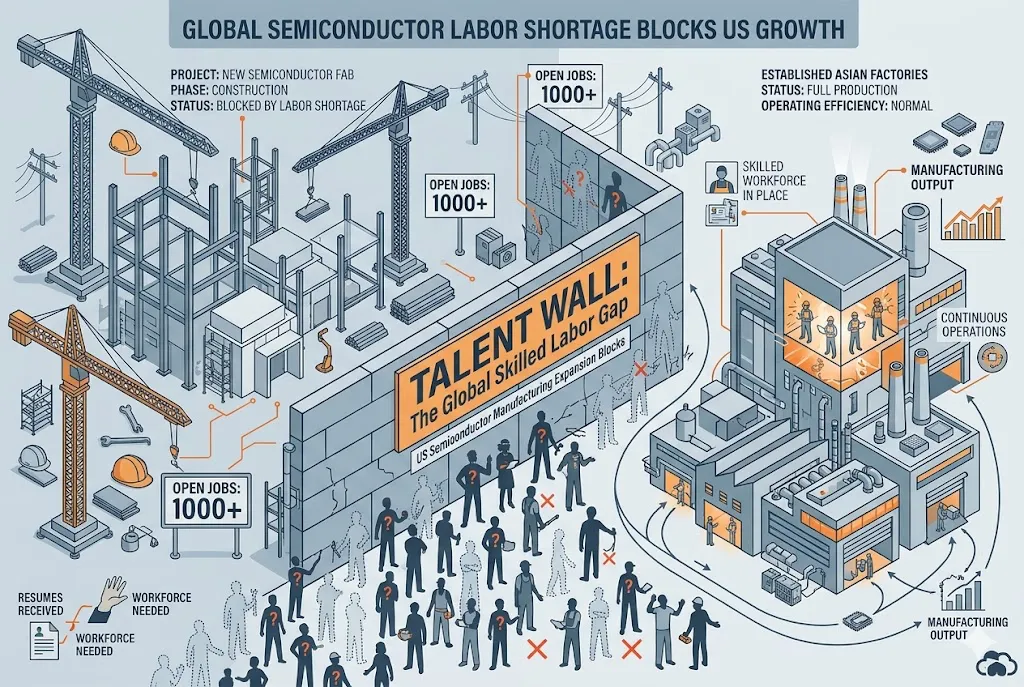
I see many clients worry about these delays. They read the news about new local factories. They expect quick results. Then they realize the chips are not coming soon. You cannot just buy machines and start making chips. You need people. Without the right people, the machines just sit there. Let us look closely at why this happens and what it means for your work.
Why do the US and Europe lack skilled semiconductor technicians4s](https://seminar.trendforce.com/Campaign/2017Analysis/US/Sponsors/)%%%FOOTNOTE_REF_5%%%?
Schools do not train enough chip workers. Young people choose software over hardware. This leaves factories without the hands they need to build and run the cleanrooms6.
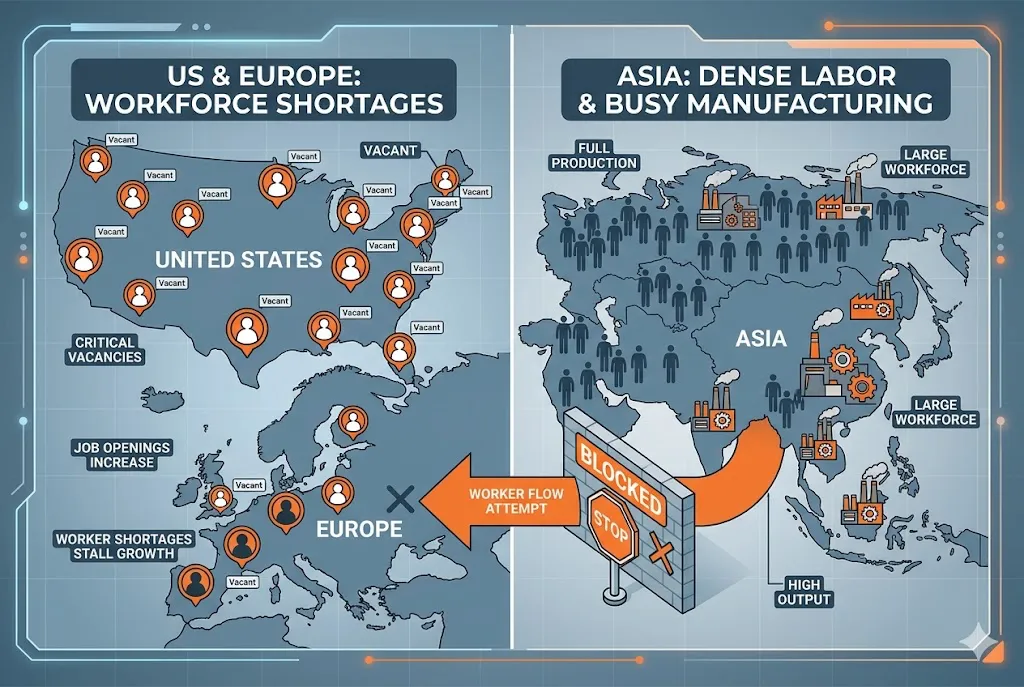
The US and Europe lack skilled technicians5 because manufacturing moved to Asia7 decades ago. Local training programs stopped growing. Now companies try to build new factories. But they cannot find workers with the specific skills needed to install complex chip-making tools and operate cleanrooms6 safely.
The Lost Decades of Manufacturing Training
I have talked to many factory managers. They all say the same thing. The knowledge gap is huge. For the last twenty years, the US and Europe sent chip manufacturing to Asia. So local schools stopped teaching advanced manufacturing skills8. Students wanted to make software apps. They did not want to wear bunny suits in a cleanroom. We lost a whole generation of hardware workers9. This created a giant hole in the labor market. Now the industry wants to bring manufacturing back. But the teachers and the training centers are gone.
Breaking Down the Skill Gap
We must understand what kind of talent is missing. It is not just engineers with advanced degrees. The biggest missing piece is the technicians5. These are the people who install pipes. They fix vacuum pumps. They calibrate lithography machines.
| Worker Type | Required Skills | Current Availability in US/EU | Impact on Factory |
|---|---|---|---|
| Construction Worker | Cleanroom building, special piping | Very Low | Slows down the physical building |
| Equipment Technician | Machine setup, daily repair | Low | Delays machine installation |
| Process Engineer | Yield improvement, testing | Medium | Lowers early production quality |
The table shows the real problem. You can hire a smart engineer to design a chip. But you cannot easily find fifty workers to install the machines that make the chip. The skills take years to learn. You cannot teach them in a short class. This broken training system is the main reason the talent wall3 exists today. You cannot fix it overnight.
How does the talent shortage delay factory construction cycles10?
You expect a new factory in two years. But the schedule keeps slipping. Missing workers mean machines wait in boxes. Your planned supply of parts gets pushed back.
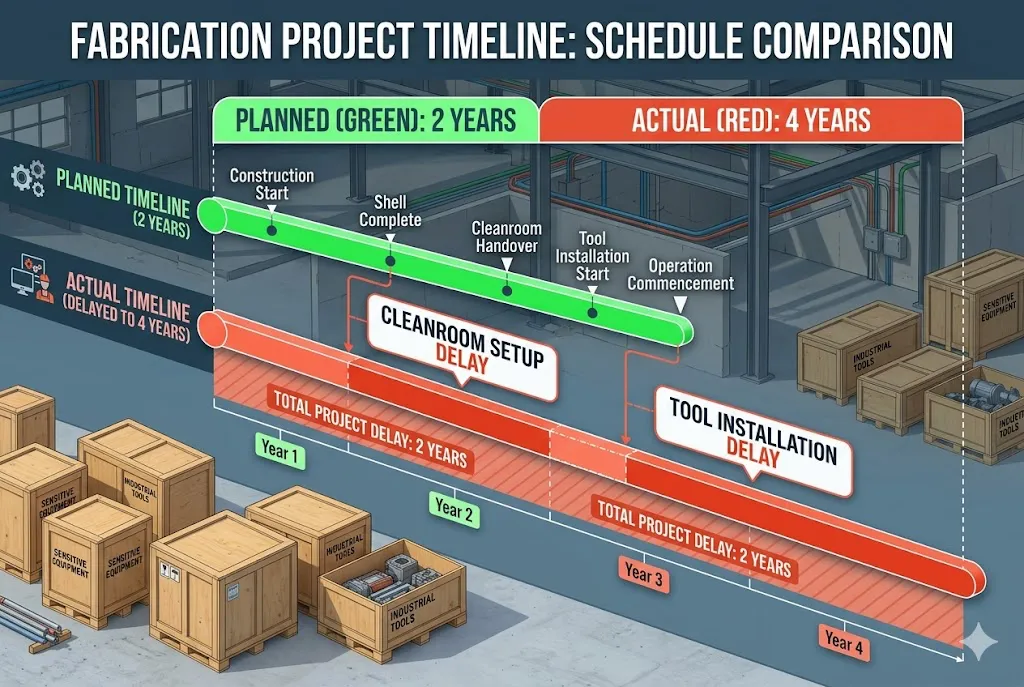
The talent shortage delays construction because building a chip plant requires exact precision. Companies cannot find workers who know how to build cleanrooms6 or install sensitive equipment. So they must wait or train new people from scratch. This turns a two-year building plan into a four-year struggle.
The Timeline of Building a Chip Factory
I remember a client who planned their new product launch based on a new factory opening. They had to delay their launch by a full year. Building a semiconductor fab is not like building a warehouse. It is the most complex building process in the world. Everything must be perfect. The air must be totally clean. The floors cannot vibrate. You need special workers to build these things. When you do not have these workers, every step stops.
Where the Delays Happen
Let us look at the steps. The delays happen at very specific points. A company buys a big machine. It needs hundreds of trucks to move it. It needs specially trained teams to put it together.
| Construction Phase | Normal Time | Delayed Time | Reason for Delay |
|---|---|---|---|
| Shell Construction | 12 months | 18 months | Lack of specialized welders and pipe fitters |
| Cleanroom Setup | 6 months | 12 months | Missing experts for air system testing |
| Tool Installation | 6 months | 15 months | No local technicians5 to calibrate machines |
If you add up these numbers, the delay is massive. The original manufacturer cannot just bring workers from Asia easily. Visa rules make it hard. So the factory shell sits empty. The machines wait in storage. The company loses money. And you do not get the chips you were promised. This is the direct result of the talent wall3. The building process simply freezes.
What does this delay mean for electronic component procurement11?
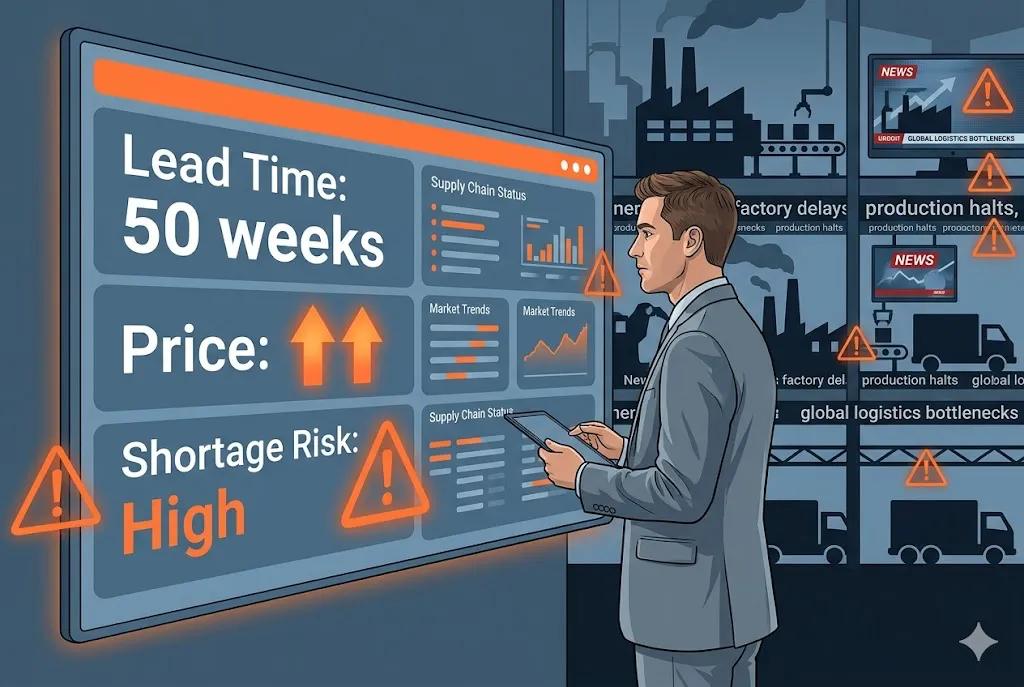
You need stable prices and steady supply. Factory delays ruin your forecasts. You face unexpected shortages and price jumps. This makes your procurement job much harder and riskier.
Factory delays mean you cannot rely on new local supply lines anytime soon. You will still depend on the existing global supply chain12n](https://www.trendforce.com/news/2022/04/21/opportunity-and-risk-for-taiwans-supply-chains/)%%%FOOTNOTE_REF_2%%%. This keeps the risk of shortages high. You might face longer lead times and higher prices for critical parts like MCUs and PMICs.
The False Hope of Quick Reshoring
Many hardware engineers and procurement managers thought reshoring13 would fix everything. They thought local factories would end supply chain2 shocks. I have to tell my clients the hard truth. Reshoring is a ten-year plan. It is not a two-year fix. You cannot base your current production plans on factories that do not exist yet. If you wait for local chips, your assembly lines will stop.
The Real Impact on Your Daily Work
Because the new factories are late, the old factories in Asia are still doing all the work. They are running at full capacity. If anything goes wrong there, you still feel the pain.
| Procurement Goal | Expected Reshoring Benefit | Reality Due to Delays |
|---|---|---|
| Shorter Lead Times | Parts arrive in weeks | Parts still take 20-50 weeks |
| Lower Shipping Costs | No ocean freight needed | High global shipping costs remain |
| Supply Security | Safe from global trade issues | Still exposed to global trade risks |
You have to manage these risks today. You cannot wait for the new factories to open. The talent wall3 means the promised safe supply chain2 is still years away. You must plan your component sourcing based on what exists right now. You need to secure your parts through reliable distributors. You cannot let factory delays stop your own production lines. You need original parts to keep your business alive.
How can we secure our supply chain2 during these delays?
You cannot control when the new factories will open. But you must keep your production running. Relying on promises will hurt your business. You need a real plan today.
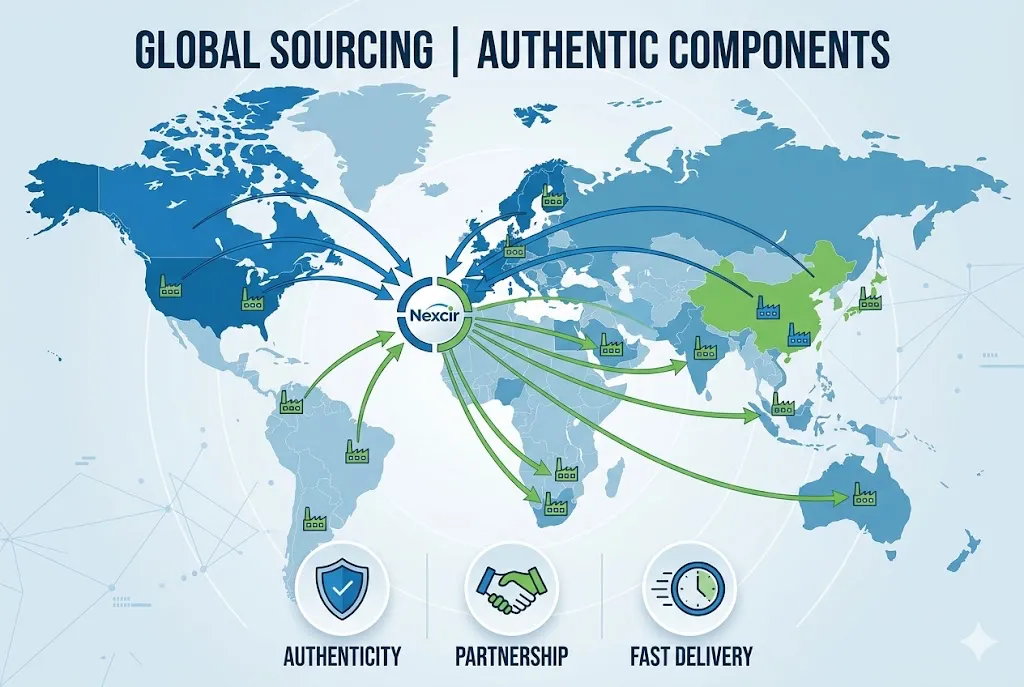
You can secure your supply chain2 by partnering with an experienced global distributor14. You need to look beyond local factories. You should use a global supply network. You must lock in long-term supply programs. You also need to find safe alternatives for critical components to avoid construction delays.
Finding Certainty in an Uncertain Market
At Nexcir15, we see this problem every day. We know the talent wall3 is real. We also know our customers need 100% original electronic components right now. I always tell my clients to stop waiting for the new local fabs. We need to act with the resources we have today. The market will stay unstable. But your supply chain2 does not have to be unstable. You can build safety into your process.
Actionable Steps for Procurement Managers
Our founding team has over twenty years of experience in the electronic components industry. We know how to navigate these long waiting periods. You must build a flexible sourcing strategy.
| Strategy | How It Helps | Nexcir15's Role |
|---|---|---|
| Global Sourcing | Bypasses local factory delays | We use proven channels in North America, Europe, and Asia. |
| Long-term Programs | Locks in price and supply | We offer stable pricing without market fluctuations. |
| Material Alternatives | Replaces hard-to-find parts | We provide insights on safe alternatives for old parts. |
You must ensure product authenticity. You must avoid counterfeit products16. When local supply is delayed, the gray market gets dangerous. Bad actors try to sell fake parts. We source only from authorized distributors and original manufacturers. This guarantees authenticity. You can lower procurement risks. You can maintain your production schedule stability. You just need the right partner to help you cross the talent wall3. We can help you build a smarter and more connected future.
Conclusion
The talent wall3 delays local chip factories1 and keeps supply risks high. You must secure your supply chain2 now with global, reliable partners to keep your production running smoothly.
Learn how the lack of skilled workers impacts the establishment and operation of local chip factories. ↩
Discover how the talent shortage creates bottlenecks and risks in the semiconductor supply chain. ↩
Understanding the 'talent wall' is crucial for grasping the challenges in semiconductor manufacturing and its impact on supply chains. ↩
Exploring the shortage of skilled technicians reveals the root causes of delays in chip manufacturing and factory construction. ↩
Technicians are vital for operations, and understanding their roles can help address the talent shortage. ↩
Cleanrooms are essential for chip production, and understanding their role highlights the need for skilled technicians. ↩
Explore the historical shift of manufacturing to Asia and its long-term effects on local skills and training. ↩
Understanding these skills is key to addressing the talent gap and improving local manufacturing capabilities. ↩
Learn about the decline in hardware workers and its impact on the semiconductor industry's growth. ↩
Learn how the lack of skilled workers extends the timeline for building semiconductor factories. ↩
Understand the impact of factory delays on procurement, including risks of shortages and price fluctuations. ↩
Despite local efforts, the global supply chain remains vital, and understanding its role is key for procurement. ↩
Reshoring aims to bring manufacturing back home, and understanding its challenges is crucial for future planning. ↩
Partnering with a global distributor can mitigate risks and ensure a steady supply of authentic components. ↩
Learn how Nexcir helps companies navigate supply chain challenges and ensure component authenticity. ↩
Avoiding counterfeit products is crucial for maintaining quality and reliability in semiconductor manufacturing. ↩