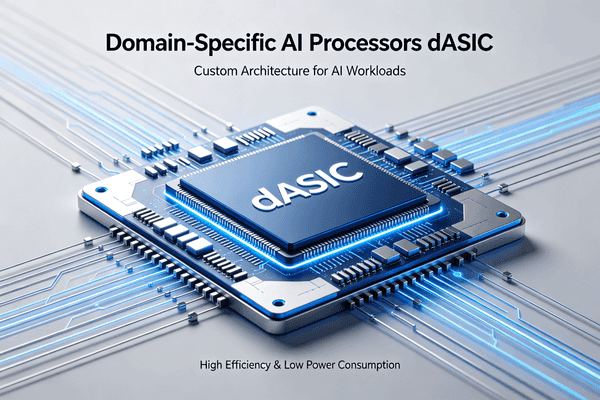
AI models grow fast. Standard chips struggle with high power costs. Domain-Specific AI Processors (dASIC)1 offer a targeted fix to run these heavy tasks smoothly.
Domain-Specific AI Processors (dASIC)1 are custom hardware chips2 built for specific AI tasks. They offer high speed and low power use for models like Transformer or Mamba3. These chips give hardware engineers and OEMs4 better performance than general-purpose processors for focused applications.
Do you worry about keeping up with AI hardware? Many hardware engineers face this exact problem today. I remember a recent project where standard chips just could not handle the data load. We had to find a better way. Let us look at how these custom chips change the game and why you need to care about them right now.
How Do Custom dASICs Support Transformer and Mamba Architectures?
Standard chips waste energy on complex AI math. This slows down your system. Custom dASICs solve this by matching the exact needs of Transformer and Mamba designs.
Custom dASICs physically mirror the math processes of specific AI models like Transformer or Mamba3. By stripping away unneeded functions, these chips process data faster and use less power. This makes them perfect for edge devices and large data centers5.
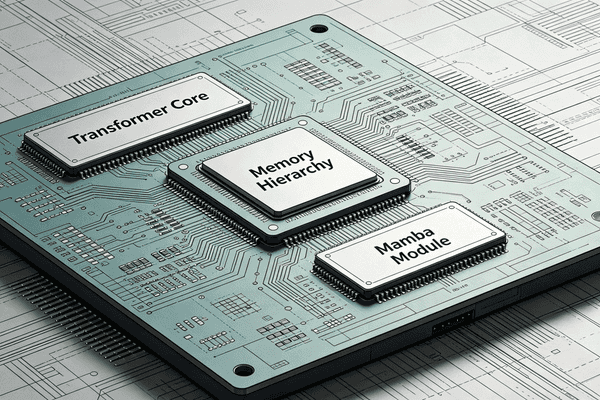
Let us break down why this matters for your procurement and design teams. My team and I see many clients ask for chips that can handle heavy AI workloads. They do not want to burn too much power. General-purpose chips try to do everything. This makes them good for basic tasks. But it makes them bad for specific AI math. Transformer models need massive parallel processing6 for attention mechanisms. Mamba models need fast sequence processing. A dASIC is built just for these jobs.
Understanding the Hardware Shift
You build products for IoT or automotive systems7. Your power is very limited. You cannot use a massive, hot chip in a small device. You need a chip that only does what the AI model needs. This is where dASICs win. They cut out the fat. As a distributor with over 20 years of experience, I always tell my clients to match the silicon to the software. You save money this way. You also make your device run cooler.
Comparing Chip Types
Here is a simple look at how dASICs compare to standard options:
| Feature | General Purpose (CPU/GPU) | Domain-Specific (dASIC) |
|---|---|---|
| Power Use | High | Low |
| Speed for AI | Medium | Very High |
| Flexibility | High | Low (Task Specific) |
| Cost at Scale | Medium | Low |
You want to optimize your supply chain8. You want to reduce costs. Picking the right architecture is step one. We help you source these exact original components. We keep your production safe. We keep your production steady.
Why Do Fast AI Model Changes Threaten dASIC Development?
AI software changes9 every month. Building a custom chip takes years. Your expensive dASIC might be useless before it even hits the factory floor.
The biggest risk for dASICs is the speed of AI software updates. It takes 18 to 24 months to design and make a custom chip. If the AI model changes during this time, the new chip becomes outdated and wastes millions of dollars in investment.
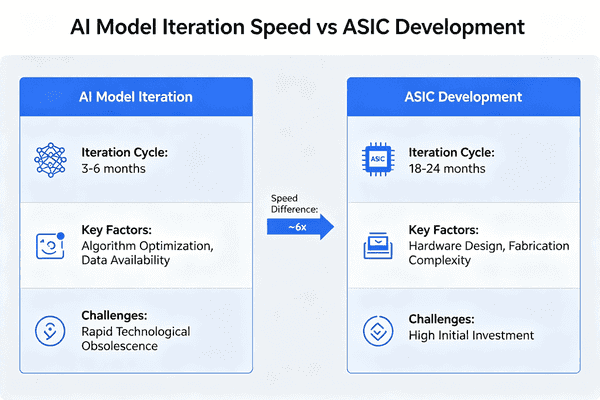
I hear this fear from OEM procurement managers all the time. You want the speed of a dASIC. But you fear the risk. AI moves fast. Yesterday, everyone used CNNs. Today, everyone uses Transformers. Tomorrow, Mamba might rule the market.
The Timing Trap
Designing a chip is hard work. You design the logic. You test it. You send it to the fab. This takes up to two years. Software engineers can write a new AI model in two weeks. This creates a huge gap. You lock your hardware to a specific software. You take a big gamble. I once worked with a client who bought thousands of custom chips for a smart camera. They waited months for delivery. By the time the chips arrived, their software team had changed the core algorithm. The chips were useless. They lost a lot of money.
Managing the Risk
You must plan your supply chain carefully to avoid this trap. You need a reliable partner like Nexcir10. We help you find the right balance between custom and standard parts.
| Risk Factor | Impact on Project | How to Manage It |
|---|---|---|
| Time to Market | High | Use proven, stable AI models |
| Sunk Costs | High | Source reliable, authentic parts |
| Model Changes | Very High | Build fallback software options |
Our global supply network helps you find the right parts quickly. You can test and deploy faster. We make sure you get authentic parts. You do not add counterfeit risks to your design risks. You keep your project on track.
Will Reconfigurable Chips Rule the dASIC Market by 2026?
Fixed chips risk early death. Total flexibility wastes power. Reconfigurable chips offer the perfect middle ground to keep your hardware alive and efficient.
By 2026, reconfigurability will be the main selling point for dASICs. These chips will allow hardware engineers to adjust internal pathways after manufacturing. This lets the chip adapt to new AI models while keeping the low power and high speed of a custom design.
The future belongs to hardware that can change its mind. I look at the trends for 2026. Reconfigurability is everywhere. Hardware engineers need a safety net. They need chips that are built for AI. But they also need chips that can learn new tricks.
The Best of Both Worlds
A reconfigurable dASIC gives you power and safety. It has fixed blocks for basic math11. All AI uses this basic math. But it also has flexible blocks. You can program these flexible blocks later. The Transformer model gets an update. You just update the chip firmware. You do not need to buy new hardware. This is great news for procurement managers. It extends the life of your product. It keeps your supply chain stable. You save a lot of money over time.
Why This Matters for Your Supply Chain
At Nexcir10, we always look ahead. We want to supply parts that give you long-term value.
| Chip Feature | Benefit for Engineers | Benefit for Procurement |
|---|---|---|
| Soft Logic Blocks | Easy to update models | Longer product life cycle |
| Hard Math Blocks | Fast data processing | Better market value |
| Shared Memory | Less power needed | Lower cooling costs |
You buy from our authorized network. You get parts that last. You avoid the pain of finding new parts every year. We help you secure stable pricing for these advanced chips. This makes your production schedule safe. This makes your job easy to manage.
Conclusion
Domain-Specific AI Processors bring huge speed to AI tasks. By choosing reconfigurable designs, you reduce risk, save money, and keep your products ready for the future.
Understanding dASICs can help you leverage their high speed and low power use for specific AI tasks, enhancing performance over general-purpose processors. ↩
Custom hardware chips are tailored for specific AI tasks, offering better performance and efficiency, crucial for handling complex AI models like Transformer or Mamba. ↩
Learning about Transformer and Mamba models can help you understand the specific AI tasks that custom dASICs are optimized for, ensuring better performance. ↩
Exploring how dASICs benefit hardware engineers and OEMs can provide insights into improving AI task performance and efficiency in product design. ↩
Discovering why dASICs are ideal for edge devices and data centers can help optimize power use and processing speed in various applications. ↩
Understanding the role of massive parallel processing in AI can highlight the advantages of using dASICs for models requiring high-speed data handling. ↩
Exploring the benefits of dASICs in IoT and automotive systems can reveal how they enhance performance while minimizing power consumption. ↩
Optimizing your supply chain with the right chip architecture can significantly reduce costs and improve production efficiency. ↩
Understanding the impact of AI software changes on dASIC development can help manage risks and ensure timely product updates. ↩
Nexcir provides reliable sourcing for AI hardware, ensuring authentic parts and stable pricing, crucial for maintaining a steady production schedule. ↩
Fixed blocks for basic math in reconfigurable chips ensure fast data processing, crucial for maintaining high performance in AI tasks. ↩