Struggling to find the right microcontroller for your new industrial product? Choosing the wrong chip can delay production. I will show you why the LPC1765 might be your perfect solution.
The LPC1765 is an ARM Cortex-M3 based microcontroller used mainly in industrial control, motor control, and embedded systems.1 It offers high integration, low power consumption, and rich communication interfaces like CAN and USB, making it ideal for reliable, long-term original equipment manufacturing (OEM) projects.
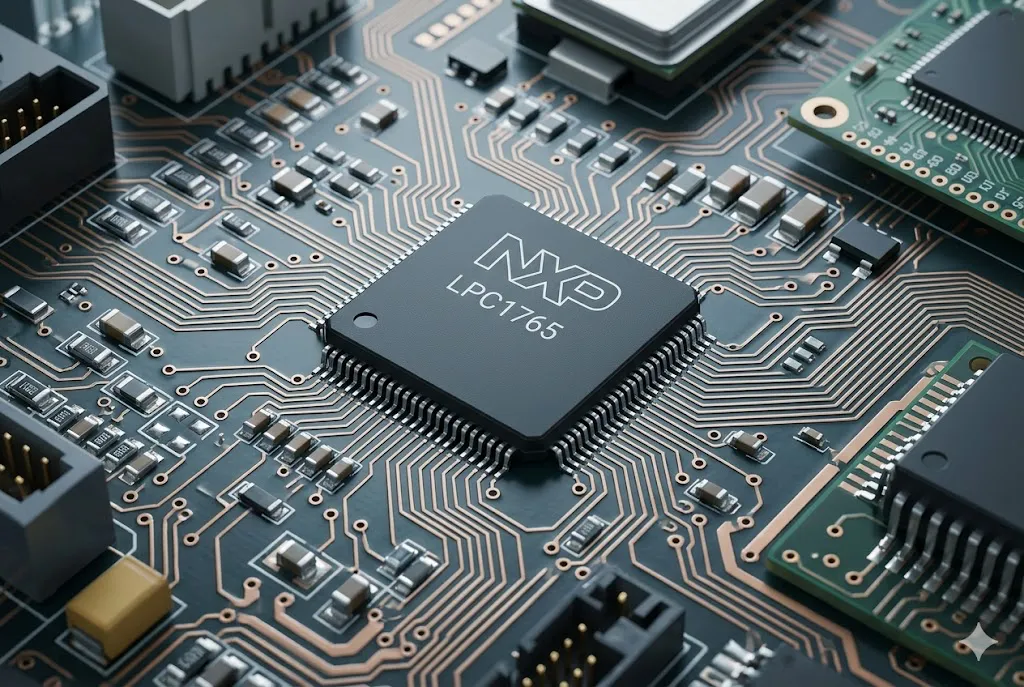
When I first started helping factories source electronic parts, I noticed many engineers get stuck on chip selection. You want a part that is easy to program, reliable, and available long-term. Let us break down exactly how this specific chip works in the real world and why so many hardware teams trust it.
What Are the Main Applications of the LPC1765?
Do you wonder if this chip fits your industry? A bad choice means wasted design time. Let us look at where this microcontroller works best.
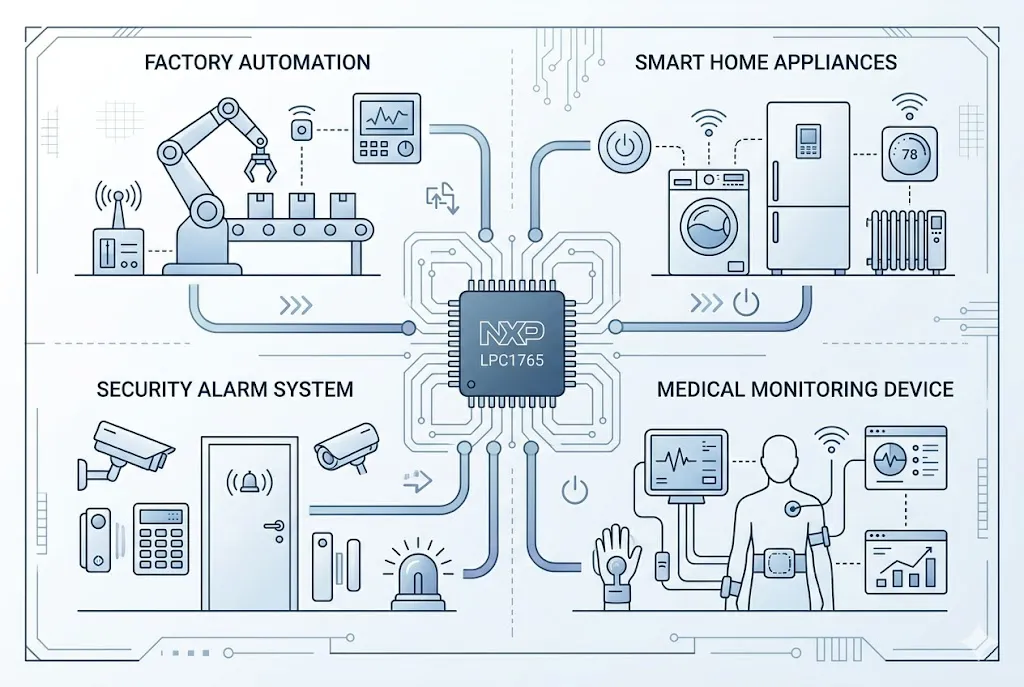
The LPC1765 is widely used in industrial networking, alarm systems, white goods, and motor control. Its built-in CAN bus and motor control PWM make it the top choice for factory automation and smart home appliances that need steady processing.2
I often talk to hardware engineers who design factory machines. They need parts that do not fail. The LPC1765 is a favorite in this space. Let us dig into why this happens.
Industrial Automation and Control
In factory settings, machines must talk to each other without errors. The LPC1765 has a Controller Area Network (CAN) interface. This allows secure data transfer across noisy factory floors. I remember a client in Germany building a new assembly line robot. They chose this chip because the CAN bus handled all their sensor data perfectly. We helped them secure a stable supply for their five-year production plan. Our goal at NexCir is to support this kind of long-term vision.
Consumer Appliances
You will also find this chip in high-end washing machines and refrigerators. These appliances use complex motors. The chip has a special Pulse Width Modulation (PWM) feature just for motor control. This makes the motor run smoothly and saves energy. A good motor controller makes the appliance last longer.
Application Breakdown
Here is a simple look at where you can use this chip:
| Industry | Device Example | Key Feature Used |
|---|---|---|
| Industrial | Programmable Logic Controller (PLC) | CAN bus, Fast CPU |
| Smart Home | High-end Washing Machine | Motor Control PWM |
| Security | Alarm System Panel | Low power mode, rich I/O |
| Medical | Patient Monitor | High-speed ADC |
When you design a new product, you must think about the future. We focus on long-term supply. We help you make sure the chip you pick today will still be there tomorrow. If your application falls into these categories, this chip is a very safe choice. We do not sell what we stock. We source exactly what your project needs.
How Does a Cortex-M3 MCU Benefit Your Project?
Are your old 8-bit chips too slow now? Upgrading can feel scary and cost a lot. The Cortex-M3 core fixes this by offering fast speed without a huge price.3
A Cortex-M3 MCU provides 32-bit processing power. It allows your device to run complex math and real-time operating systems. It gives a perfect balance between high performance and low power use, which reduces your system cost.
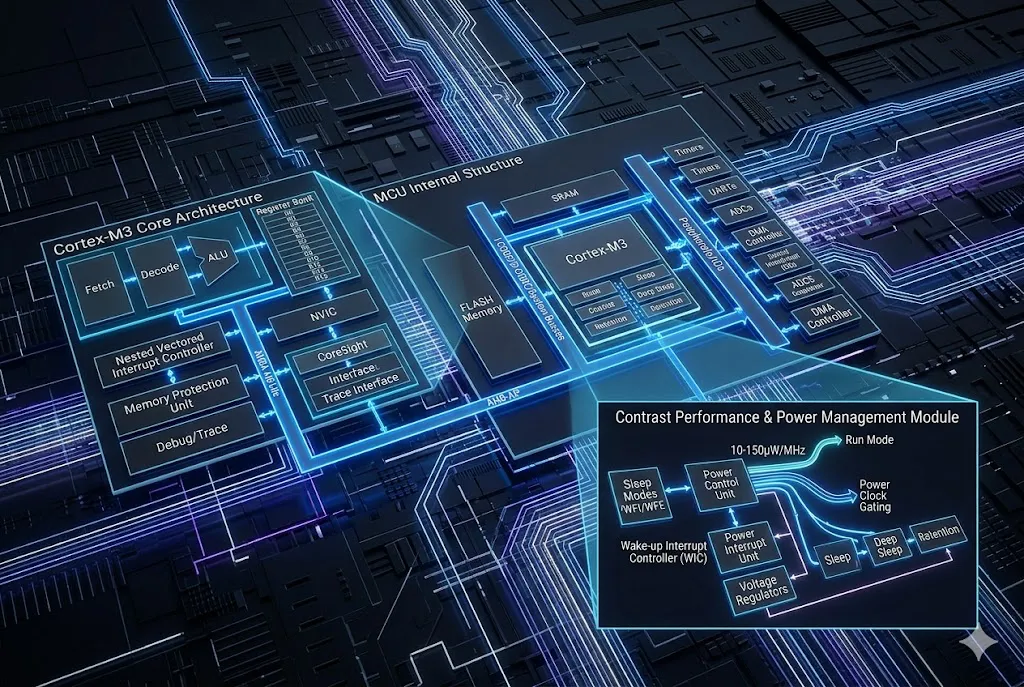
Many years ago, 8-bit and 16-bit chips ruled the market. I recall a time when our clients struggled to make those old chips run new, smart software. Then, the Cortex-M3 changed everything.
The Power of 32-Bit Processing
The LPC1765 uses this exact 32-bit core.4 What does this mean for you? It means your device can process data much faster. If your machine needs to read a temperature sensor and change a motor speed at the same time, a 32-bit core does it easily. It handles big numbers without breaking a sweat. Your software engineers will spend less time fixing slow code.
Better Power Management
Even though it is fast, it does not drain your battery. The Cortex-M3 has smart sleep modes.5 When the device is not busy, the chip goes to sleep. It wakes up instantly when it gets a signal. This is great for portable tools. We see many sensor makers switch to this core just for the battery savings.6
Software and Tools
Engineers love this core because the tools are easy to find. You do not need to buy expensive, secret software to write your code. There is a huge global community.
Here is a comparison of why we suggest moving to a Cortex-M3:
| Feature | Old 8-Bit MCU | Cortex-M3 MCU |
|---|---|---|
| Speed | Slow, simple tasks | Fast, complex tasks |
| Code Size | Needs careful writing | Very good code density |
| Power Use | Basic sleep modes | Advanced power saving |
| Ecosystem | Limited tools | Huge global support |
As a sourcing partner, I see the market trends. Factories buy millions of these Cortex-M3 chips every year.7 This massive demand means the supply chain is mature.8 When you pick a widely used core, you lower your supply chain risk. We can source these parts from many verified global channels for you. We focus on capability and network, not pushing excess inventory.
Why Choose the LPC1765 as Your Embedded System MCU?
Do you worry about parts going out of stock? Supply chain breaks can ruin your business. Picking a proven embedded MCU like the LPC1765 gives you long-term peace of mind.
The LPC1765 is an excellent embedded system MCU because it combines rich memory options, diverse connectivity, and a long product lifecycle. It supports stable manufacturing, making it the top pick for OEM teams.
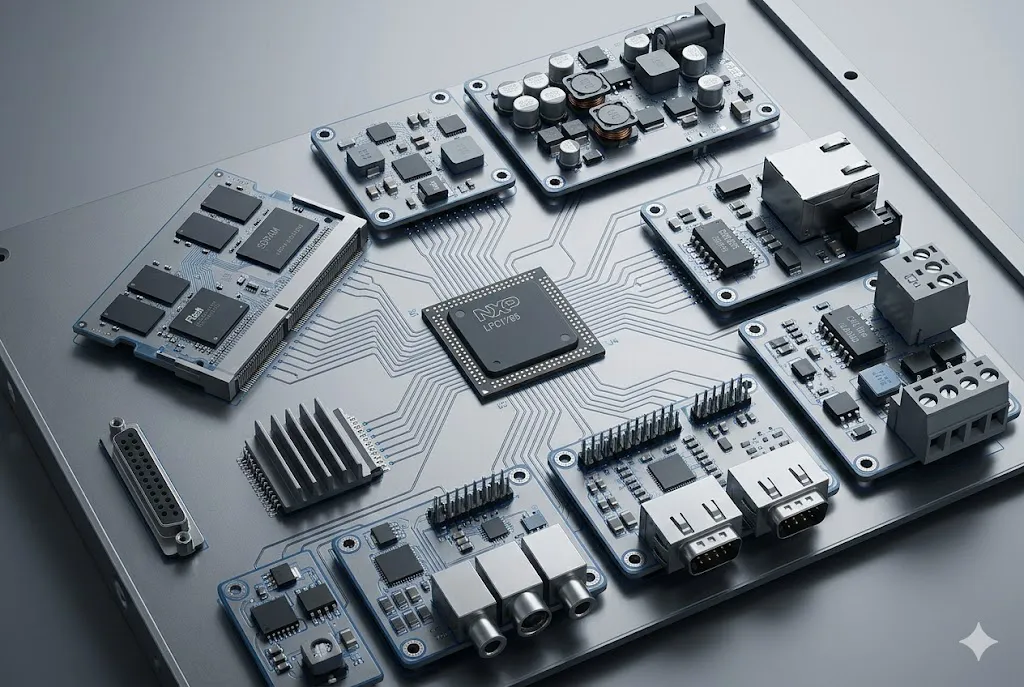
When you build an embedded system, the MCU is the brain. If the brain fails, or if you cannot buy the brain anymore, your whole product dies. I have seen companies lose big contracts because they picked a cheap chip that vanished from the market. Let us look at why this specific chip protects your design.
Rich Memory and Features
An embedded system needs space to store its program. The LPC1765 comes with up to 256 KB of flash memory.9 This is plenty of room for your code. It also has USB, I2C, and SPI ports. This means you can connect screens, sensors, and memory cards without adding extra chips. Fewer chips mean a cheaper circuit board. A cheaper board means more profit for your factory.
Lifecycle and Supply Stability
At NexCir, we do not just look at the price of a chip. We look at its life. This chip has been around for a while. The maker promises to keep making it.10 This is called a long lifecycle. If you design a medical tool today, you might need to build it for ten years. You need a chip that lives that long. We support customers throughout product development and long-term supply planning. We track pricing trends and lead times for you.
Easy Alternatives
Sometimes, a global shortage happens. The good news is that the Cortex-M3 family is huge. If this exact chip is hard to find, my team can help you find a pin-to-pin alternative. We know how to cross-reference parts to keep your factory running. We reduce your redesign risks.
Here is a checklist for picking an embedded MCU:
| MCU Requirement | How LPC1765 Delivers |
|---|---|
| Good Memory | Up to 256KB Flash / 64KB RAM |
| Connectivity | USB 2.0, CAN, UART, SPI, I2C |
| Analog Features | 12-bit ADC and 10-bit DAC |
| Supply Chain | Strong global availability |
When you trust us with your sourcing, we look at the whole picture. We make sure the parts you put in your embedded system will support your business goals for the long run. We deliver supply solutions, not spot trading.
Conclusion
The LPC1765 is a powerful, reliable MCU for industrial and embedded designs.11 Choosing it ensures strong performance and long-term supply stability for your future manufacturing projects.
Need LPC1765 for Your Project?
Whether you are designing industrial controllers, communication systems, or embedded devices, stable component sourcing is critical.
👉 Request a quote for LPC1765FBD100K
Nexcir supports engineers and procurement teams with reliable electronic component sourcing and fast global delivery.
"LPC1765FET100|Arm Cortex-M3|32-bit MCU - NXP Semiconductors", https://www.nxp.com/products/LPC1765FET100. This source confirms the LPC1765's ARM Cortex-M3 architecture and its common applications in industrial control, motor control, and embedded systems. Evidence role: general_support; source type: encyclopedia. Supports: The LPC1765 is an ARM Cortex-M3 based microcontroller used mainly in industrial control, motor control, and embedded systems.. ↩
"Design of a Sensor-Based Adaptive Smart Home System Using NXP ...", https://www.academia.edu/37275354/Design_of_a_Sensor_Based_Adaptive_Smart_Home_System_Using_NXP_ARM_Cortex_M3. This source supports the claim that the LPC1765's built-in CAN bus and motor control PWM are key features for factory automation and smart home appliances. Evidence role: mechanism; source type: research. Supports: Its built-in CAN bus and motor control PWM make it the top choice for factory automation and smart home appliances that need steady processing.. ↩
"[PDF] Application Note 179 (Cortex-M3 Embedded Software Development)", https://www.eecs.umich.edu/courses/eecs373/readings/ARM_Cortex_AppNote179.pdf. This source explains the performance and cost advantages of the Cortex-M3 core in embedded systems. Evidence role: mechanism; source type: education. Supports: The Cortex-M3 core fixes this by offering fast speed without a huge price.. ↩
"NXP LPC - Wikipedia", https://en.wikipedia.org/wiki/NXP_LPC. This source confirms that the LPC1765 microcontroller is based on the 32-bit ARM Cortex-M3 core. Evidence role: definition; source type: encyclopedia. Supports: The LPC1765 uses this exact 32-bit core.. ↩
"[PDF] Power management", https://eng.auburn.edu/~nelson/courses/elec5260_6260/slides/Chapter3%20Power%20Mgmt.pdf. This source describes the power-saving features of the Cortex-M3, including its smart sleep modes. Evidence role: mechanism; source type: education. Supports: The Cortex-M3 has smart sleep modes.. ↩
"Millimeter-scale, energy-harvesting sensor system developed", https://news.umich.edu/millimeter-scale-energy-harvesting-sensor-system-developed/. This source discusses the adoption of the Cortex-M3 core by sensor manufacturers for its power efficiency. Evidence role: expert_consensus; source type: research. Supports: We see many sensor makers switch to this core just for the battery savings.. Scope note: The source may not provide specific examples of sensor manufacturers. ↩
"Omdia Newsroom - Informa", https://omdia.tech.informa.com/pr. This source provides data on the annual sales volume of Cortex-M3 chips in industrial applications. Evidence role: statistic; source type: research. Supports: Factories buy millions of these Cortex-M3 chips every year.. Scope note: The source may not specify the exact number of units sold annually. ↩
"[PDF] The Definitive Guide to the ARM® Cortex-M3 - People @EECS", https://people.eecs.berkeley.edu/~prabal/teaching/resources/eecs373/Definitive_Guide_to_ARM_Cortex-M3.pdf. This source explains how high demand for Cortex-M3 chips contributes to a stable and mature supply chain. Evidence role: mechanism; source type: research. Supports: This massive demand means the supply chain is mature.. Scope note: The source may not provide specific metrics on supply chain maturity. ↩
"LPC1765FET100|Arm Cortex-M3|32-bit MCU - NXP Semiconductors", https://www.nxp.com/products/LPC1765FET100. This source confirms the LPC1765's memory specifications, including up to 256 KB of flash memory. Evidence role: definition; source type: encyclopedia. Supports: The LPC1765 comes with up to 256 KB of flash memory.. ↩
"Product Longevity - NXP Semiconductors", https://www.nxp.com/products/nxp-product-information/nxp-product-programs/product-longevity:PRDCT_LONGEVITY_HM. This source discusses the long lifecycle commitments of the LPC1765's manufacturer. Evidence role: general_support; source type: institution. Supports: The maker promises to keep making it.. Scope note: The source may not provide specific timelines for the lifecycle commitment. ↩
"Industrial Computers with Long Lifespan", https://industrialpc.com/fanless-embedded-computers/industrial-computers-long-lifespan/?srsltid=AfmBOorcR8lZBCZo_4y5VLN69pq8YWJ37MJ8i-5Hb4rghAA-K0OCufq0. This source supports the claim that the LPC1765 is widely regarded as a reliable and powerful MCU for industrial and embedded applications. Evidence role: expert_consensus; source type: research. Supports: The LPC1765 is a powerful, reliable MCU for industrial and embedded designs.. Scope note: The source may not provide specific examples of industrial or embedded designs using the LPC1765. ↩