You need 800V systems for fast charging. But SiC parts are hard to find. This delays your production. Here is how you can understand and solve this shortage.
Silicon Carbide (SiC) faces a shortage under the 800V architecture1 because high-voltage fast charging demands SiC MOSFETs2 over traditional IGBTs. Meanwhile, low substrate manufacturing yields3 limit global supply. Automakers are now buying directly from fabs, leaving fewer components for other buyers in the open market.
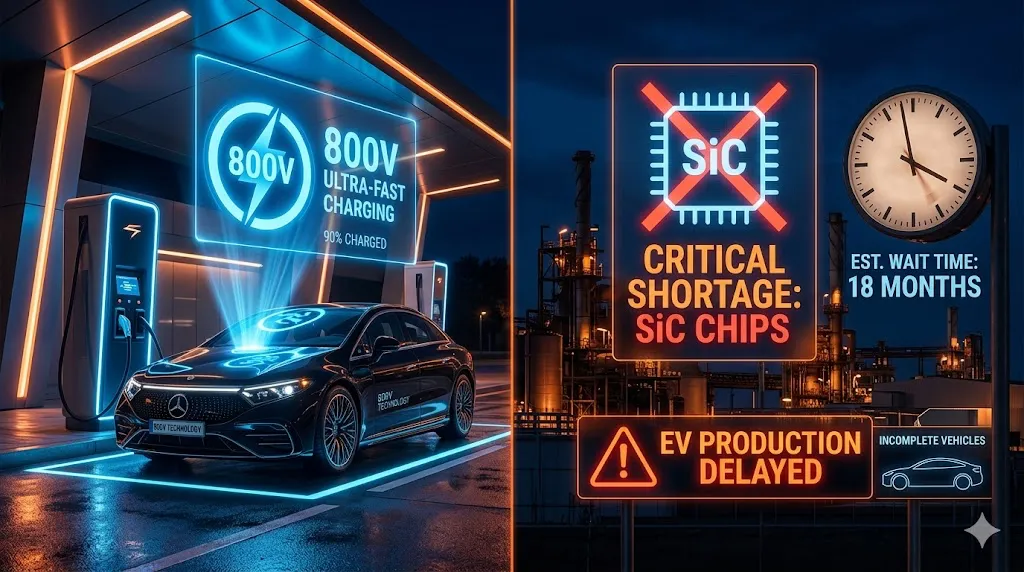
I remember when a client called me last month. They were in a panic. Their new EV production line was about to stop. They could not find enough SiC modules. This is a common story today. Let us look at the real reasons behind this problem. You will see what you can do about it.
Why Are SiC MOSFETs2 Replacing Traditional IGBTs in Fast Charging?
Heat and power loss ruin your EV charging speed. Old IGBT chips cannot handle 800V heat well. SiC MOSFETs2 fix this by running cooler and faster.
SiC MOSFETs2 replace traditional IGBTs in fast charging because they handle high voltages up to 800V with much less power loss. They offer better thermal conductivity4 and faster switching speeds. This makes EV batteries charge faster and extends the driving range significantly compared to older silicon chips.
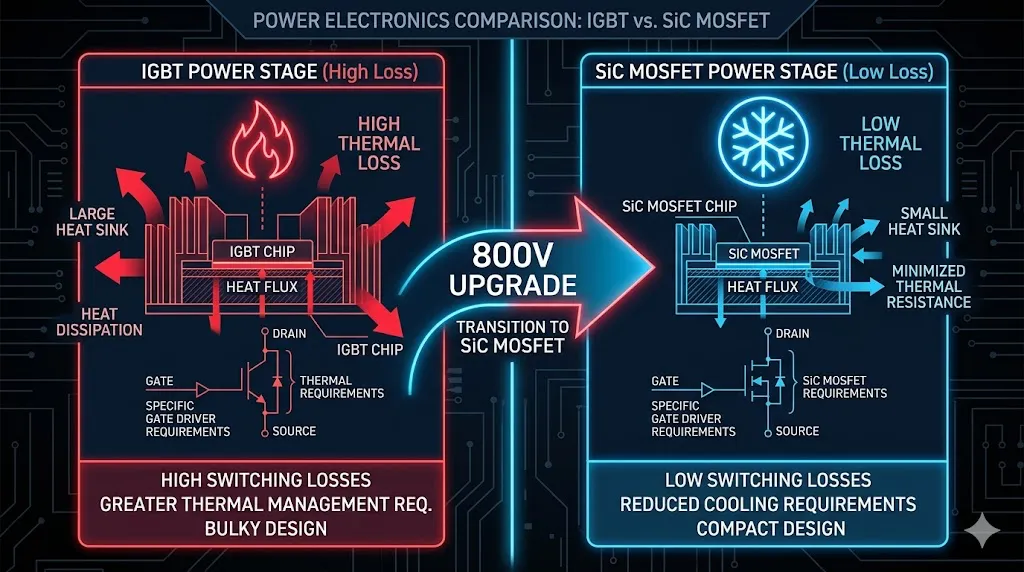
Let us break down the shift from IGBT to SiC. The industry moved from 400V to 800V. This changed everything. I saw this shift first-hand. A few years ago, everyone used IGBTs. Now, no one wants them for high-end electric vehicles. The shift from 400V to 800V is not just a small update. It is a total change in power management.
The Problem with Silicon IGBTs
Silicon IGBTs work fine at lower voltages. But they lose too much energy at 800V. They get too hot. You need bigger cooling systems. This adds extra weight to the car.
The Advantage of Silicon Carbide
SiC is a wide-bandgap material5. Electrons move differently inside this chip. It can handle high heat easily. It can switch on and off very fast. Fast switching means you lose less energy. When you use SiC, you get much better thermal control.
Direct Comparison
Here is a simple look at the two options. You will see why engineers choose SiC over IGBT for 800V systems:
| Feature | Traditional Silicon IGBT | Silicon Carbide (SiC) MOSFET |
|---|---|---|
| Voltage Handling | Best for 400V | Perfect for 800V and above |
| Switching Speed | Slow | Very Fast |
| Power Loss | High at 800V | Low at 800V |
| Cooling Need | High (needs big heat sinks) | Low (can use smaller parts) |
| Total Cost | Cheaper chip | Expensive chip, but saves system cost |
SiC saves space and weight. The car can drive further on a single charge. This is why every car maker wants them now. The demand is huge.
Why Is Substrate Yield Still the Biggest Bottleneck for SiC Production?
You order SiC chips, but factories say wait 50 weeks. Growing SiC crystals is very hard and slow. This poor yield keeps prices high and supply low.
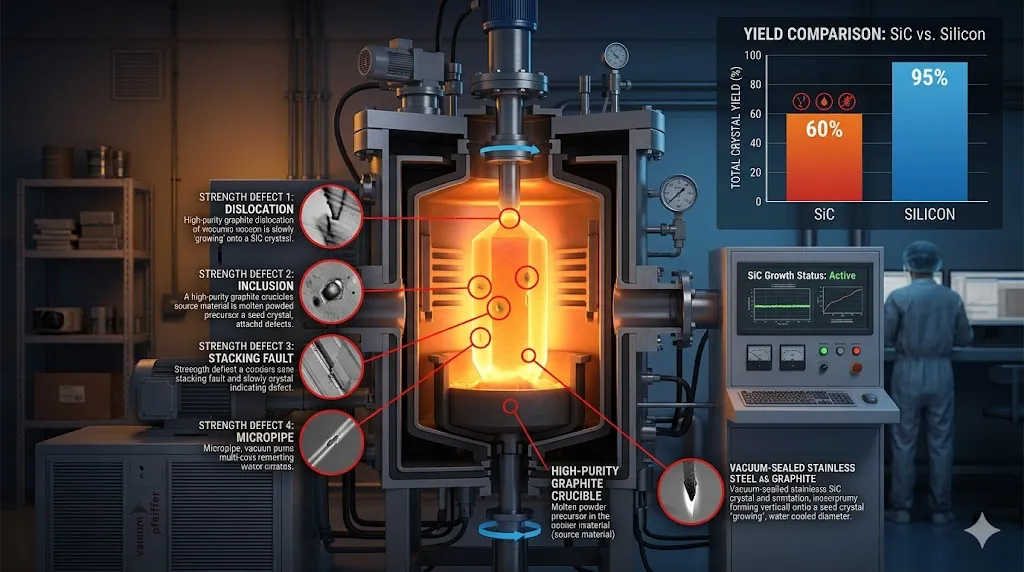
Substrate yield is the biggest bottleneck for SiC production because growing Silicon Carbide crystals requires extreme temperatures and takes weeks. The process often creates defects. These defects ruin the wafers. Low yields mean factories produce fewer usable chips, causing severe delays and high costs in the supply chain.
I visited a chip factory a long time ago. Making normal silicon is fast. You melt it. You pull it. You get a big crystal in a few days. SiC is a completely different story.
The Hard Process of Growing SiC
You cannot just melt Silicon Carbide. It turns into gas. You have to use a special vapor method. The temperature must be over 2000 degrees Celsius. You must hold this heat for weeks. The crystal grows very slowly. It only grows a few millimeters each day. This slow process is why factories cannot build more quickly. They need huge buildings full of special ovens. This takes years to build.
Why Defects Happen
The process takes a long time. Things go wrong often. Small mistakes in the heat or pressure cause defects. We call these "micropipes" or "dislocations." The chip will not work if a defect is in the crystal.
Yield Impact on Supply
Let us look at how this affects the final numbers:
| Production Step | Normal Silicon | Silicon Carbide (SiC) | Impact on Supply |
|---|---|---|---|
| Crystal Growth Time | 2 to 3 days | 2 to 3 weeks | Very slow output |
| Growth Temperature | ~1500°C | >2000°C | High energy cost |
| Wafer Yield Rate | >95% | 50% to 70% | Many wasted materials |
| Cutting Difficulty | Easy | Very hard | More broken wafers |
The yield is often only 60%. Factories throw away almost half of their work. This is the real reason you cannot find enough parts.
How Does Vertical Integration Solve the SiC Supply Chain Pain Points?
Relying on open markets for SiC is risky. You might face sudden price jumps or empty shelves. Automakers are buying fabs directly to guarantee their own supply.
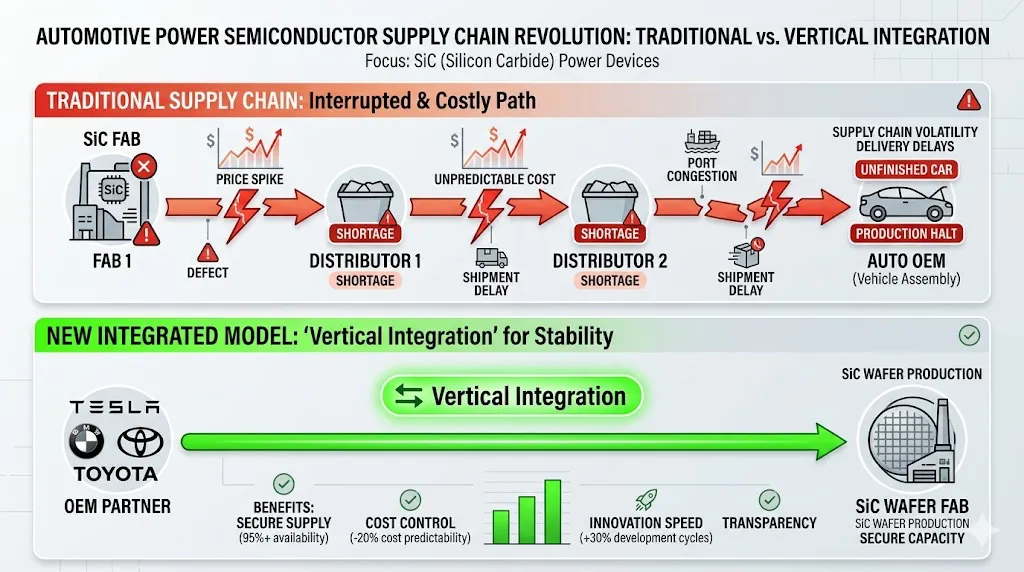
Vertical integration6 solves SiC supply chain pain points by giving automakers direct control over production. By investing in or buying wafer fabs, car companies secure a steady supply of SiC chips. This bypasses the open market, protects them from shortages, and locks in stable prices for their production lines.
A few years ago, car makers just bought parts from big distributors. They did not care about the manufacturing process. Now, the game has changed. I see major auto brands spending billions to buy chip factories.
The Shift to Direct Control
Car makers realized a hard truth. They cannot build 800V EVs without SiC. The car factory stops if the chip factory stops. So, they started vertical integration. This means they own the whole process. They buy the raw materials. They own the machines to grow the crystals. This trend will continue to grow. Big brands have the cash to do this. They want zero risk in their supply chain.
The Impact on the Open Market
This is good for the big car makers. But it is very bad for everyone else. A car brand buys the factory's whole output. There is nothing left for smaller companies.
Market Structure Before and After
Here is how vertical integration changes the supply chain:
| Supply Model | Who Controls the Chips? | Risk of Shortage | Impact on Pricing |
|---|---|---|---|
| Traditional (Open Market) | Fab -> Distributor -> OEM | High | Prices go up and down |
| Vertical Integration | OEM owns the Fab | Low for the OEM | Stable for the OEM |
You cannot buy a factory if you are a smaller OEM or a hardware engineer. You have to find another way. You must rely on trusted partners. These partners must have deep roots in the global supply network.
How Can Procurement Managers Secure SiC Components During This Global Shortage?
Fake parts and long delays ruin your projects. You need SiC chips now, but the market is dry. You must change your buying strategy to survive this shortage.
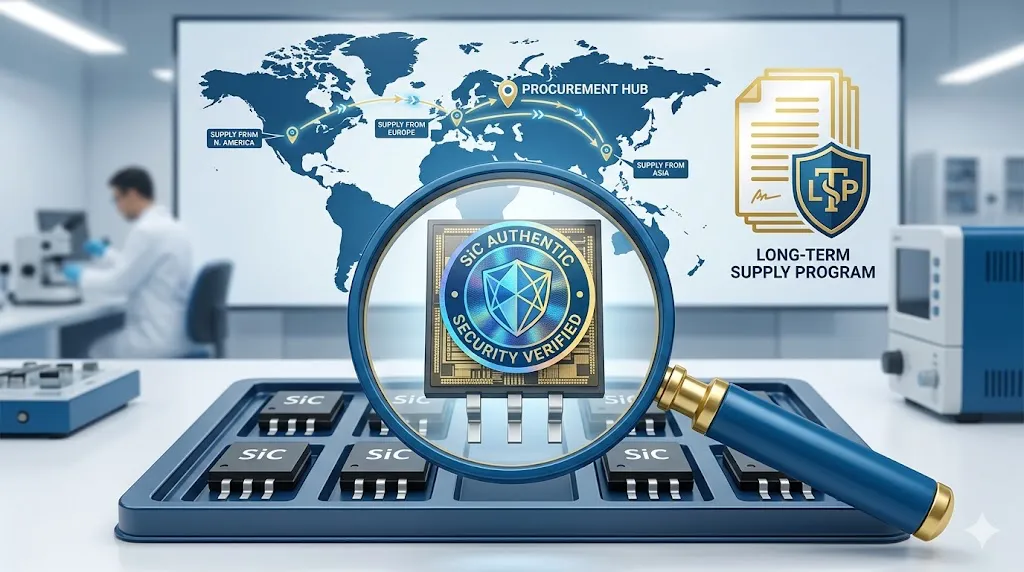
Procurement managers can secure SiC components by partnering with specialized, reliable global distributors7. You should avoid open market risks by using suppliers who only source from authorized channels. Planning long-term supply programs8 and finding verified material alternatives will keep your production lines running smoothly during shortages.
I talk to procurement managers every day. They all have the same pain points. They need 100% original parts. They need stable prices. They are very worried about fake chips. Fake parts flood the market when supply gets tight.
The Danger of Counterfeits
A fake SiC MOSFET9 will fail at 800V. It might even catch fire. You cannot take this risk. You must ensure full traceability10. You must know exactly where the chip came from.
Building a Resilient Supply Chain
You cannot wait for the shortage to end. You must act now. We use our 20 years of experience at Nexcir11 to help clients. We use our global network across North America, Europe, and Asia. We find exactly what you need. We always tell our clients to look ahead. Do not wait until your stock is at zero. A good partner will help you see the market trends early.
Actionable Steps for Buyers
Here is a simple guide to protect your supply chain:
| Strategy | Action to Take | Benefit to Your Company |
|---|---|---|
| Verify Channels | Only buy from trusted distributors | Zero risk of fake parts |
| Global Sourcing | Look beyond your local market | Find better prices and stock |
| Alternative Parts | Ask engineers to approve other brands | More options when stock is zero |
| Long-Term Plans | Sign supply programs early | Lock in prices and delivery dates |
You can avoid the panic by using these steps. You can keep your costs down. You can make sure your production never stops.
Conclusion
The 800V shift makes SiC essential, but low yields cause shortages. Automakers are buying fabs. To survive, you must partner with trusted distributors for authentic, stable component supply.
Understanding the 800V architecture is crucial for grasping why SiC MOSFETs are preferred over IGBTs in fast charging applications. ↩
SiC MOSFETs offer better thermal conductivity and faster switching speeds, making them ideal for high-voltage applications like EV fast charging. ↩
Exploring the reasons behind low substrate yields can help in understanding the supply chain challenges and high costs associated with SiC components. ↩
Better thermal conductivity in SiC MOSFETs allows for cooler operation and faster switching, enhancing EV charging efficiency. ↩
Wide-bandgap materials like SiC allow for higher efficiency and performance in electronic components, crucial for modern EV systems. ↩
Vertical integration allows automakers to control the entire production process, ensuring a stable supply of SiC components. ↩
Global distributors can provide access to a wider range of authentic components, helping to mitigate local shortages and price hikes. ↩
Long-term supply programs lock in prices and delivery schedules, providing stability and predictability in component availability. ↩
Fake SiC MOSFETs can fail under high voltage, posing safety risks and potentially causing fires, making authenticity crucial. ↩
Traceability ensures that components are authentic and reliable, reducing the risk of failures in high-stakes applications like EVs. ↩
Nexcir leverages its global network to provide clients with authentic SiC components, ensuring production continuity and cost control. ↩