Sanctions block access to top EDA tools. You struggle to design new boards. I will show you how domestic substitution changes your BOM selection process completely.
EDA tool embargoes force downstream manufacturers to use domestic design software1. This shift pushes procurement managers to demand fully localized Bills of Materials (BOMs)2. We must adapt our component selection to ensure compatibility with domestic EDA tools3 and secure a stable, sanction-free supply chain.
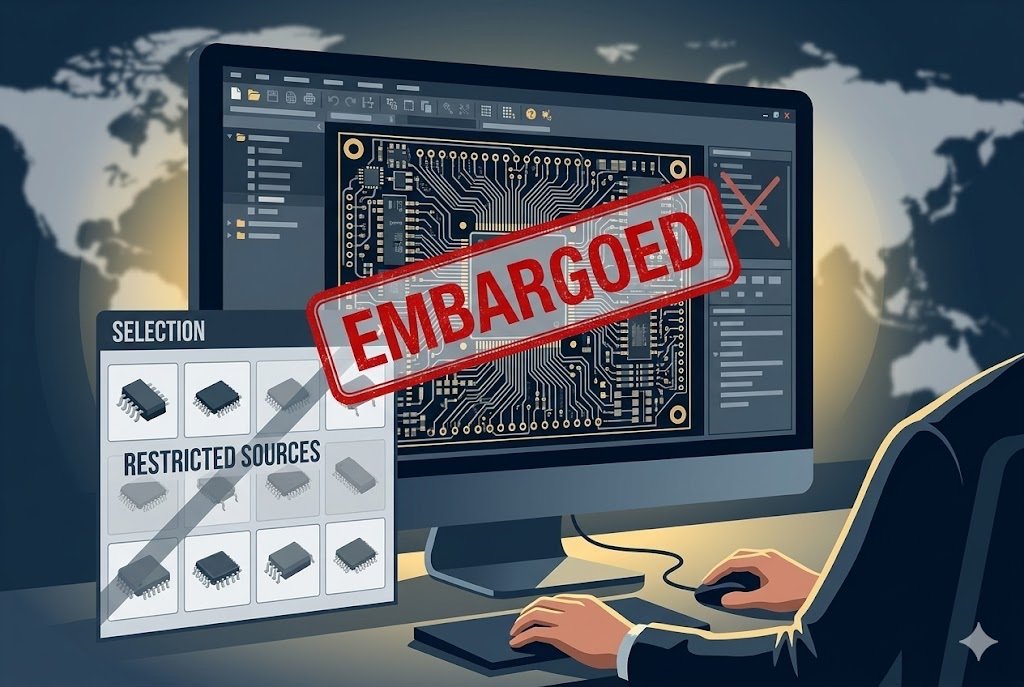
You might think software bans only affect software engineers. However, these bans change everything about how we source physical chips. Let us explore how this software crisis directly impacts your daily procurement tasks and keeps you from finishing your projects.
Why Are Downstream Manufacturers Demanding Fully Localized BOMs?
Foreign chips rely on foreign EDA models4. You cannot design with them using domestic software. We see OEMs now forcing distributors to supply fully domestic components to solve this.
Downstream manufacturers demand fully localized BOMs because domestic EDA tools3 often lack simulation models5 for foreign chips. Procurement teams must source domestic alternatives. This ensures the hardware design process continues smoothly without relying on restricted foreign software and component ecosystems.
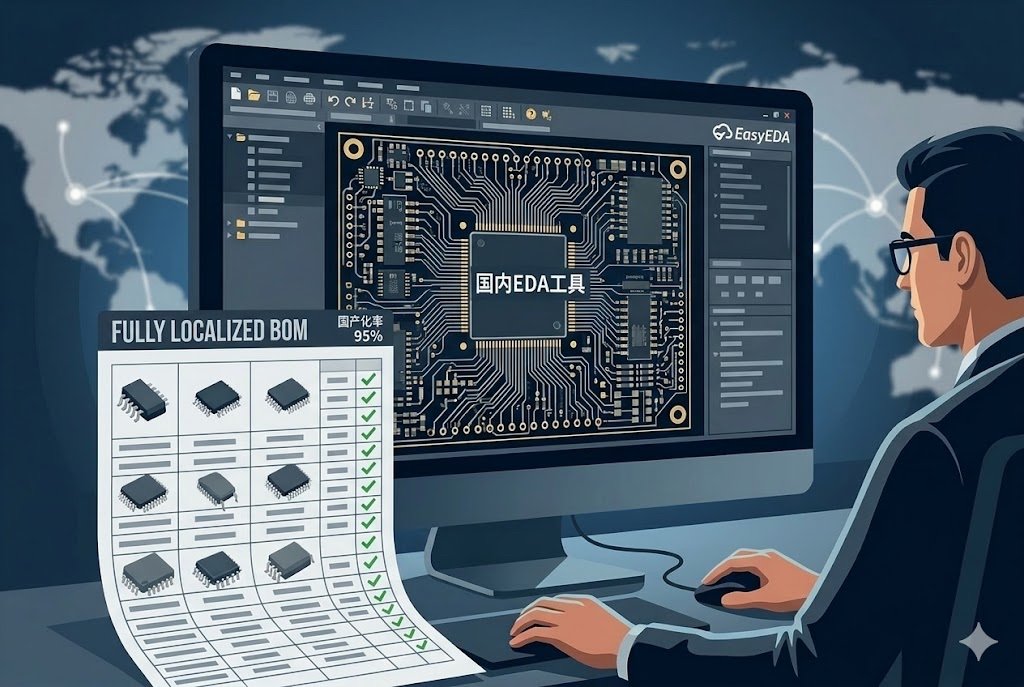
I remember a recent project with a major IoT client. They called me in a panic. Their US-based EDA software licenses were revoked suddenly. They had to switch to a domestic EDA tool overnight. But there was a massive problem. The new software could not read the simulation models5 of the foreign MCUs and PMICs on their board. Hardware engineers need accurate software models to test their designs. Foreign chip makers build these models for foreign EDA tools.
When you use domestic EDA software, these foreign models often fail. The pin layouts do not match in the system. The power consumption data shows wrong numbers. The signal integrity simulations crash completely. This forces the design team to pick domestic chips instead. Domestic chip makers naturally optimize their models for domestic EDA tools3. They want local engineers to use their parts easily.
This software issue becomes a major procurement issue. Downstream OEMs now push us, the distributors, to find these localized parts. They need a fully localized BOM to keep their projects alive.
Sourcing Focus Shift
Here is a breakdown of how this shifts our sourcing focus:
| Component Type | Past Preference (Foreign EDA) | Current Demand (Domestic EDA) |
|---|---|---|
| Microcontrollers (MCU) | Global Top Brands (e.g., ST, NXP) | Leading Domestic Brands |
| Power Management (PMIC) | Texas Instruments, Analog Devices | Local Power IC Makers |
| Sensors | Bosch, InvenSense | Domestic Sensor Suppliers |
| Connectivity Modules | Broadcom, Qualcomm | Local Wi-Fi/Bluetooth Chips |
At Nexcir, our 20 years of experience help us navigate this shift. We find high-quality domestic alternatives that fit the new EDA environment perfectly. We make sure these new parts meet your strict quality standards. We help your engineers get the right models so they can finish their designs on time.
How Do EDA Tool Bans Increase Supply Chain Risks for OEMs?
Forced software migrations cause long delays. You risk missing your production deadlines entirely. We must understand these new risks to keep your manufacturing lines running safely.
EDA tool bans create sudden design halts and force unexpected component replacements. This transition increases the risk of buying untested or counterfeit domestic chips. Procurement teams face longer lead times and quality control issues while rushing to find parts that work with new domestic software.
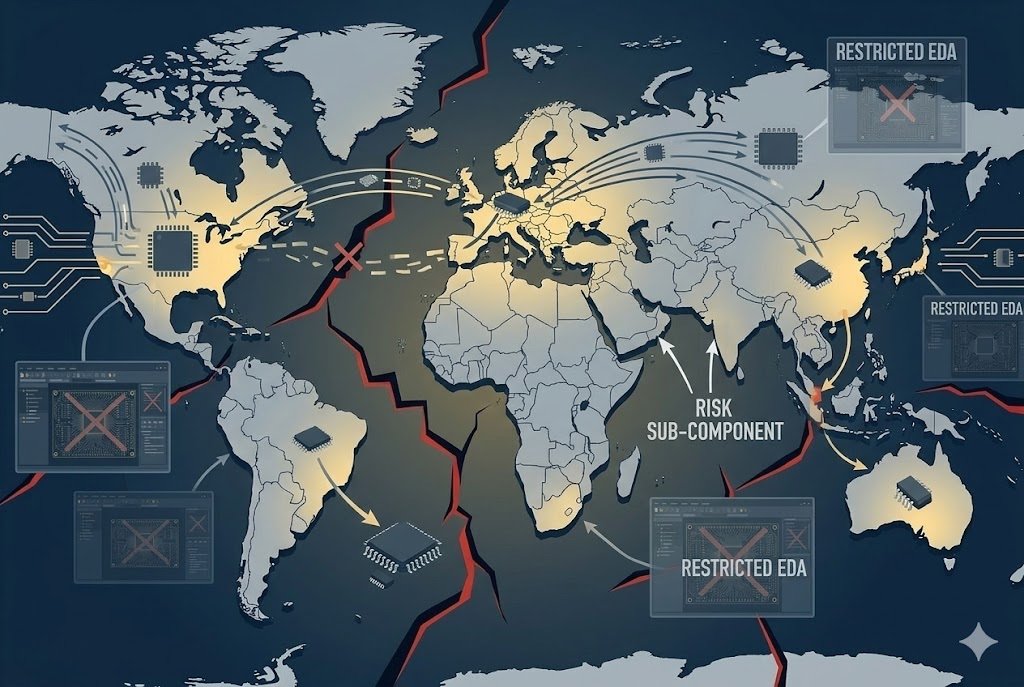
A sudden ban on EDA tools creates a ripple effect. It hits the procurement department hard. I saw this happen to an automotive client last year. They lost access to their standard design tools. They had to redesign their entire dashboard control unit. When engineers change the design software, they change the required parts. Procurement managers suddenly get a new BOM on their desks.
They must source these new domestic parts fast. This rush brings major supply chain risks6 to your door. You might buy from unverified suppliers because you are desperate. You might face sudden stock shortages for popular domestic alternatives. The biggest risk is poor quality. As everyone rushes to buy domestic chips, the gray market grows quickly.
Counterfeiters see a big chance to make money. They take old, used chips and clean them. They label these fake chips as high-demand domestic brands. If you buy these fake parts, your final product will fail in the field. Your company will lose money and customer trust.
Risk Management Comparison
| Risk Area | Normal Sourcing | Sourcing Under EDA Ban Rush |
|---|---|---|
| Lead Times | Predictable (12-16 weeks) | Highly Unpredictable |
| Supplier Trust | Established Global Authorized Partners | New, Unverified Local Vendors |
| Counterfeit Risk | Low (Strict Traceability) | High (Panic Buying on Gray Market) |
| Price Stability | Stable Contract Pricing | Extreme Market Fluctuations |
At Nexcir, we solve this exact pain point. We only use authorized distributors and original manufacturers. We guarantee 100 percent authentic components, even when you must switch to a domestic BOM in a hurry. We help you avoid the fake parts in the market. We provide full traceability for every single chip we sell. We also protect you from crazy price jumps during these panic periods.
How Can Procurement Managers Adapt to the Domestic Substitution Trend?
Finding reliable domestic parts is hard work. You waste time searching for safe replacements. I recommend building a proactive sourcing strategy7 to handle these forced BOM changes.
Procurement managers must build strong relationships with distributors who understand domestic alternatives. You should evaluate local chip brands early and secure authorized supply channels. By proactively mapping foreign parts to domestic equivalents, you protect your supply chain from sudden EDA embargoes and ensure smooth production.

You cannot wait for an EDA ban to hit your company. You must prepare right now. I always tell my clients to treat domestic substitution as a daily strategy, not an emergency plan. One of my consumer electronics clients started doing this two years ago. They saved thousands of dollars when software sanctions finally hit their industry.
The best way to adapt is to know your options early. You need a clear map of alternatives. Work with your hardware engineers today. Ask them which domestic chips work well with domestic EDA tools3. Then, create a strong cross-reference list8 for your most critical components. This helps you manage end-of-life (EOL) parts9 too.
You need a partner with a global network10 and deep local market knowledge. At Nexcir, our core team has over 20 years of experience. We know exactly which domestic brands offer real quality. We know their lead times. We know their pricing stability. We can tell you which local factories have real production capacity and which ones only make empty promises.
Steps for Proactive Substitution
| Step | Action Required | Nexcir Support |
|---|---|---|
| 1. BOM Analysis | Identify high-risk foreign components. | We audit your BOM for supply risks. |
| 2. Identify Alternatives | Find domestic parts compatible with local EDA. | We provide verified cross-reference options. |
| 3. Sample Testing | Buy small batches for engineer validation. | We supply authentic samples quickly. |
| 4. Secure Supply | Set up long-term purchasing agreements11. | We offer stable pricing and global logistics. |
By taking these steps, you take full control. You stop worrying about software bans ruining your day. You ensure your production lines never stop. We help you lower procurement costs and improve your overall competitiveness in the market. We handle the complex sourcing work so you can focus on building great products.
Conclusion
EDA embargoes force a major shift to fully localized BOMs. Procurement must adapt quickly. Partner with reliable distributors like Nexcir to secure authentic domestic alternatives and ensure stable production.
Understanding the benefits of domestic design software can help you adapt to changes in the EDA landscape and ensure compatibility with local tools. ↩
Exploring the importance of localized BOMs can help you maintain a stable supply chain and ensure compatibility with domestic EDA tools. ↩
Learning about domestic EDA tools can help you understand their role in maintaining a sanction-free supply chain and adapting to software bans. ↩
Understanding the impact of foreign EDA models on domestic software can help you navigate challenges in hardware design and procurement. ↩
Exploring the role of simulation models can help you understand their importance in testing designs and ensuring compatibility with EDA tools. ↩
Exploring supply chain risks can help you mitigate potential issues and ensure a stable supply of components during EDA tool bans. ↩
Learning about proactive sourcing strategies can help you prepare for EDA embargoes and ensure a smooth production process. ↩
Creating a cross-reference list can help you manage component substitutions and ensure compatibility with domestic EDA tools. ↩
Managing EOL parts effectively can help you avoid disruptions in production and maintain a stable supply chain. ↩
Understanding the importance of a global network can help you secure reliable components and maintain production stability. ↩
Exploring the benefits of long-term agreements can help you secure stable pricing and reliable supply for your components. ↩