Electronic waste is piling up globally. Toxic circuit boards sit in landfills for centuries. I believe biodegradable substrate materials1 offer a real way to solve this massive pollution problem.
Yes, biodegradable substrate materials1 are the future of printed circuit boards. These new materials use natural fibers and non-toxic resins2. They break down naturally in compost environments. This reduces electronic waste3. It helps electronic manufacturers build fully sustainable devices.
I started working in the electronic components industry over 20 years ago. Nobody thought about old electronics back then. Today, my clients at Nexcir constantly ask me about environmental rules. We must look at our board designs. Let us explore these new natural materials. We will see why they matter to your next project.
Why do we need biodegradable PCB substrates right now?
Millions of tons of e-waste appear every year. Old FR-4 boards4 leak harmful chemicals into our soil. We need biodegradable substrates to stop this toxic cycle immediately.
We need biodegradable PCB substrates right now. Traditional fiberglass and epoxy boards do not break down. Biodegradable boards dissolve safely in nature after their useful life. This stops heavy metal pollution5. It cuts down recycling costs. It meets strict new global environmental laws.
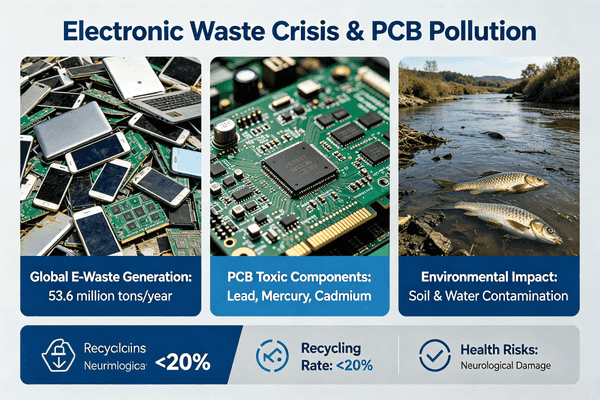
I often visit manufacturing plants across Asia. I see huge bins full of scrapped FR-4 boards4. Traditional PCBs use a mix of glass fiber, copper, and epoxy resin. You cannot easily separate these parts. You cannot burn them safely. You cannot melt them down easily. This creates a huge headache for procurement managers.
The Hidden Costs of Traditional E-Waste
Devices reach the end of their lives. Then companies must pay high fees to throw them away properly. Governments are adding new green taxes6. Biodegradable substrates change this entire system. They use natural fibers like cellulose or flax7. They use bio-based resins8. You put them in hot, active compost. Then they break down in a few months.
| Material Type | Disposal Method | Environmental Impact | End-of-Life Cost |
|---|---|---|---|
| Traditional FR-4 | Landfill or special burning | Very high toxic risk | High disposal fees |
| Biodegradable PCB | Industrial composting | Low to zero toxicity | Low to zero fees |
We use these natural boards. We cut down our e-waste footprint by a massive amount. My team at Nexcir sees more clients looking for these green options. They want to avoid future recycling taxes. They also want to protect their brand image. They ask us for reliable supply chains. We help them find the best factories.
What materials make up a naturally decomposable PCB?
Engineers struggle to find materials that conduct well but also melt away. Wrong choices lead to board failure. Scientists now use plant fibers to solve this.
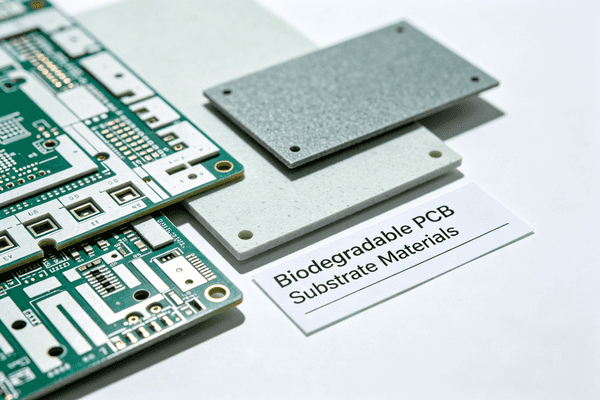
A naturally decomposable PCB uses natural fibers like wood or flax. It uses these instead of glass fiber. It uses bio-based polymers instead of toxic epoxy resins. These natural materials provide strong physical support. But they break down completely in wet soil.
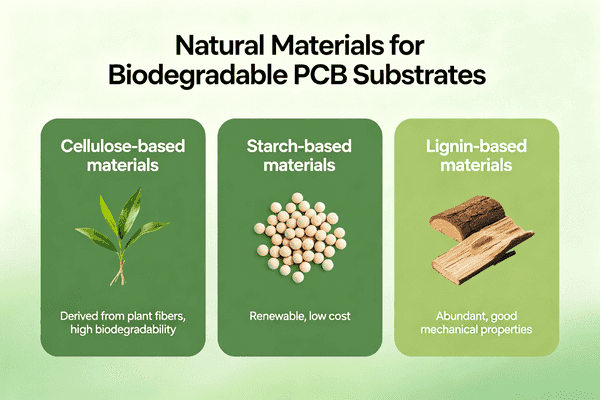
I first heard about boards made from banana stems. I was very surprised. I am a distributor of integrated circuits. I am used to hard plastic and silicon. But material scientists have made amazing progress. They extract cellulose from plants9. They press this cellulose into thin, strong sheets.
Inside the Green Circuit Board
These natural sheets replace the standard glass weave. Next, the makers need a binder. They cannot use standard epoxy. Standard epoxy lasts forever. Instead, they use bio-polymers10. These bio-polymers10 come from natural oils or starches. They hold the board together tightly during normal use. But you put them in soil with certain bacteria. Then the bio-polymers10 fall apart.
| Component | Traditional Material | Biodegradable Alternative |
|---|---|---|
| Reinforcement Base | Woven Glass Fiber | Cellulose, Flax, Wood fibers |
| Binding Resin | Epoxy Resin | Bio-polymers, Soy resins |
| Conductive Trace | Copper foil | Copper or silver paste |
The copper traces11 still remain. The base melts away. So recyclers can easily collect the clean copper. This makes recovering precious metals much faster. It also makes it cheaper. Our hardware engineer clients are very excited about this easy recovery process. They can save money. They can also save the earth.
How do biodegradable substrates perform compared to traditional FR-4?
Engineers worry about weak boards. Weak boards ruin expensive electronic components. Thankfully, new biodegradable boards match many FR-4 specs for standard electronics.
Biodegradable substrates perform very well for low-power electronics. They have good dielectric strength. They handle normal operating temperatures. They cannot replace FR-4 in high-heat industrial machines yet. But they are perfect for IoT sensors12 and everyday gadgets.
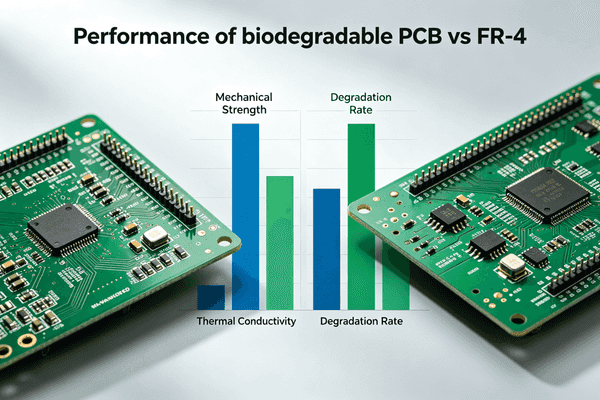
My customers always ask me about reliability. They buy high-quality MCUs and PMICs from Nexcir. They need to know the board will not fail. I tell them to look at the exact use case. Biodegradable boards are not for car engines. They are not for massive servers yet. They absorb a little more moisture than FR-4. They also have lower heat limits.
Testing the Limits of Natural Boards
But they are perfect for short-life consumer goods. You can think about a smart toothbrush. You can think about a simple IoT sensor. These devices do not get very hot. They only live for a year or two. Natural boards offer exact electrical performance for these items. The signals travel just as fast. The components solder on just as tightly.
| Performance Metric | Traditional FR-4 | Biodegradable Substrate |
|---|---|---|
| Heat Resistance | Very High | Medium |
| Moisture Absorption | Very Low | Low to Medium |
| Signal Integrity | Excellent | Good |
| Best Application | Industrial, Auto, Servers | Wearables, IoT, Smart Tags |
We must match the right board to the right project. Your project fits the limits. So you can save money on disposal. You still get great performance. You do not need to buy expensive high-heat boards for simple gadgets.
How will green PCBs change your electronic component procurement?
Buying new component types often causes supply chain delays13. Unstable prices hurt your budget. Partnering with a reliable global distributor makes sourcing green materials safe.
Green PCBs will change procurement by adding new suppliers. You will need different quality checks. You will need to track the shelf life of raw materials14 closely. A trusted distributor helps you find authentic biodegradable materials. We secure stable pricing for you.
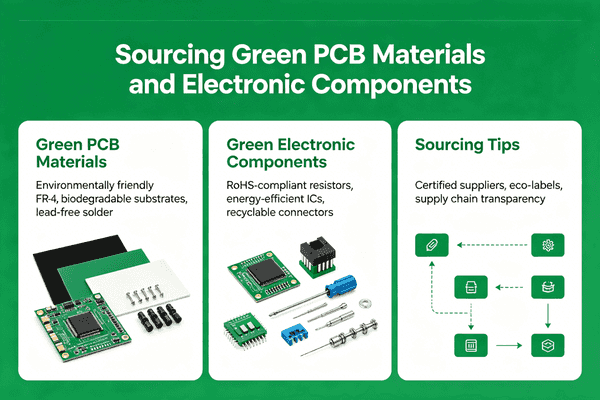
We know that any change in materials brings risk at Nexcir. Your procurement team faces new challenges. You switch to biodegradable substrates. You cannot just call your old FR-4 factory. You need to find specialized makers. These natural materials also have a shelf life. They have a shelf life before they are printed. You cannot store them in a hot warehouse for five years.
Adapting Your Supply Chain
I help my clients plan their buying cycles carefully. We use our global supply network across North America, Europe, and Asia. We make sure our clients get fresh green boards. We make sure they get authentic green boards. We also help them find the right low-heat soldering components15. These components must match these new boards.
| Procurement Focus | Traditional Sourcing | Green PCB Sourcing |
|---|---|---|
| Storage Needs | Standard dry storage | Strict air control |
| Supplier Base | Very wide, easy to find | Specialized |
| Component Match | Standard high-temp parts | Low-temp parts |
You plan ahead. You avoid fake products. You avoid market price jumps. We guide our customers through this change. We make sure your green transition is smooth. We make sure it is safe. We make sure it is highly cost-effective. You can trust our twenty years of experience.
Will biodegradable substrates lower your overall production costs?
High material costs eat into your profit margins. New green technologies often seem too expensive at first. But biodegradable substrates can actually save you money.
Biodegradable substrates will lower your overall production costs over time. The raw natural materials are cheap to grow. You save money because you do not pay high e-waste disposal fees. Governments also offer tax breaks for using green materials16 in your devices.
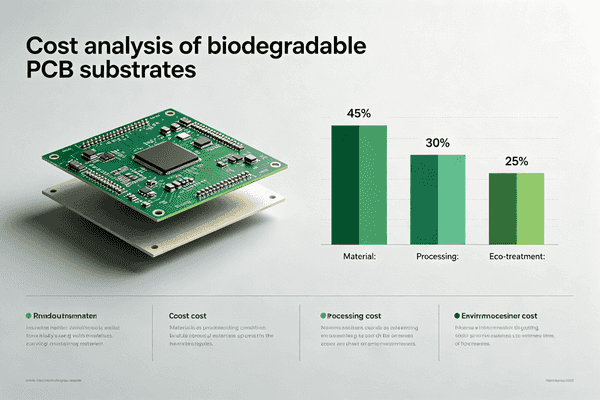
Many procurement managers worry about the price of new tech. I completely understand this fear. I help clients optimize their procurement costs every day. Right now, bio-boards cost slightly more to make. The factories are still small. They do not have massive scale yet.
The True Cost of Green Electronics
But we must look at the total cost of ownership17. You buy a traditional board. You pay for the board. Then you pay a tax to recycle it later. You buy a bio-board. You pay for the board. You pay zero tax later. Also, the raw materials for bio-boards grow in fields. They are much cheaper than mining oil for epoxy resins.
| Cost Factor | Traditional FR-4 | Biodegradable Substrate |
|---|---|---|
| Raw Material Cost | Medium (tied to oil prices) | Low (agricultural products) |
| Manufacturing Cost | Low (massive scale) | Medium (growing scale) |
| End-of-Life Tax | High | Zero |
| Government Grants | None | High chance of subsidies |
The prices of natural boards will drop very fast. More companies will start using them. We track these market trends closely at Nexcir. We will help you lock in the best prices. We will help you stay ahead of your competitors. We always put our customers first.
Conclusion
Biodegradable substrates offer a smart way to stop e-waste. They provide good performance for many devices. We can help you source these green materials safely and efficiently.
Explore how biodegradable substrate materials can revolutionize electronic waste management and contribute to sustainable manufacturing practices. ↩
Learn how natural fibers and non-toxic resins are key components in creating environmentally friendly printed circuit boards. ↩
Understand the environmental challenges posed by electronic waste and the need for sustainable solutions. ↩
Discover the environmental risks associated with traditional FR-4 boards and the benefits of switching to biodegradable alternatives. ↩
Find out how biodegradable substrates can mitigate heavy metal pollution from electronic waste. ↩
Explore the role of green taxes in promoting sustainable electronic waste management practices. ↩
Learn about the advantages of using natural fibers in PCBs for environmental sustainability and performance. ↩
Understand the role of bio-based resins in enhancing the eco-friendliness of printed circuit boards. ↩
Explore the innovative use of plant-derived cellulose in creating sustainable printed circuit boards. ↩
Learn about bio-polymers and their importance in the construction of biodegradable printed circuit boards. ↩
Find out how copper traces can be efficiently recovered from biodegradable PCBs, aiding in recycling efforts. ↩
Discover why biodegradable substrates are ideal for IoT sensors and other low-power electronic devices. ↩
Explore strategies to overcome supply chain challenges when transitioning to biodegradable PCB materials. ↩
Understand the importance of managing the shelf life of raw materials in the production of biodegradable PCBs. ↩
Learn about the significance of low-heat soldering components in the assembly of biodegradable printed circuit boards. ↩
Discover potential tax incentives for incorporating environmentally friendly materials in electronic manufacturing. ↩
Evaluate the long-term financial benefits of using biodegradable PCBs over traditional options. ↩