Bulky LiDAR systems increase costs and drain vehicle battery power. If you do not fix this problem, your smart car projects will stall. Lightweight SoC design1 is the clear answer.
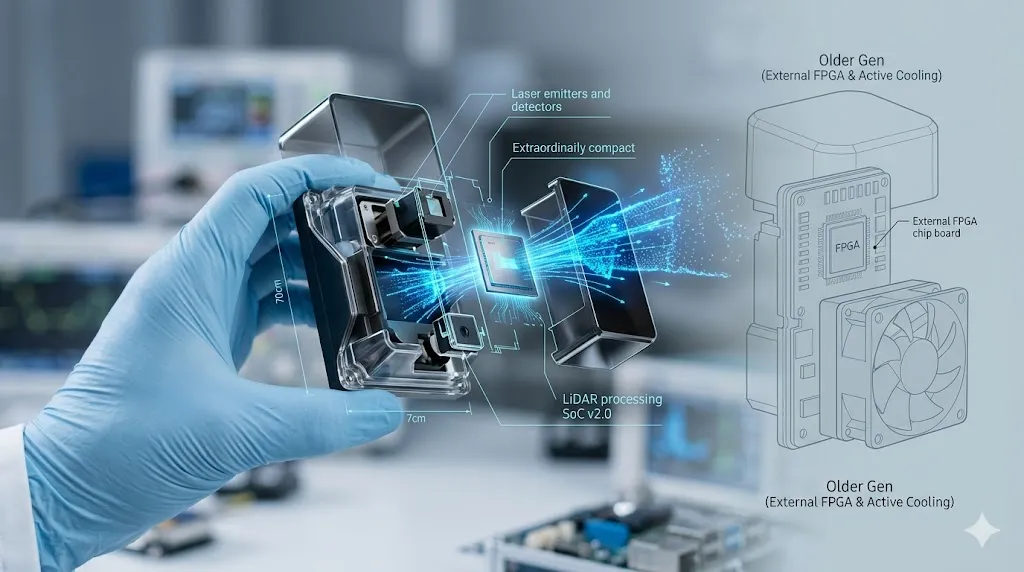
A lightweight LiDAR SoC integrates complex point cloud processing algorithms2 directly into a single chip. This removes the need for an external FPGA3. It greatly reduces the overall size, cuts power consumption, and lowers costs, making LiDAR affordable for mass-market vehicles.
Let me explain exactly how this hardware shift changes the automotive industry. I will show you why this new design keeps your production lines moving without delays.
How Does Integrating Point Cloud Algorithms into a Single SoC Work?
Traditional LiDAR uses separate FPGAs to process point clouds. This adds layout complexity and creates extra heat. A unified SoC4 solves these hardware headaches instantly for your engineering team.
Integrating point cloud algorithms into one SoC means moving all signal processing into a single silicon die5. This design eliminates the bulky external FPGA3. It simplifies the printed circuit board layout and speeds up data transfer inside the system.
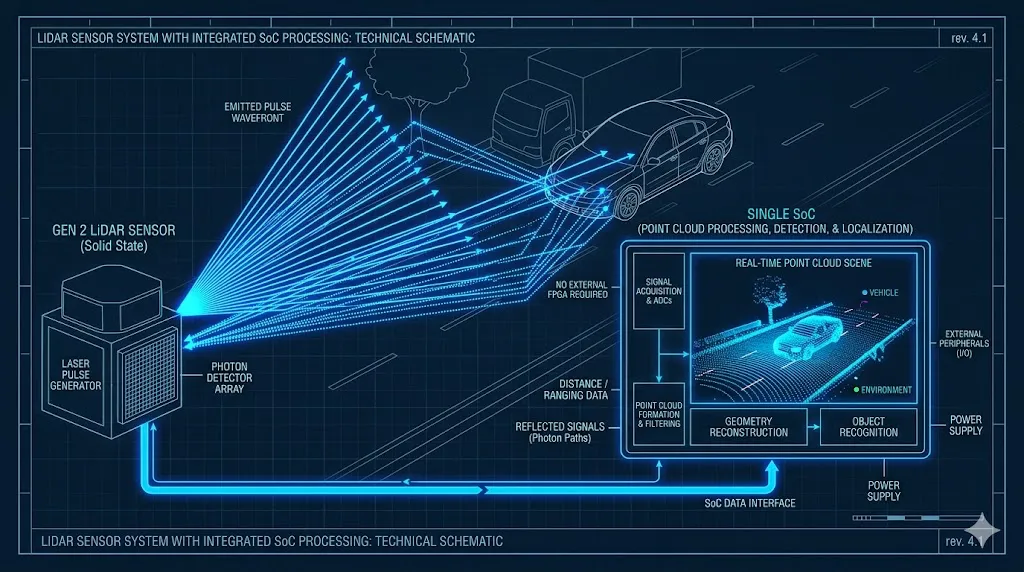
When I look at older LiDAR designs, I see a very crowded circuit board. In the past, engineers used an external FPGA3 to handle heavy point cloud data. Now, we put everything into one System on Chip (SoC). This is a big change for hardware design.
The Problem with External FPGAs
FPGAs are great for early testing. However, they take up too much physical space on the board. They also use a lot of power. When you put an FPGA next to a main processor, the data must travel a long distance between the two chips. This travel causes delays. It also creates more heat. Heat is very bad for electronic components. It makes them fail faster. As a procurement manager6, you also have to buy two separate expensive chips. This makes your supply chain much harder to manage.
The Single SoC Solution
By putting the point cloud algorithms directly into the SoC, we fix these hardware issues completely. The single chip processes the laser signals7 right away. The data path is very short inside the chip. This lowers the chance of errors. It also uses much less power. For hardware teams, this means buying fewer parts. You do not need to hunt for hard-to-find FPGAs anymore. I have worked in the electronic components industry for over 20 years. I know that fewer parts mean less supply chain risk.
| Feature | Traditional Design | Lightweight SoC Design |
|---|---|---|
| Component Count | High (Main chip + FPGA) | Low (Single SoC) |
| Power Use | Very High | Low |
| Heat Output | High | Low |
| Supply Chain Risk | High | Low |
Why Do Lower Power and Smaller Size Matter for Mass-Market Cars?
High power draw ruins electric vehicle range. Large sensors ruin beautiful car designs. If sensors stay big and hungry, mass-market buyers will reject them completely.
Lower power and smaller size allow car makers to hide LiDAR behind the windshield or inside the bumper. This keeps the car looking good and saves battery life. It cuts the total system cost, pushing LiDAR into the 200,000 RMB mass-market vehicle range8.
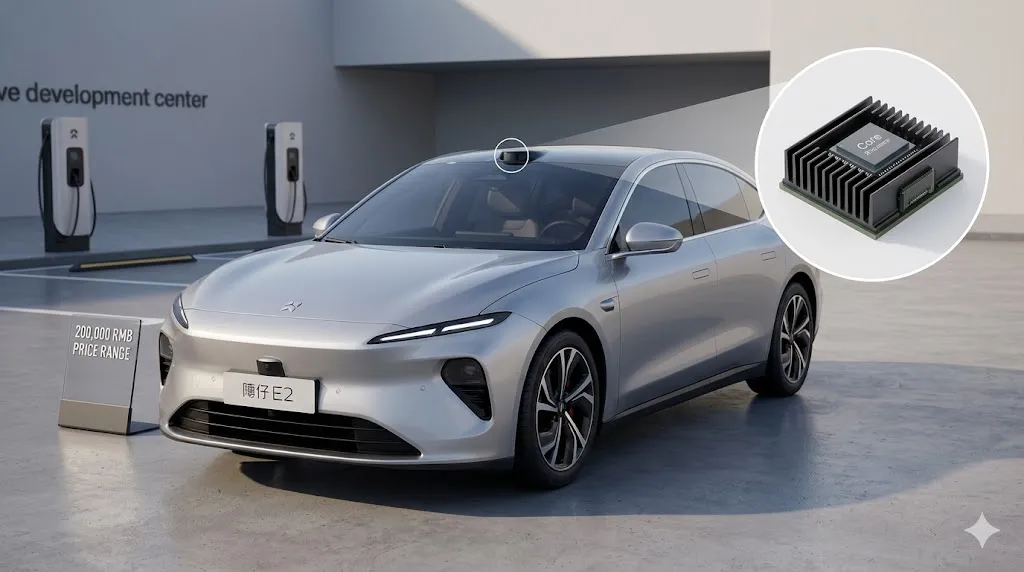
To put LiDAR in a normal family car, the price must drop. The 200,000 RMB car market is very strict on costs. You cannot use a very expensive sensor in these cars. The lightweight SoC makes this price drop possible.
Breaking Down the Cost and Space Issues
A heavy LiDAR needs big cooling fans9 to stop it from breaking. Fans add weight to the car. Fans also cost extra money. A lightweight SoC uses less power. Because it uses less power, it creates less heat. You can remove the cooling fan completely. This makes the sensor much smaller. Car designers love small sensors. They can hide the sensor behind the windshield. They can also put it inside the front bumper. It keeps the car looking very nice. It also reduces wind drag. Less wind drag saves battery life for electric cars.
Entering the Mass Market
When the sensor is small and cheap, car companies will buy more of them. They put them in mid-range cars. They do not just put them in luxury cars anymore. This creates a huge demand for these specific SoCs. I talk to OEM procurement managers10](6s">https://www.assemblymag.com/articles/99675-suppliers-navigate-lidar-assembly-challenges)6s every day. They all want these highly integrated chips. They need a stable price to keep their car prices low. At Nexcir, we understand this need. We help our clients find these chips quickly. We make sure the price is right for mass-market vehicle production.
| Market Factor | Luxury Vehicles | Mass-Market Vehicles |
|---|---|---|
| Target Car Price | Over 400,000 RMB | Around 200,000 RMB |
| Sensor Size | Can be larger | Must be very small |
| Cooling Method | Active (Fans) | Passive (No fans) |
| SoC Requirement | Basic SoC + FPGA | Highly integrated SoC |
How Can Hardware Teams Secure Reliable LiDAR SoC Supply?
Fake chips and sudden price jumps destroy production schedules. You lose money and trust when parts fail or arrive late. A strong supply chain stops this panic.
Hardware teams must buy from authorized channels with deep industry experience. A reliable distributor ensures authentic parts, offers stable pricing, and uses global logistics11. This removes procurement risks and keeps your smart vehicle production running smoothly.
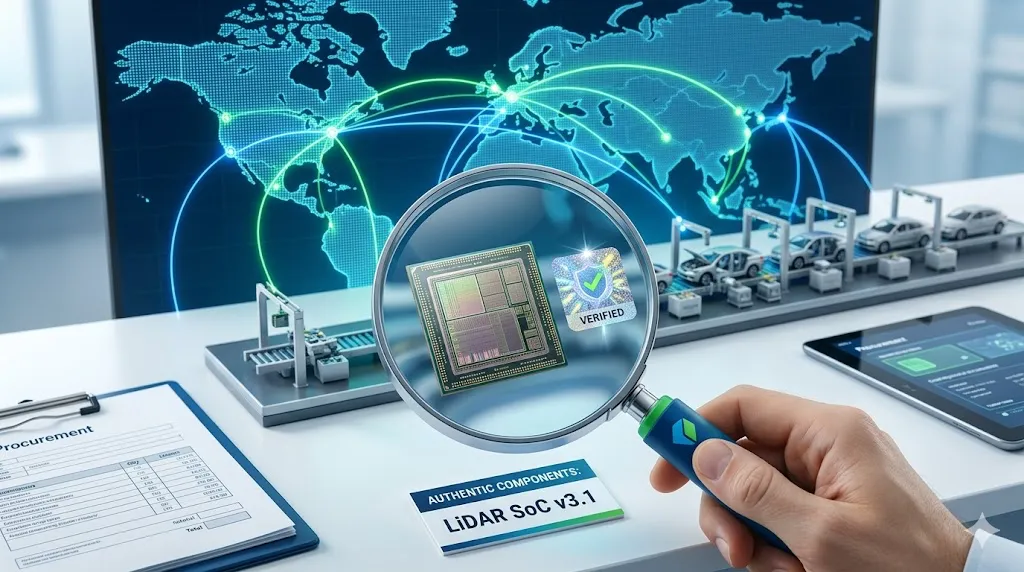
At Nexcir, we see the stress that procurement manager6s face every single day. Finding these advanced LiDAR SoCs is not an easy job. Market prices change fast. Shortages happen without warning. You need a safe way to buy your parts.
Avoiding Counterfeits in High-Tech Chips
LiDAR SoCs are very expensive and very complex. This makes them a big target for fake parts. If a fake chip goes into a car, the LiDAR will fail. The car might crash. This is very dangerous for everyone. You must trace every single chip back to the original maker. We only use authorized distributors and original manufacturers. This guarantees complete safety. We check every part carefully. We give you peace of mind. You will never worry about fake components ruining your production line.
Keeping Prices and Deliveries Stable
You need stable prices to control your factory costs. We use our 20 years of experience to plan ahead for you. We secure bulk orders early. This stops market shocks from hurting your budget. We also set up global shipping routes across North America, Europe, and Asia. Fast shipping means your factory never stops waiting for parts. We offer flexible service models. If you need parts tomorrow, we can help. If you need a long-term supply plan, we can build it. We want to be your long-term partner in the electronic supply chain.
| Procurement Challenge | Industry Pain Point | Nexcir Solution |
|---|---|---|
| Fake Parts | High safety risk in cars | Original parts guarantee |
| Price Changes | Ruins budget plans | Stable pricing via bulk orders |
| Late Deliveries | Stops the production line | Fast global logistics11 network |
| Trust Issues | Hard to verify suppliers | Transparent and honest service |
Conclusion
Lightweight LiDAR SoCs cut costs and size by replacing FPGAs. Partnering with a trusted supplier ensures authentic parts and stable pricing for your mass-market vehicle projects.
Explore how lightweight SoC design revolutionizes LiDAR systems, making them more efficient and cost-effective for mass-market vehicles. ↩
Understand the role of point cloud processing algorithms in enhancing LiDAR systems' performance and integration into a single chip. ↩
Learn about the drawbacks of using external FPGAs in LiDAR systems and how they affect performance and design complexity. ↩
Discover the benefits of a unified SoC in simplifying LiDAR systems, reducing heat, and enhancing data transfer efficiency. ↩
Explore how integrating signal processing into a single silicon die streamlines LiDAR systems and reduces hardware issues. ↩
Learn about the difficulties procurement managers encounter in managing supply chains for LiDAR components. ↩
Discover the efficiency of single-chip processing of laser signals and its impact on reducing errors and power usage. ↩
Explore how LiDAR technology is becoming affordable for mass-market vehicles, enhancing their functionality and design. ↩
Learn about the necessity of cooling fans in traditional LiDAR systems and how lightweight SoCs eliminate this need. ↩
Understand the requirements and expectations of OEM procurement managers when sourcing LiDAR components for vehicles. ↩
Learn about the role of global logistics in ensuring timely delivery and stable supply of LiDAR components worldwide. ↩