You need faster chips, but old nodes cause heat issues and high costs. This hurts your product launches. I will show how 2nm technology1 solves these major problems now.
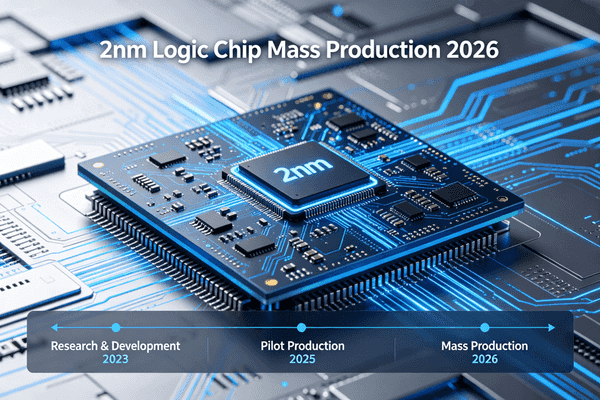
Yes, 2026 is the first year of mass production for 2nm logic chips. Samsung's SF2P process yield2 recently passed 70%. This breakthrough breaks TSMC's monopoly. It also uses Gate-All-Around (GAA) architecture3 to boost chip frequency by over 12%. This means better performance and supply for your hardware projects.
I know you worry about chip shortages4 and high prices. New technology changes the market fast. Let us explore what this 2nm shift means for your supply chain. You will see why you must act early to protect your production lines.
How Does Samsung SF2P Yield Break the TSMC Monopoly?
You rely on one supplier for advanced chips. A single source means high prices and huge risks. Samsung's new 70% yield offers a strong second option for your orders.
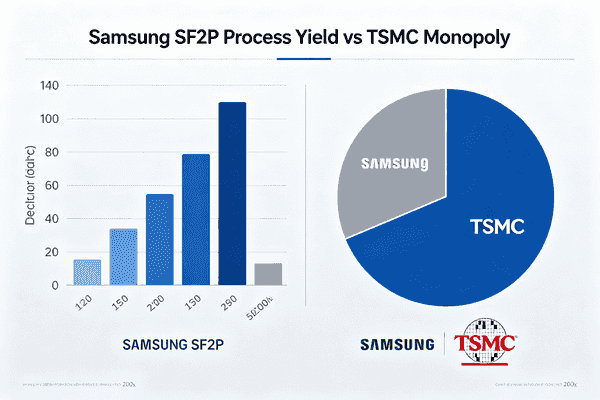
The Samsung factory reached a 70% yield on its SF2P 2nm process. This high yield proves the process is ready for mass production. It breaks TSMC's control over advanced chips. Buyers now have two choices. This competition lowers supply chain risks and helps control high component costs.
I remember a time when a major client came to me in a panic. They needed standard PMICs for their new industrial machines. But their only supplier delayed the delivery by six months. They lost a big contract because of this delay. This personal story shows why relying on one company is dangerous. The Samsung SF2P breakthrough gives us hope.
The Power of a Second Choice
TSMC controls most of the advanced chip market today. This control gives them too much power over prices. When Samsung reaches a 70% yield, the market changes completely. The yield is the number of working chips on a single silicon disk. A 70% yield means the factory can make money. It means the technology is ready for big orders.
Lower Costs for Your Projects
You are a procurement manager5. Your main goal is to keep costs low and keep the factory running. When two giant companies fight for orders, you win. Samsung will offer lower prices to get new customers. TSMC will have to lower its prices to keep its old customers. At Nexcir, my team watches these price wars closely. We have over 20 years of experience in the electronics market. We use this deep knowledge to buy parts at the exact right time. We pass these savings directly to you.
Market Change Summary
I created this table to explain the market shift.
| Market Fact | Before 2026 (TSMC Lead) | After 2026 (Samsung SF2P) | Result for Your Business |
|---|---|---|---|
| Supplier Options | Only one main choice | Two strong choices | You have more buying power |
| Chip Prices | Very high | Going down | You save money on orders |
| Supply Safety | Low | High | Your lines do not stop |
You must understand this shift. You can use this new competition to get better contracts. We are here to help you negotiate. We will secure the best deals for your business.
Does GAA Architecture Really Bring Over 12% Frequency Improvement?
Old chip designs leak power. Your devices run hot and slow down. The new GAA architecture fixes this power leak and speeds up your chips significantly.
Yes, Gate-All-Around (GAA) architecture3 boosts chip frequency by over 12%. It wraps the gate around the channel on all four sides. This design controls current much better than old FinFET designs6. It gives your devices higher speeds and uses much less power at the same time.
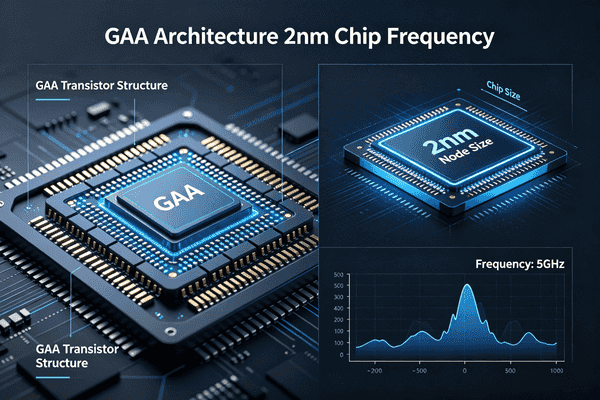
I talk to hardware engineers every day. They all have the same problem. They need to put more computing power into smaller spaces. But chips get too hot. A hot chip ruins the whole device. The new GAA architecture solves this exact heat problem7.
Understanding the GAA Design
In the past, we used a design called FinFET. The FinFET design controls the electric current on three sides. This was good for older chips. But at the 2nm size, electricity leaks out of the fourth side. This leak causes heat. It also wastes your battery power. The GAA design wraps the control gate around all four sides of the channel. It stops the electrical leaks completely.
Faster Speeds for Your Devices
Because the chip does not leak power, it can run much faster. The GAA design brings a 12% frequency improvement. This means your device processes data 12% faster. If you build smart cars or factory robots, this speed is very important. Your machines will react instantly.
Finding Real Components
New technology also brings new risks. When new chips enter the market, bad sellers try to sell fake parts. You must protect your products. At Nexcir, we buy only from authorized distributors and original makers. We guarantee that every part is 100% authentic.
Technology Comparison
This table shows why GAA is better than old designs.
| Feature | Old FinFET Design | New GAA Design | How This Helps You |
|---|---|---|---|
| Power Control | 3 Sides | 4 Sides | You waste less power |
| Speed | Normal | 12% faster | Your product performs better |
| Heat Output | High | Low | You can cool your device easily |
| Battery Use | High | Low | Your portable devices last longer |
You can see why the whole industry is moving to GAA. This new design will change how you build your next project. We will help you find these new parts safely and quickly.
Are You Ready for the 2nm Supply Chain Shift in 2026?
New chip nodes cause old parts to go out of stock. You might face sudden shortages. You must plan your 2026 supply chain now to avoid production stops.
The 2026 mass production of 2nm chips will shift global factory capacity8. Foundries will focus on new nodes. This shift will make older components harder to find. You must secure long-term supply programs now to ensure your production lines do not stop during this transition.
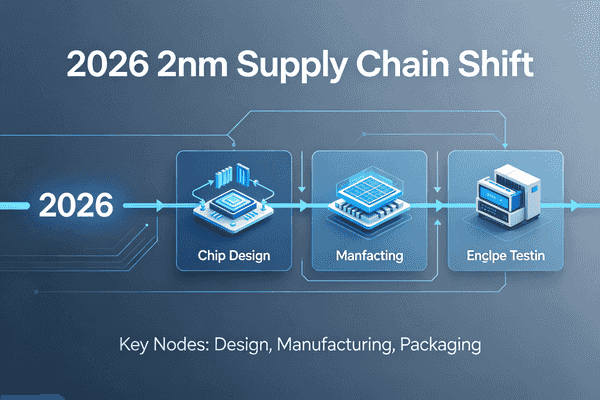
I have lived through many technology shifts in my 20 years in this business. I remember the panic when factories stopped making old 28nm chips. Companies could not finish their products because they lacked one cheap part. The 2026 shift to 2nm will cause the exact same problem.
The Danger to Older Parts
You probably do not buy 2nm chips for your daily work. You buy standard MCUs, sensors, and connectors. But big factories have limited space. When they start making 2nm chips, they will shut down older production lines. This means your standard parts will become End-of-Life (EOL)9. They will become Not-Recommended-for-New-Design (NRND)10.
Planning Ahead with Nexcir
You cannot wait for the shortage to happen. You must act now. My team at Nexcir helps you look at your Bill of Materials (BOM)11. We find the parts that are in danger. We help you buy enough stock now to last through the shortage. We also help you find different parts that do the same job.
Your Action Plan
I made a simple table to help you prepare for 2026.
| What You Must Do | Why You Must Do It | How Nexcir Supports You |
|---|---|---|
| Check Your Parts | Find old parts before they disappear | We give you early market warnings |
| Buy Extra Stock | Stop price increases from hurting you | We offer stable and low prices12 |
| Test New Brands | Keep the factory open | We suggest safe replacement parts13 |
| Use Good Logistics | Get parts exactly when you need them | We deliver worldwide safely |
We want to be your long-term partner. We believe in our motto, "Next Circuit, Next Future14." We will protect your supply chain from these big market changes. We make sure you never have to stop your production lines.
Conclusion
The 2nm era starts in 2026. Samsung's high yield and GAA architecture will lower costs and boost speeds. You must prepare your supply chain now to stay competitive.
Explore how 2nm technology addresses heat issues and high costs, enhancing product launches and performance. ↩
Discover how Samsung's 70% yield breaks TSMC's monopoly, offering a strong alternative for chip procurement. ↩
Learn how GAA architecture boosts chip frequency by over 12%, improving device speed and power efficiency. ↩
Understand the impact of new technology on chip availability and strategies to protect production lines. ↩
Gain insights into leveraging competition between Samsung and TSMC to secure better deals. ↩
Understand why GAA architecture is preferred over FinFET designs for better power control and speed. ↩
Learn how GAA architecture reduces heat output, enhancing device performance and longevity. ↩
Explore the impact of new nodes on manufacturing priorities and older component availability. ↩
Learn about the risks of older parts becoming obsolete and strategies to secure long-term supply. ↩
Explore the implications of NRND status on component availability and design planning. ↩
Find out how to identify and secure parts at risk of becoming obsolete during the 2nm transition. ↩
Learn strategies to avoid price increases and secure cost-effective procurement during market shifts. ↩
Discover how to test and integrate new brands to maintain production continuity. ↩
Understand Nexcir's commitment to protecting supply chains and ensuring uninterrupted production. ↩