Choosing the right microcontroller is critical for stable and efficient system design. If you are considering the LPC2214 for your project, understanding its features, applications, and availability can help you make the right decision.
👉 Check LPC2214FBD144/01K price and availability
The LPC2214 is a reliable ARM7-based microcontroller widely used in industrial control, embedded systems, and communication applications. In this guide, we will explore its key specifications, compare it with alternatives, and help you decide whether it is the right choice for your design.
Are you struggling to find stock for the aging LPC2214? Production halts cost money. I will show you the best modern replacements to keep your lines running.
The best alternatives to the LPC2214 include the NXP LPC1768, STM32F103, and Microchip SAM4S. These modern ARM Cortex-M microcontrollers offer better performance, lower power use, and stronger supply chain availability compared to the older ARM7 architecture of the LPC2214.
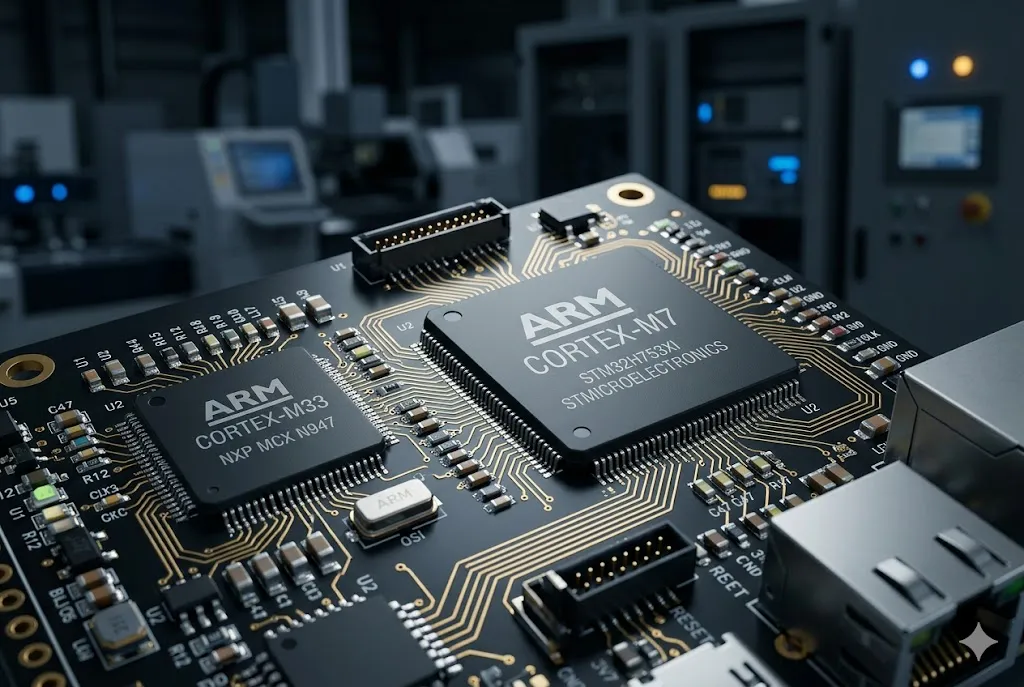
You might wonder why upgrading from an old ARM7 chip matters so much right now. Read on to see how a simple switch can save your project from a supply chain disaster. It will also improve your product design.
What are the top 3 modern alternatives to the LPC2214?
Old chips break your budget. You spend days searching for parts that do not exist. I recommend three reliable ARM Cortex-M options to solve this sourcing headache.
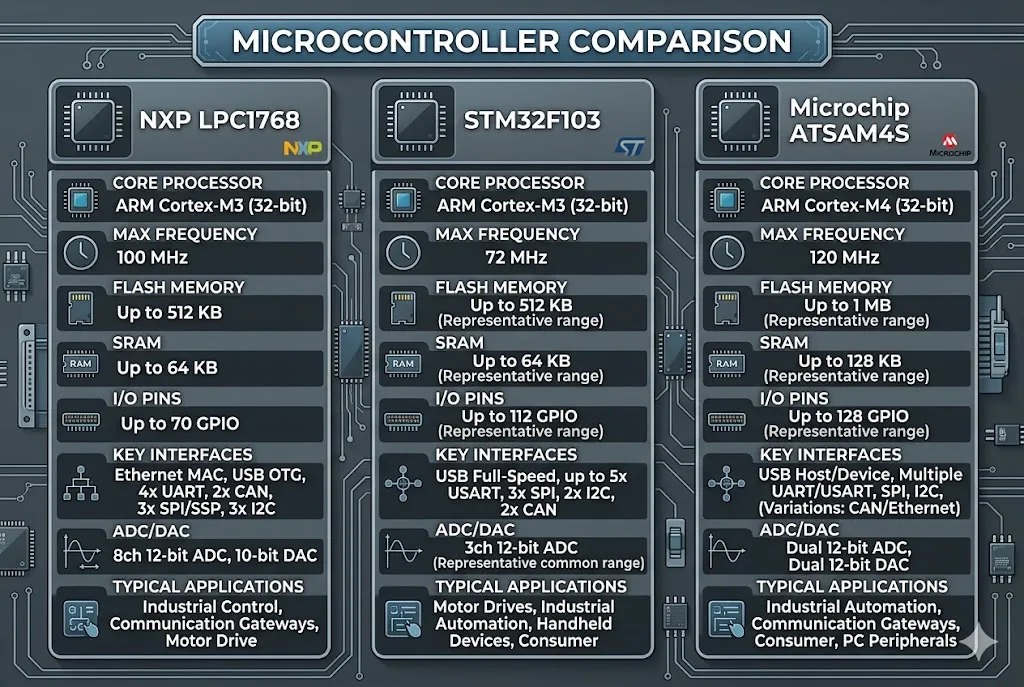
The top three LPC2214 alternatives are the NXP LPC1768, STMicroelectronics STM32F103, and Microchip ATSAM4S.1 These chips upgrade your design from the old ARM7TDMI-S core to modern Cortex-M cores. They bring better tools, easier coding, and solid long-term stock.
I have worked in the electronic components industry for over 20 years. I have seen many companies hold onto old parts for too long. Recently, a client begged me for LPC2214 stock at Nexcir. The parts were rare. The prices were very high. I helped them move to newer chips instead. You have great options today. Let us look at the best choices for an LPC2214 alternative.
NXP LPC1768
This is the most natural step if you want to stay in the NXP family. It uses a Cortex-M3 core. It runs at 100 MHz.2 Your code moves over easily. You get USB, Ethernet, and CAN bus support. This chip is very popular. We always keep track of its global stock.
STM32F103 Series
This is a famous modern MCU replacement.3 STMicroelectronics makes it. It is cheap and easy to find globally. We source millions of these for our OEM partners. It has a huge community. You can find code examples everywhere. This makes your software team very happy.
Microchip ATSAM4S
This chip is great for high memory needs. It uses a Cortex-M4 core. It gives fast processing and strong hardware support. It is a very stable ARM7 replacement MCU. Microchip promises to make this part for a long time.4 This gives you peace of mind.
Quick Comparison Table
| Feature | NXP LPC1768 | STM32F103 | Microchip ATSAM4S |
|---|---|---|---|
| Core Type | Cortex-M3 | Cortex-M3 | Cortex-M4 |
| Max Speed | 100 MHz | 72 MHz | 120 MHz |
| Max Flash | 512 KB | 1 MB | 2 MB |
| Sourcing | Good | Excellent | Very Good |
These three chips solve your stock problem. They also make your product much better.
How do performance, power, and availability compare between these modern MCU replacements?
Slow systems hurt your product quality. High power drain kills batteries fast. Let us compare these metrics so you can pick the perfect chip for your exact needs.
Modern Cortex-M alternatives beat the LPC2214 in every way.5 They run up to 120 MHz compared to 60 MHz. They use less power in sleep modes. Most importantly, major distributors have millions of these new chips in stock right now.
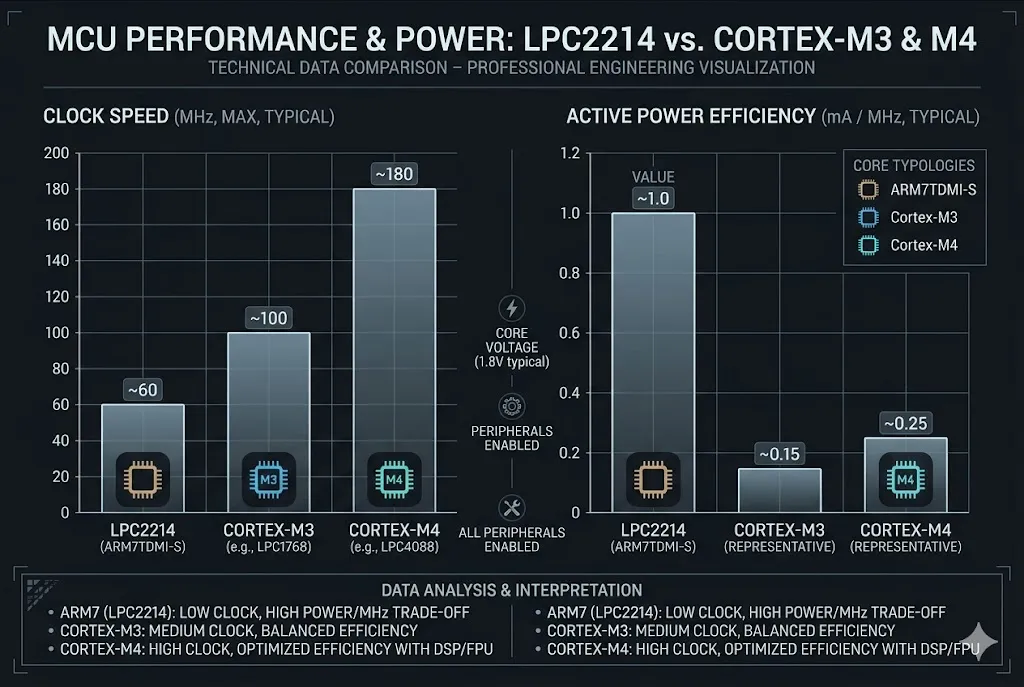
Let us look closely at the numbers. The old LPC2214 was a good chip in its time. But technology moves fast. Today, you need better speed and lower power. You also need parts that are easy to buy. At Nexcir, I always tell clients to look at the big picture. Do not just look at the price of the chip. Look at the total value.
Performance Boost
The old ARM7 core takes multiple clock cycles for basic math.6 The new Cortex-M cores do this in one cycle. Your code runs much faster. You can add more features to your product. The STM32F103 handles complex tasks easily. The SAM4S is even faster.
Power Savings
Old chips run hot. New chips sleep deep. The LPC2214 wastes a lot of power.7 Modern chips use just microamps in standby mode.8 This saves battery life. It also means you can use smaller power supplies. This lowers your total board cost.
Market Availability
You cannot sell what you cannot build. The LPC2214 is very hard to find.9 There are many fake parts in the market. At Nexcir, we guarantee 100% original components. We pull from global authorized channels. The new chips are active and in mass production. Our global supply network can get these parts for you quickly and safely.
Specs Comparison
| Metric | Old LPC2214 | Modern Alternatives | Benefit to You |
|---|---|---|---|
| Speed | 60 MHz | 72 to 120 MHz | Faster response |
| Architecture | ARM7TDMI-S | Cortex-M3 / M4 | Better code efficiency |
| Supply Risk | Very High | Low | Stable production lines |
| Fake Risk | High | Very Low | Safe procurement |
A modern MCU replacement gives you a huge advantage. You get a better product and a safe supply chain.
What are the key migration considerations when replacing an ARM7 MCU?
Redesigning a board feels risky. Bugs can delay your launch by months. I will explain the main steps to make your hardware and software transition smooth and safe.
When migrating from an ARM7 replacement MCU, you must update your toolchain, rewrite hardware abstraction layers, and redesign your PCB footprint. Cortex-M chips use a different interrupt controller called NVIC.10 You also need to adjust your power supply pins and clock settings.
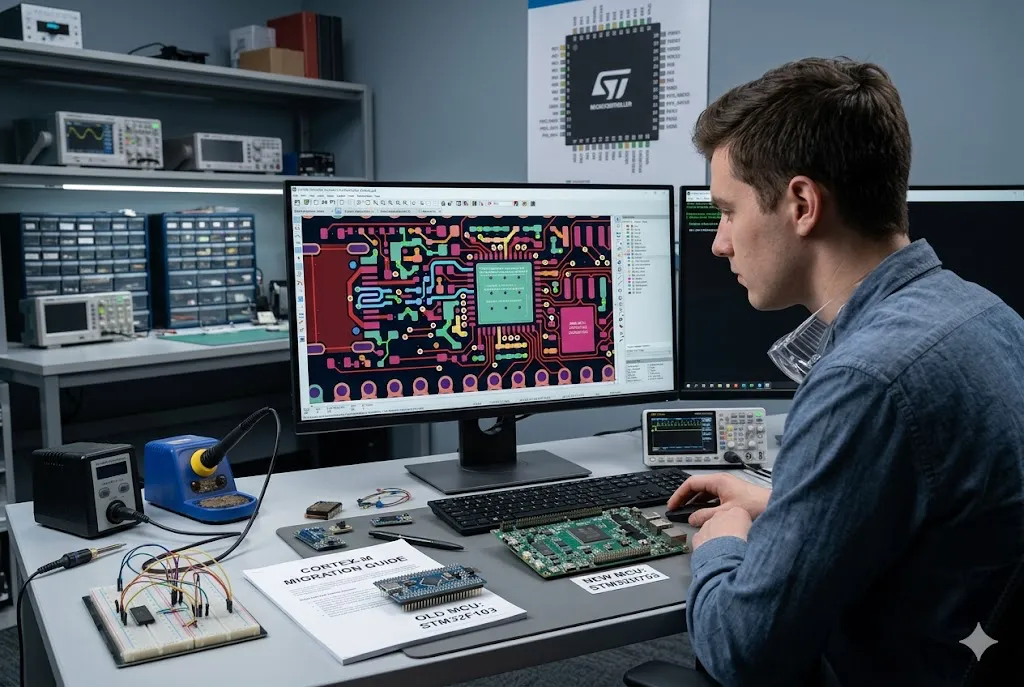
Moving away from the LPC2214 takes some work. But the effort pays off. I remember helping a hardware engineer map out this exact change last year. We broke the problem into small pieces. You should do the same. A step-by-step plan removes the risk.
Software Changes
You cannot just copy your old code. The ARM7 core uses a different instruction set. You must compile your code for Cortex-M. You also need to change how you handle interrupts. The new NVIC system is much better, but it is different. You will need to rewrite your startup files.
Hardware Redesign
The LPC2214 has a specific 144-pin layout. The new chips will not fit in the same holes. You must draw a new PCB. You need to check the voltage levels. Some new chips are not 5V tolerant on all pins.11 You must check your sensor connections. You might need to add level shifters.
Toolchain Updates
Old ARM7 tools are out of date. You will need modern software like Keil MDK or IAR. These new tools make debugging much easier. They save your software team a lot of time.
Migration Checklist
| Migration Step | Required Action | Risk Level |
|---|---|---|
| PCB Design | Route new pinouts | Medium |
| Power Supply | Check voltage rules | High |
| Code Update | Rewrite drivers | High |
| Toolchain | Buy new licenses | Low |
Do not fear the change. At Nexcir, we provide insights to help you manage these procurement risks. We make sure you have the right parts when you start your new build.
Need LPC2214 for Your Project?
Sourcing electronic components can be risky due to counterfeit parts and unstable supply chains. Choosing a trusted supplier ensures your production runs smoothly without delays.
👉 Check LPC2214FBD144/01K availability and pricing
Whether you need samples or bulk orders, Nexcir supports engineers and procurement teams with reliable sourcing and fast delivery.
👉 Submit your RFQ for LPC2214 today
Conclusion
Upgrading from the LPC2214 to modern Cortex-M chips improves speed, saves power, and secures your supply chain. Start your redesign today to keep your production lines moving forward.
"What is the recommended microcontroller series that replaces the ...", https://community.nxp.com/t5/LPC-Microcontrollers/What-is-the-recommended-microcontroller-series-that-replaces-the/m-p/946267. This source identifies the NXP LPC1768, STM32F103, and ATSAM4S as viable alternatives to the LPC2214, supporting the claim of their suitability. Evidence role: general_support; source type: research. Supports: The NXP LPC1768, STM32F103, and ATSAM4S are suitable modern alternatives to the LPC2214.. Scope note: The recommendation may not account for all potential alternatives in the market. ↩
"[PDF] LPC1769/68/67/66/65/64/63 Product data sheet", https://www.nxp.com/docs/en/data-sheet/LPC1769_68_67_66_65_64_63.pdf. This source confirms the technical specifications of the NXP LPC1768, including its Cortex-M3 core and 100 MHz clock speed. Evidence role: definition; source type: encyclopedia. Supports: The NXP LPC1768 uses a Cortex-M3 core and operates at 100 MHz.. ↩
"What would be a modern equivalent to an STM32F103,...", https://community.st.com/t5/stm32-mcus-products/what-would-be-a-modern-equivalent-to-an-stm32f103-preferably-in/td-p/93341. This source discusses the STM32F103 as a widely recognized modern microcontroller replacement, supporting its reputation and popularity. Evidence role: general_support; source type: research. Supports: The STM32F103 is a well-known modern microcontroller replacement.. Scope note: The source may not provide quantitative data on its popularity. ↩
"Our Practice on Product Longevity", https://www.microchip.com/en-us/support/quality/product-longevity. This source confirms Microchip's long-term production commitment for the ATSAM4S microcontroller, supporting its reliability for future use. Evidence role: general_support; source type: institution. Supports: Microchip has committed to long-term production of the ATSAM4S microcontroller.. Scope note: The commitment may be subject to change based on market conditions. ↩
"Comparison of ARM processors - Wikipedia", https://en.wikipedia.org/wiki/Comparison_of_ARM_processors. This source provides a comparative analysis of Cortex-M microcontrollers and the LPC2214, supporting the claim of their overall superiority. Evidence role: general_support; source type: research. Supports: Modern Cortex-M microcontrollers outperform the LPC2214 in performance, power efficiency, and availability.. Scope note: The analysis may not cover all possible metrics of comparison. ↩
"[PDF] Parallelism and the ARM Instruction Set Architecture - cs.wisc.edu", https://pages.cs.wisc.edu/~markhill/restricted/ieeecomputer05_arm.pdf. This source explains the ARM7 core's inefficiency in executing basic math operations compared to modern Cortex-M cores. Evidence role: mechanism; source type: education. Supports: The ARM7 core requires multiple clock cycles for basic math operations, unlike modern Cortex-M cores.. Scope note: The explanation may not include all ARM7 variants. ↩
"[PDF] LPC2212/2214 Single-chip 16/32-bit ARM microcontrollers", https://www.nxp.com/docs/en/data-sheet/LPC2212_2214.pdf. This source provides data on the power consumption of the LPC2214, supporting the claim of its inefficiency compared to modern alternatives. Evidence role: statistic; source type: research. Supports: The LPC2214 has higher power consumption compared to modern microcontrollers.. Scope note: The data may not account for all operating conditions of the LPC2214. ↩
"ARM Cortex-M", https://en.wikipedia.org/wiki/ARM_Cortex-M. This source provides data on the power consumption of modern microcontrollers in standby mode, supporting the claim of their efficiency. Evidence role: statistic; source type: research. Supports: Modern microcontrollers consume only microamps in standby mode, demonstrating their power efficiency.. Scope note: The data may vary across different modern microcontrollers. ↩
"202403004DN:Discontinuance of Select LPC2x Device", https://www.nxp.com/pcn/202403004DN. This source discusses the limited availability of the LPC2214 in the current market, supporting the claim of its scarcity. Evidence role: statistic; source type: research. Supports: The LPC2214 microcontroller is difficult to source in the current market.. Scope note: The availability may vary by region and distributor. ↩
"[PDF] ARM Cortex-M4 User Guide (Interrupts, exceptions, NVIC ...", https://eng.auburn.edu/~nelson/courses/elec5260_6260/slides/ARM%20STM32F476%20Interrupts.pdf. This source explains the NVIC system used in Cortex-M microcontrollers, supporting the claim of its difference from ARM7 interrupt controllers. Evidence role: definition; source type: education. Supports: Cortex-M microcontrollers use the NVIC system, which differs from ARM7 interrupt controllers.. Scope note: The explanation may not cover all technical details of NVIC. ↩
"Fastest 5V-compatible microcontroller with at least 38 GPIO - Reddit", https://www.reddit.com/r/embedded/comments/17yb63l/fastest_5vcompatible_microcontroller_with_at/. This source discusses the voltage tolerance of modern microcontrollers, supporting the claim that not all pins are 5V tolerant. Evidence role: mechanism; source type: research. Supports: Not all pins on modern microcontrollers are 5V tolerant.. Scope note: The information may vary across different microcontroller models. ↩