The Complete Ordering Code as the Orderable Identity
The record for this part holds one string: A1221LLHLT-T. Every parameter discussed below — package, pin count, supply window, current figures, temperature range and RoHS status — is attached to that string and to nothing shorter.
That matters where a requirement turns into an order line. Shortening a code is easy to do by accident: dropping trailing characters when keying a purchase order, matching on a leading fragment in an ERP material master, or pasting a code from an older file. Each of those produces a different string, and the record no longer describes the device the buyer believes they are ordering.
Before releasing a requirement, confirm three things. First, that the order line carries the full code exactly as recorded, character for character. Second, that the supplier's acknowledgement repeats the same full string rather than a shortened form. Third, that the internal material master and any quotation request use the complete code, so the engineering and purchasing views of the requirement agree.
The record does not break the code into segments and does not describe what individual characters denote. Buyers should not fill that gap by assuming a fragment is a complete identity, or that two codes sharing a prefix describe the same device. If the code appears in shortened form anywhere in the chain, treat it as unverified until it is matched back to the full string.
Package and Pin Count: Confirming the SOT-23W Footprint Before You Release the Line
The record lists the package as SOT-23W and the pin count as 3. Both entries belong to A1221LLHLT-T and should be checked together: a footprint review that confirms the body style but not the lead count, or the reverse, leaves half the physical check undone.
The confirmation happens twice. On the engineering side, the footprint released to the assembly file should carry a package name matching the recorded SOT-23W entry, and the pad pattern should be the three-pad arrangement the recorded pin count implies. On the purchasing side, the package field on the order line should read SOT-23W.
Where library footprints are involved, note that the record states SOT-23W. It does not state that other package variants are equivalent, and nothing in the record supports treating a differently named footprint as a substitute. A footprint renamed or copied from another project should be traced back to the recorded package entry before use.
At goods-in the check becomes physical: the device body and its three leads under a bench microscope, compared against the same two entries.

Supply Voltage Window: Checking the Design Rail Against the Recorded Range
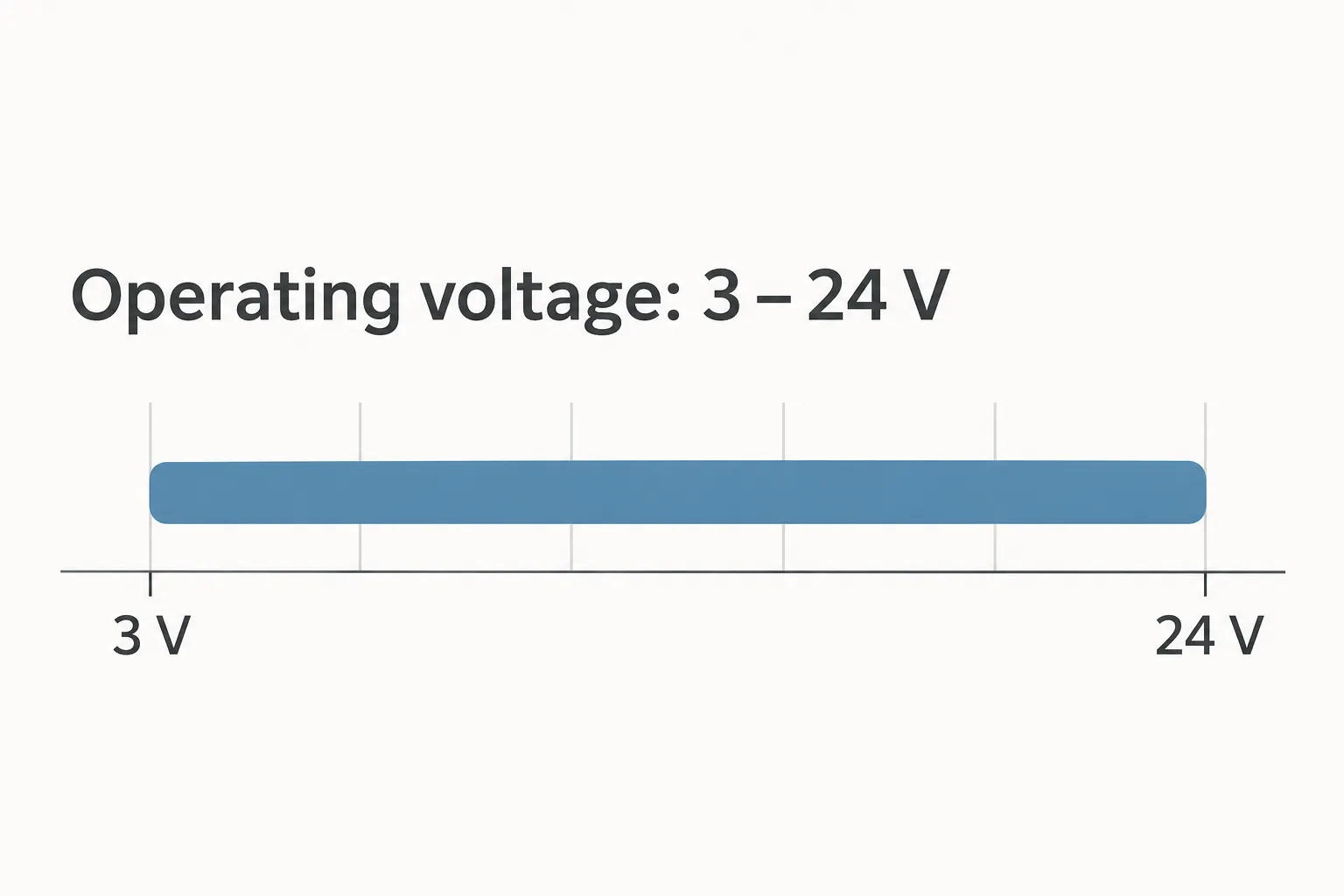
The recorded operating voltage is 3 – 24 V. That is a window with two endpoints, and a design review has to sit inside both: the lowest supply the circuit applies to the part and the highest supply it applies must both fall within the recorded range.
Buyers rarely hold that information themselves, which is why the check belongs in the handover between engineering and purchasing. The question to put to the design team is specific: what supply does this board present to the device in normal operation? The answer is compared with the recorded 3 – 24 V window. If the design applies a rail outside it, the record for A1221LLHLT-T does not support the application, and the conversation moves back to the design rather than forward to the purchase order.
The record states the operating window and nothing beyond it. It does not describe behaviour outside the window, and it does not describe transient conditions. Where a design is expected to see excursions, that is a question for the datasheet and the design team, not something to be read into this record.
For procurement, the outcome is one line in the requirement file: supply presented to the device, checked against the recorded window. Once that line exists, the voltage question is closed rather than assumed.
Current Budget: Supply Current and Output Current in the Ordering Review
Two current figures appear in the record, and they answer different questions. Supply current is 4 mA. Output current is 25 mA.
Supply current is what the device draws to operate, and it belongs in the board's power budget: the total drawn from the rail is built from figures like this one, and a review that skips it can release a part the budget was never checked against. Output current is a figure for the output side of the device, and it belongs with the load the application connects there.
The two are not interchangeable and they are not added together. A common error in a requirement file is to carry a single "current" number, taken from whichever figure was read first, and to use it for both the supply and the load check. Buyers should see both entries on the file, each labelled, each compared against the thing it actually constrains.
The record states these two figures and does not state the conditions under which they apply. It gives no derating curve and no relationship between them. Where the application's load sits close to the recorded output figure, or the power budget is tight, those conditions have to come from the datasheet and from the design team's own analysis.
Practical file entry: supply current 4 mA against the rail budget; output current 25 mA against the load. Both tied to A1221LLHLT-T.
Operating Temperature Range and the End Application
The recorded operating temperature is –40 to 150 °C. As with the voltage window, both endpoints matter: the coldest and the hottest environment the end application places the part in must both fall inside the recorded range.
This is the parameter most often lost between the end customer and the purchase order. A design team that has specified the part knows the environment the enclosure will see; the purchasing file frequently carries the part number and nothing about where it will be installed. The check closes that gap by putting the application's environment next to the recorded range before the line is released.
Two cautions are worth stating plainly. The range describes the part's operating environment as recorded; it does not describe the temperature of any particular spot on a board, and it does not describe storage. And the record holds a single range with no derating table. If the application's environment sits near either endpoint, the analysis belongs with engineering, using the datasheet, not with a purchasing inference.
For the file, record the application's environment and the comparison result. If that environment is not known when the order is placed, it is the one item on this list that should be resolved before the requirement goes further.
RoHS Status: What the Record States and How Procurement Should Handle It
The record holds one RoHS entry for A1221LLHLT-T: compliant is true. It is a status attached to the full ordering code, and it should be handled that way — as a property of that exact string, not of a family, a package or a shortened code.
Three handling points follow. Keep the entry with the order file, alongside the full code, so that the compliance statement and the part being bought are visibly the same item. Ask the supplier for the compliance documentation that accompanies the shipment and check that it names the same full code; a document naming a different string does not close the check. And do not extend the entry to another code — a part with a different suffix is a different identity in this record, and the record does not state its compliance status.
Procurement should also keep the compliance question separate from the physical one. RoHS status says nothing about package, pin count or electrical parameters; those have their own entries in this record. Combining them into a single "approved" note makes it harder to see which check has actually been done.
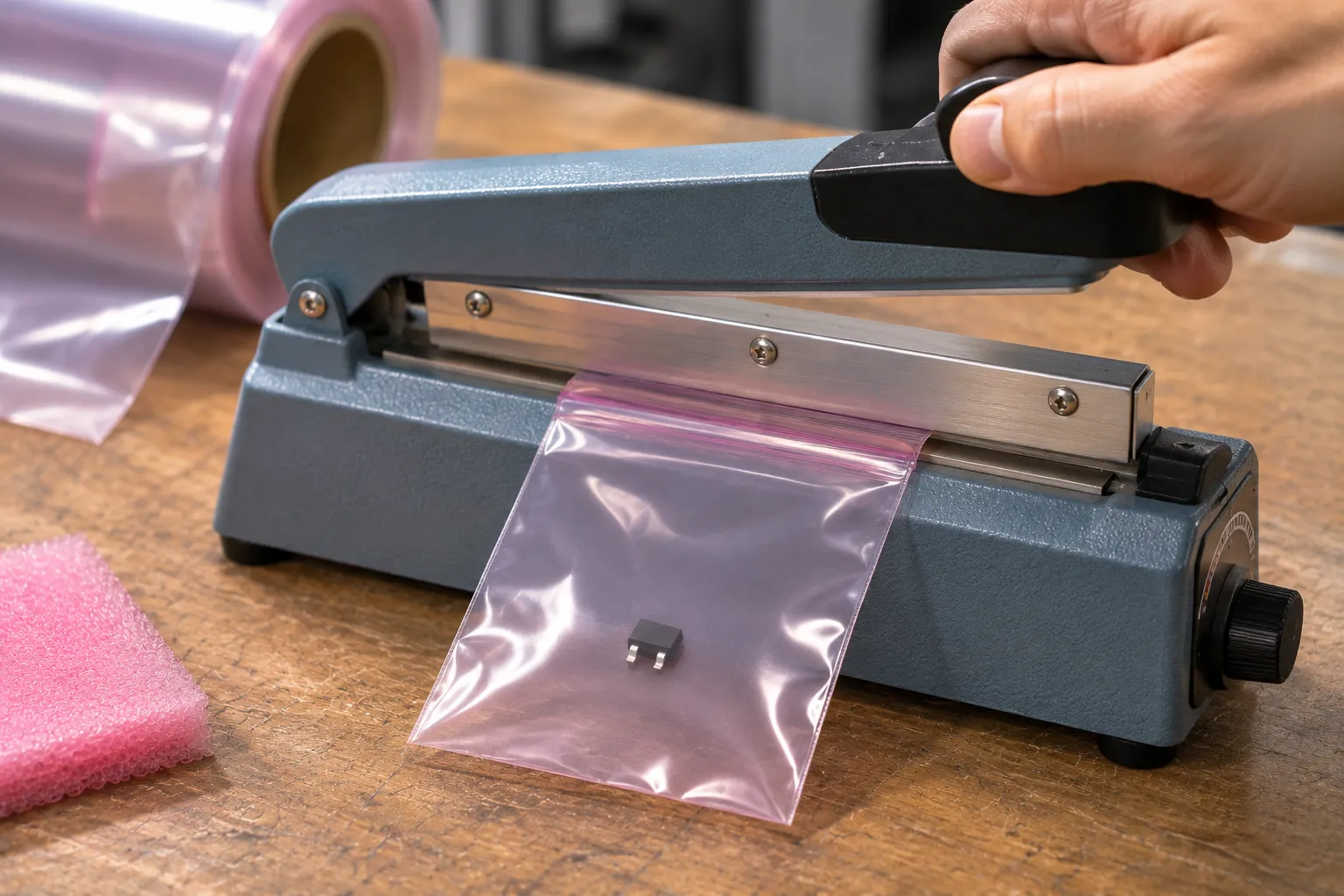
Through the review the part stays in its protective packaging, and the same full code should travel with it from the bag to the order file.
Pre-Order Checklist: Tying Every Recorded Parameter to the Ordering Code
Every parameter in the record is attached to A1221LLHLT-T. The checklist below puts them in one place so each can be ticked against the order line before release.
| Recorded parameter | Value for A1221LLHLT-T | What to confirm |
|---|---|---|
| Ordering code | A1221LLHLT-T | Full string on the order line, the acknowledgement and the material master; no shortened form anywhere in the chain |
| Package | SOT-23W | Package field on the order line; footprint name in the released assembly file |
| Pin count | 3 | Three-pad footprint; physical lead count at goods-in |
| Operating voltage | 3 – 24 V | Supply presented to the device sits inside the recorded window at both ends |
| Supply current | 4 mA | Included in the rail's power budget |
| Output current | 25 mA | Load connected at the output checked against the recorded figure |
| Operating temperature | –40 to 150 °C | End application's environment inside the recorded range at both ends |
| RoHS | Compliant | Compliance documentation names the same full code |
Two habits make the table work. The first is tying every row to the same string: a row checked against a shortened code is not checked at all. The second is recording the result, not just the tick — who confirmed it and what they compared it with — so a later review can see the basis of the release rather than reconstruct it.
Where a row cannot be completed, that is the signal to hold the line rather than to proceed on an assumption.
How to Request a Quote
Send NexCir the requirement with the full ordering code, A1221LLHLT-T, written exactly as it appears in the record. Include the quantity and any parameter from the table above that your application constrains — the supply presented to the device, the load at the output, the environment the end application sees — so the quotation can be prepared from the recorded part number rather than from a shortened or reconstructed one.
If your requirement file carries a different string, say so in the request. Matching the code back to the record first is faster than resolving a mismatch after a quotation has been prepared.
Contact NexCir with the full code and your requirement to request a quotation.