The Exact Part Number Is the Baseline for Every Comparison
Every substitution review needs a fixed point to measure against. For this part, the fixed point is the full orderable number: ACS711KLCTR-25AB-T. Not the family prefix, not the first few characters, and not a number copied from memory or from an earlier purchase order — the complete string exactly as it appears on the requirement.
That matters because cross-reference work usually starts with a verbal shortcut. Someone says a nearby part "should be the same", and from that moment the checks that follow are being run against a shortened identifier that was never specified. An error made at that point is not caught later in the process; it is inherited by every later step.
Treat ACS711KLCTR-25AB-T as an exact string. Copy it, character for character, into the review document, and place the candidate's full number beside it. Two similar-looking numbers are different parts. A device becomes a candidate only once its own documentation has been read field by field.
If the strings differ, the review does not end — it simply continues with the remaining fields. Package, pin count, operating temperature, operating voltage and supply current each have to be confirmed from the candidate's own documentation before anyone can describe the two parts as interchangeable.
Package: Why the Specified LC, 8-Pin SOIC Outline Must Match
The package field for this part reads LC, 8-pin SOIC, and both parts of that description belong in the comparison. "8-pin SOIC" describes the body outline and the lead count together. The "LC" qualifier narrows which outline within that family the requirement calls for.
The buyer should care because the package is the field that connects the purchased part to everything already fixed in production. The land pattern on the board, the stencil aperture, the placement nozzle, the inspection window and the reflow profile were all set for one outline. A candidate in a different outline is not a drop-in item; it is a board and process change, and that is an engineering decision rather than a purchasing one.
So the package check is procedural. Before a candidate goes to engineering for electrical review, its documentation must show the same package description — LC, 8-pin SOIC — taken from the same document that gives its other parameters. Not inferred from a photograph, and not carried over from a previous review of a similar part.
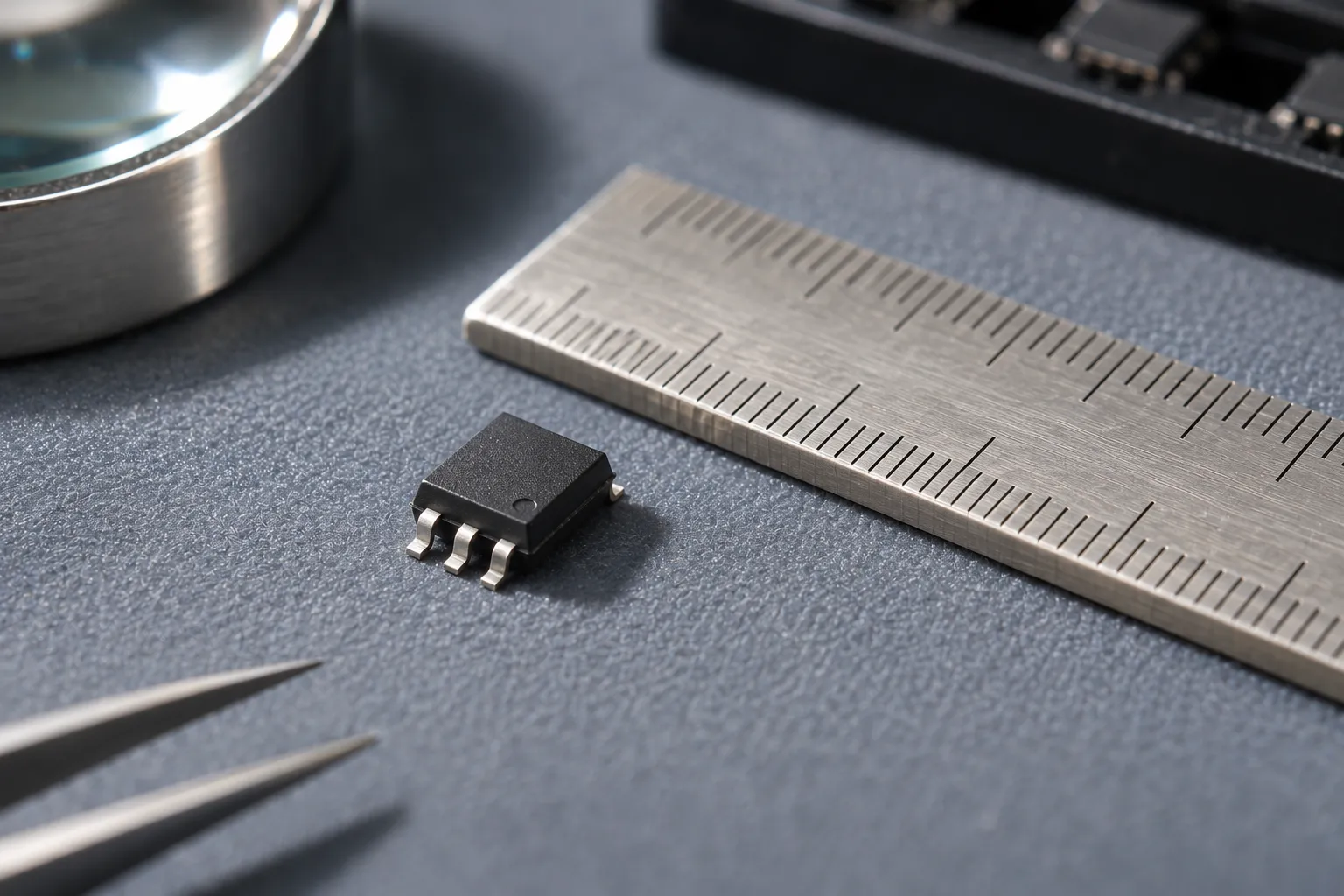
In practice the confirmation is made on the device body itself, set down under good light with the requirement open beside it. If the package cannot be confirmed from the candidate's documentation, the review stops there. There is nothing useful to compare until the outline is settled, because every physical and process consideration downstream depends on it.
Pin Count: Verifying the Eight-Pin Footprint Instead of Assuming It
An eight-pin count is a number, not a footprint. The requirement supplies both fields — pin count 8 and package LC, 8-pin SOIC — and they have to be read together, from the same document, because a count on its own does not establish that the part will sit on the existing land pattern.
The risk here is familiarity. Eight-pin packages are common enough that the count starts to feel like a given, and a candidate described as an eight-pin device can pass a first filter without anyone opening its documentation. Assume nothing from the family name. The count is confirmed when it is written in the candidate's own documentation alongside the package outline.
Keep the two fields separate in the record even though the requirement joins them in one phrase. A reviewer who sees "8" and "LC, 8-pin SOIC" as two lines can check each against the source; a reviewer who sees one merged line cannot tell which part of the claim came from where.
Eight pins is also a practical checkpoint at receiving inspection. If a delivered part or a submitted sample does not present eight leads, the item is outside the specification regardless of what its label says, and the discrepancy belongs in the record before any further comparison is attempted.
Operating Temperature: Using –40 to 125 °C as a Screening Filter
The specified operating temperature range for this part is –40 to 125 °C. In a substitution review, that range works as a screening filter rather than as a value to be matched.
The question to ask of each candidate is not whether its documented range looks similar, but whether it covers –40 to 125 °C at both ends. A candidate whose documented range is narrower at the cold end, or at the hot end, does not pass the filter, however close the numbers appear. Overlap is not coverage.
This is the field where informal reasoning does the most damage. Temperature ranges are often remembered rather than looked up, and a range that was true for a part reviewed previously gets attached to a candidate that has never been checked. The only acceptable source is the candidate's own documentation, read at the moment of review.
Two rules keep the filter honest. First, if the candidate's range is not stated in its documentation, record it as unverified — not as "probably the same". Second, do not extend the specified range by inference. The requirement is –40 to 125 °C; a candidate either covers that span or it does not.
Record the outcome as a clear pass or fail against the specified range, with the candidate's documented range quoted beside it, so a second reviewer can repeat the comparison without reopening the whole file.
Operating Voltage and Supply Current: Checking the Electrical Envelope
Voltage and current belong together in one electrical envelope, because a candidate can satisfy one and disturb the other.
The specified operating voltage is 3 to 5.5 V. A candidate must be documented across that whole window, not merely at one point inside it. A part described only at a single rail leaves the rest of the window unconfirmed, and the review should say so rather than assume the rest follows.
The specified supply current is 5.5 mA. This is the figure to hold against the candidate's documented operating current. A candidate that draws more current changes the load the rail is designed to carry; a candidate that draws less is not automatically a fit either, because the number still has to be the documented value for that part, not an estimate.
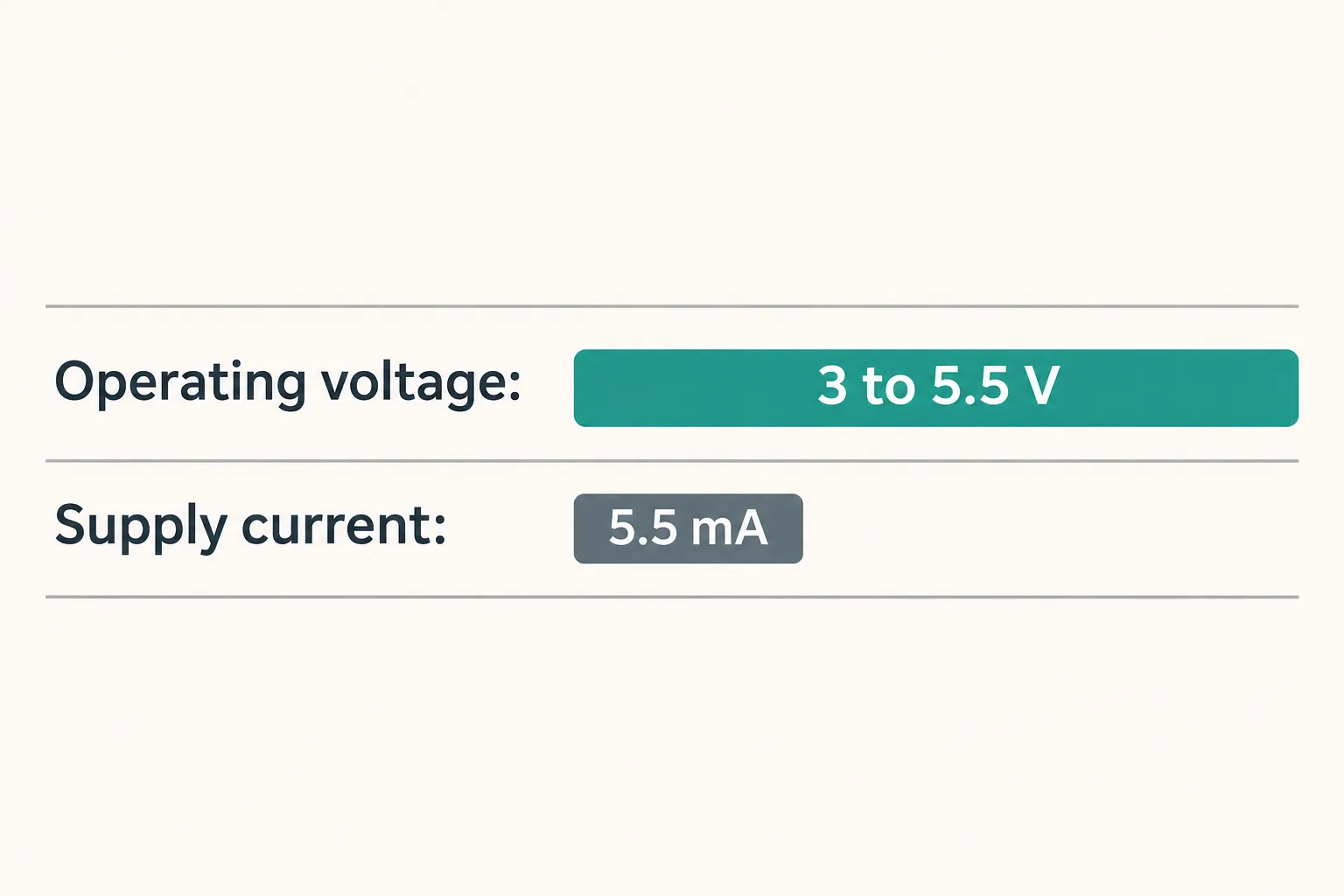
Read the two fields from the same document and record them as a pair. The envelope is what gets approved — not a voltage figure on its own, and not a current figure on its own. If either value is missing from the candidate's documentation, the electrical comparison is incomplete and the record should show it that way. An incomplete envelope is a reason to go back to the supplier for documentation, not a reason to fill the gap with the specified value.
Recording the Review: A Verification Record for Each Candidate
A review that is not written down cannot be repeated, defended or audited. For each candidate, the record should let a second person reconstruct the comparison without contacting anyone.
Keep one record per candidate, headed with the full specified number, ACS711KLCTR-25AB-T, and the candidate's full number copied from its documentation. Then a line for each field, with the specified value on the left and the candidate's documented value on the right.
| Field | Specified value for ACS711KLCTR-25AB-T | What the record shows for each candidate |
|---|---|---|
| Part number | ACS711KLCTR-25AB-T | The candidate's full orderable number, copied not retyped |
| Package | LC, 8-pin SOIC | The package description from the candidate's own documentation |
| Pin count | 8 | The count stated in the same document |
| Operating temperature | –40 to 125 °C | The documented range, and whether it covers both ends of the specified span |
| Operating voltage | 3 to 5.5 V | The documented supply voltage window |
| Supply current | 5.5 mA | The documented operating current |
Add three things that are not parameters but make the record usable: the document the candidate's values were taken from, the date of the review, and the name of the reviewer. Where a field could not be confirmed, write "unverified" rather than leaving the line blank — a blank line is ambiguous, while "unverified" tells the next reviewer exactly where the file is incomplete.
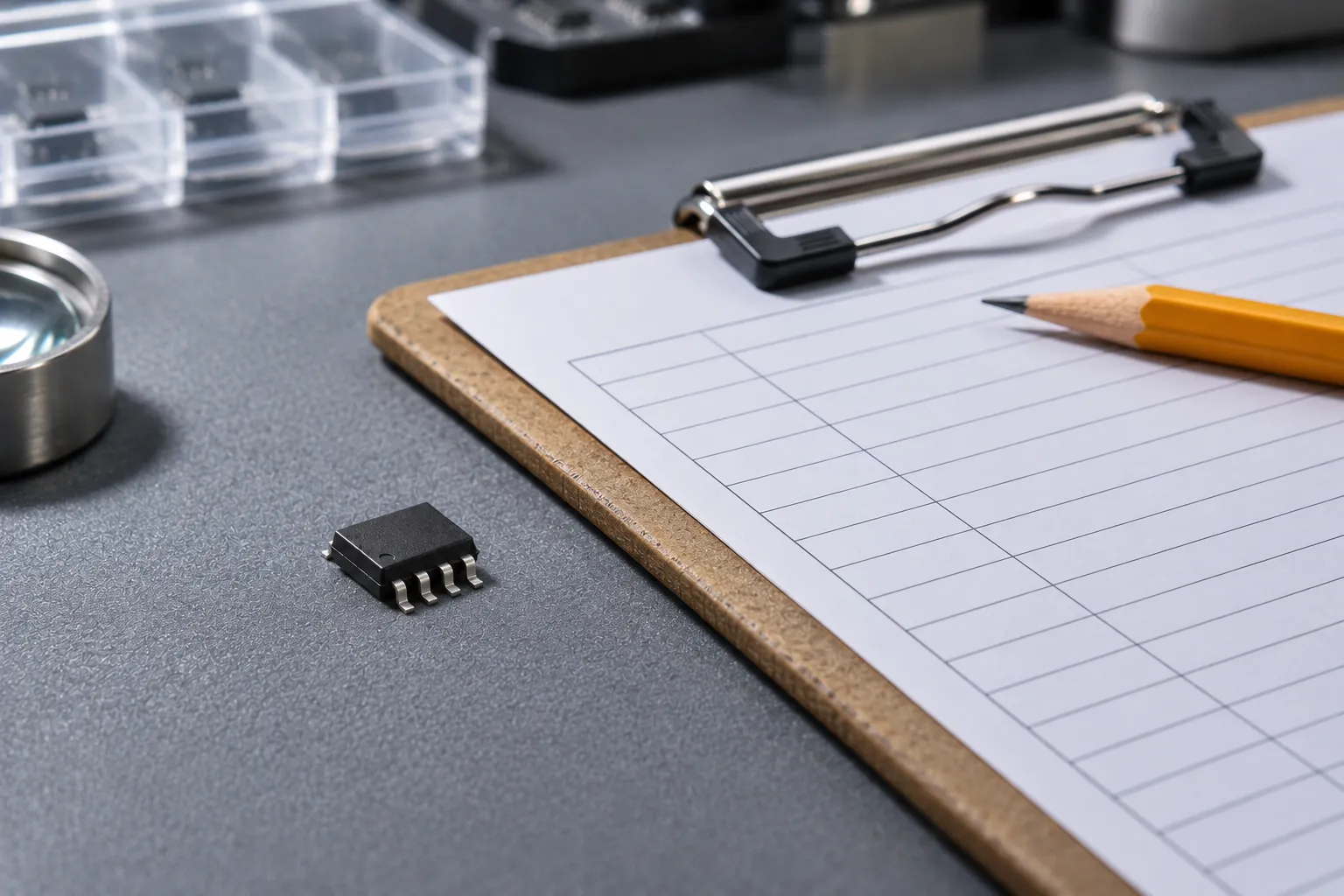
Where it is practical, keep one physical sample of each candidate with the record, labelled with the same full part number, so the paperwork and the part can be compared at any later point in the process. A record that ends in a clear pass, a clear fail, or an explicit list of unverified fields is a finished piece of work; one that ends in a general impression is not.
How to Request a Quote
Send the requirement as a specification rather than as a description. The three identifiers that make a request unambiguous are the part number, the package and the pin count: ACS711KLCTR-25AB-T, LC, 8-pin SOIC, eight pins.
Include the operating conditions your design applies — the operating temperature range and the operating voltage window — and the quantity you need, so the request can be answered against the same specification the review used. If a candidate part is already under consideration, include its full number and the field-by-field record described above; the comparison can then be made against documented values rather than against a summary.
To request a quotation from NexCir, contact our team with ACS711KLCTR-25AB-T and the requirements above, and we will take it from there.