Fake components cause system failures and ruin your brand. You lose money and trust. We must stop counterfeit chips1 before they enter your production line.
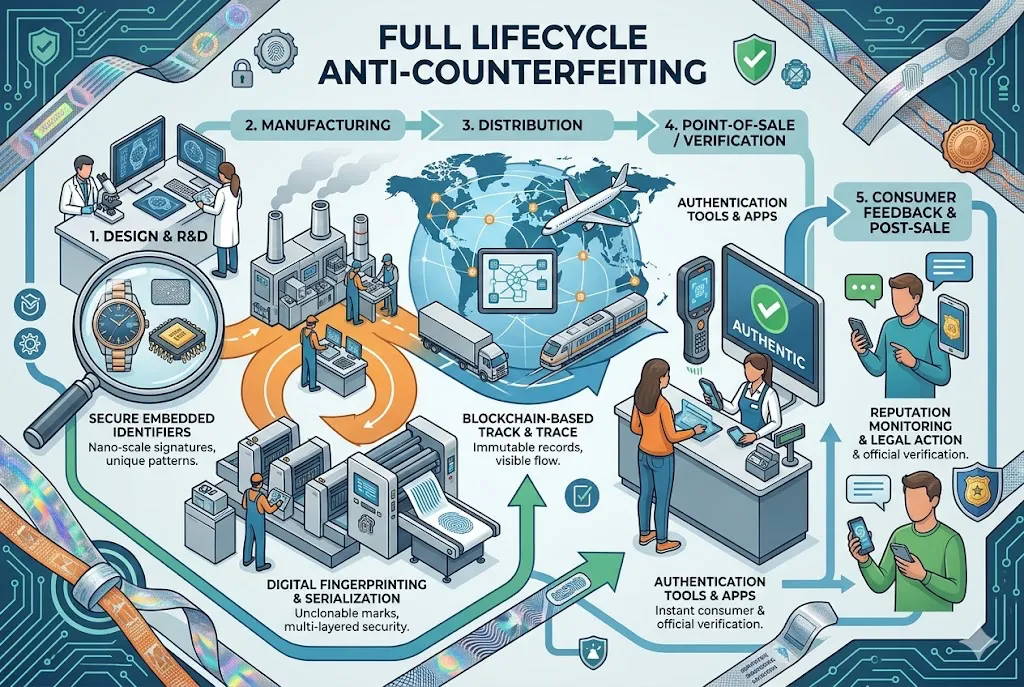
Full lifecycle anti-counterfeiting combines Physical Unclonable Function (PUF) technology2 with blockchain3. PUF gives each chip a unique physical fingerprint. Blockchain records this fingerprint in an unchangeable digital ledger. This system tracks the chip from the factory to your board, guaranteeing 100% original parts.
You might think traditional visual checks and paperwork are enough to stop fake parts. They are not. Scammers now use advanced tools to make old parts look new. I have seen this happen too many times in my 20 years in the industry. Let us look at how modern technology finally solves this huge problem.
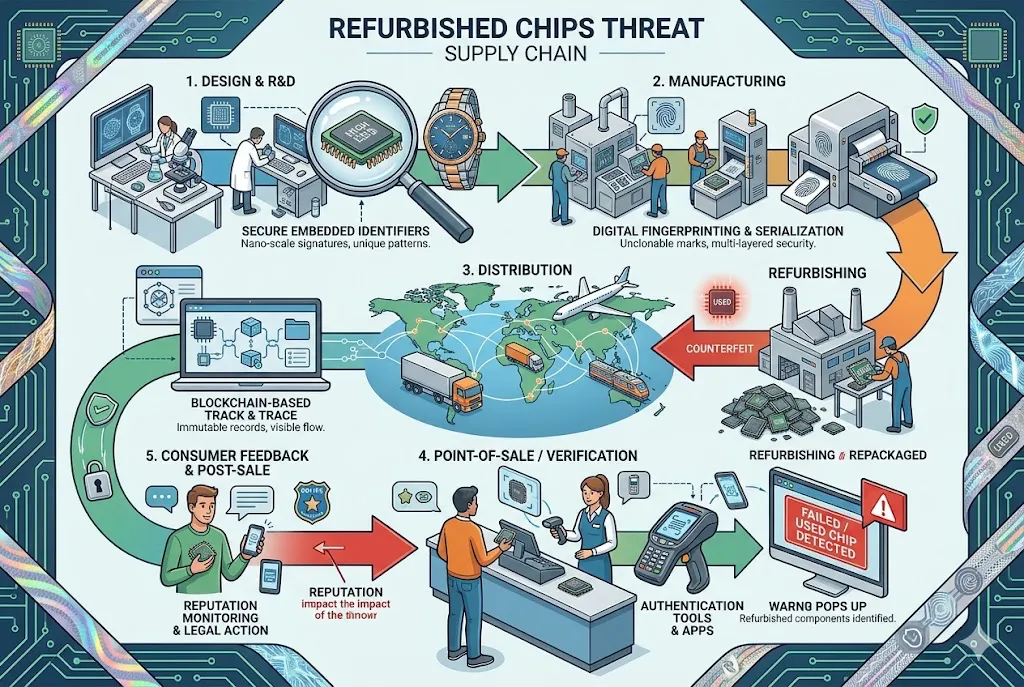
Why Do Refurbished Chips Threaten Our Global Supply Chain?
Shortages make buyers desperate. Bad actors clean old chips and sell them as new. These parts fail early and cause crashes. We need a better way to spot them.
Refurbished chips bypass standard quality checks. They look identical to new components but have degraded internal structures. When used in critical systems, these degraded chips cause sudden, dangerous failures. This creates massive recall costs and destroys your brand reputation.
The Hidden Dangers of Used Components
I remember a client who bought a batch of MCUs from a grey market broker4. The parts looked perfect. The laser marking5 was correct. But three months later, their industrial machines stopped working. The chips were actually pulled from old e-waste and re-marked. Scammers use acid to wash off old marks. They re-tin the pins to make them shine.
Traditional visual inspections only look at the outside. Basic electrical tests only check if the chip turns on. But a refurbished chip already used half of its lifespan. We need to break down the differences between new and refurbished parts to understand the real risk.
| Feature | Original New Chip | Refurbished Chip |
|---|---|---|
| Outer Appearance | Clean, factory seals intact | Re-coated, new laser marks |
| Pins and Leads | Perfect factory condition | Re-tinned, possible micro-cracks |
| Internal Lifespan | 100% remaining | Unknown, often less than 20% |
| Failure Rate | Extremely low | Very high under stress and heat |
| Traceability | Full factory records | Fake or missing paperwork |
You cannot trust paper trails anymore. Documents are easy to fake. Bad suppliers just copy a valid Certificate of Compliance6. This is why we need a physical proof of identity for every single chip. This physical proof must be impossible to copy.
What Is PUF Technology and How Does It Create a Unique Chip ID?
Hackers copy software IDs easily. Scammers will clone software numbers, ruining security. You need a hardware ID that nobody can fake. PUF technology solves this.
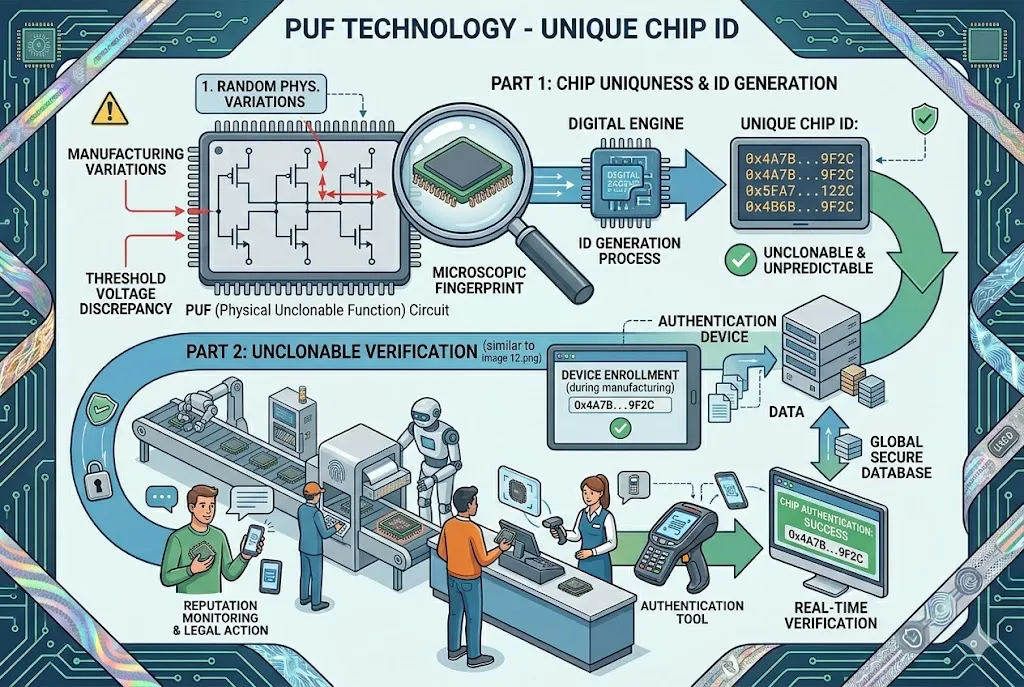
PUF stands for Physical Unclonable Function. It uses tiny, random variations in the silicon manufacturing process to create a unique digital fingerprint. Because these physical variations are random, no one can copy the PUF ID. Not even the original manufacturer can clone it.
The Silicon Fingerprint
Think of PUF like human DNA. When a factory makes a silicon wafer, the process is never perfect. There are always tiny differences at the atomic level. One wire might be slightly thicker than another. The oxide layer might be slightly thinner in one spot. These small differences change how electrical currents move inside the chip.
PUF technology measures these tiny electrical differences. It turns them into a long string of numbers. This number string is the chip's unique ID. It is born from the physical hardware itself.
| Traditional ID Method | PUF Technology ID |
|---|---|
| Stored in standard memory (EEPROM7) | Generated by physical silicon traits |
| Can be read and copied by hackers | Impossible to copy or predict |
| Needs extra security chips | Built directly into the main silicon |
| Easy to move to a fake chip | Tied forever to that exact physical chip |
| Hackers can change it with software | Cannot be changed by any software |
Because the PUF ID relies on physical traits, it is completely secure. If someone tries to open the chip to copy the ID, they destroy the physical structure. This destroys the PUF ID. This means a fake chip can never have the correct ID. But an ID alone is not enough. We must track this ID across the world.
How Can Blockchain Track Electronic Components Across Their Full Lifecycle?
Central databases get hacked. Insiders can change records to hide fake chips, losing true history. We need a system no one can alter.
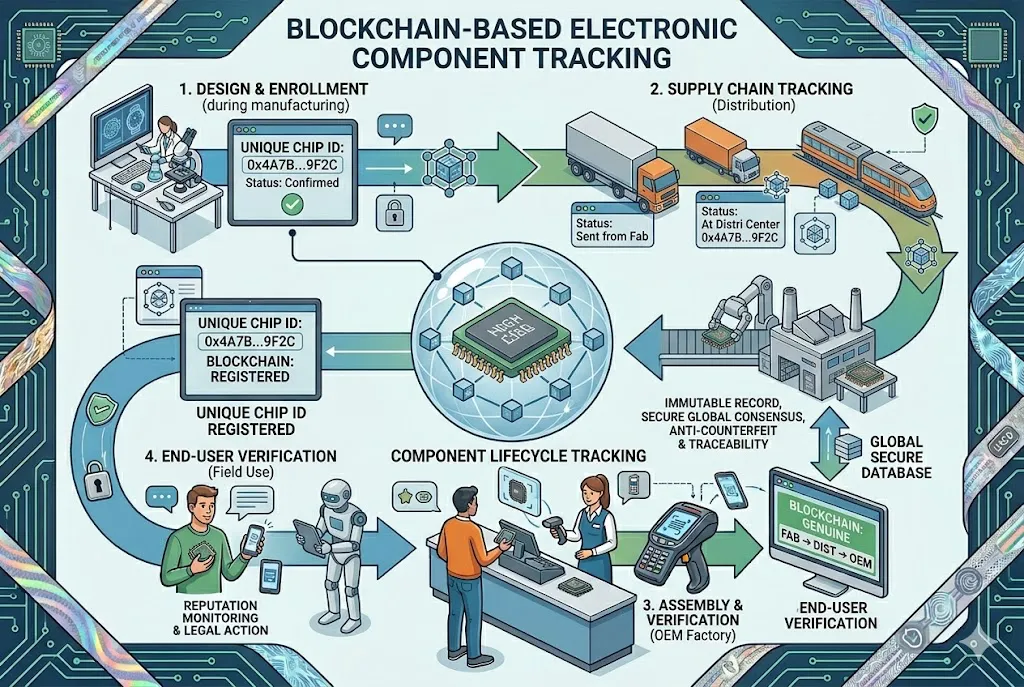
Blockchain tracks components by creating an open, secure digital ledger. Every time a chip moves from the factory to a buyer, the system adds a new block of data. No single person can alter this history. This ensures the tracking data remains completely true.
The Unbreakable Chain of Trust8
In my early days of sourcing, we relied on Excel sheets and PDF documents9 to track parts. It was a mess. If a broker changed one line in a PDF, a used part suddenly looked brand new. A central database is not much better. If a hacker gets the password, they can change the database to make fake parts look real. Blockchain fixes this broken system.
Blockchain is a network of computers. They all share the same record. When a manufacturer creates a chip, they put its details on the blockchain3. When Nexcir10 ships that chip to you, we add a shipping record to the blockchain3.
| Supply Chain Step | Blockchain Action | Security Benefit |
|---|---|---|
| Manufacturing | Factory logs PUF ID to blockchain3 | Establishes the original root of trust |
| Distribution | Distributor logs receipt and shipment | Proves the part passed through authorized hands |
| Assembly | OEM logs the part into final product | Prevents swapping parts during manufacturing |
| End of Life | Recycler logs destruction of part | Stops the chip from being refurbished and resold |
| Auditing | Buyer checks the complete history | Guarantees 100% component authenticity |
You do not need to trust the supplier's word. You only need to check the blockchain3. If a chip does not have a clear, unbroken history from the factory to your door, you reject it. It is simple and highly effective.
How Do PUF and Blockchain Work Together to Stop Fake Chips?
A secure chip ID is useless if tracking is weak. Fake parts will slip through. We must link the hardware ID to a safe digital record.
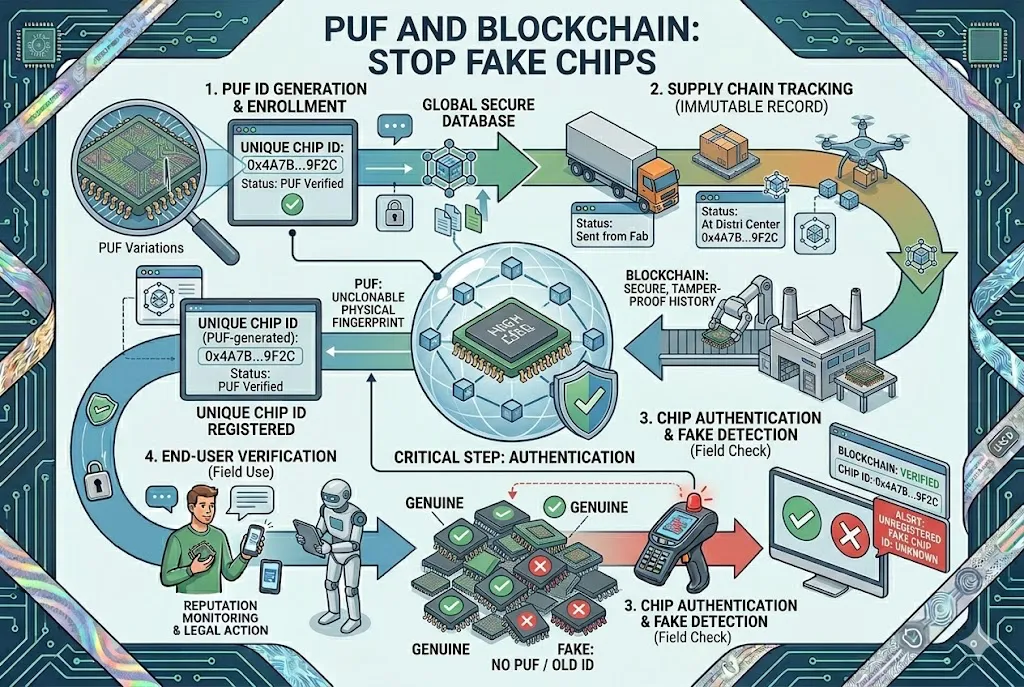
PUF provides a fake-proof physical ID for the chip. Blockchain provides a hack-proof digital ledger. Together, they create a perfect link between the physical component and its digital history. If someone tries to sell an old chip, the blockchain3 proves the ID is already used.
The Perfect Anti-Counterfeiting System
This is the core logic of modern supply chain security. Let me explain how this stops refurbished chips11 completely. We use both technologies to trap scammers.
Imagine a bad actor takes a used chip from an old car. They clean it and try to sell it to you as new. First, they cannot guess the PUF ID. Even if they somehow read the old PUF ID, they face a bigger problem. The blockchain3 already shows that this specific ID was used in a car five years ago. The system flags it immediately. The bad actor cannot change the blockchain3 to hide this fact.
| Attack Method | How PUF + Blockchain Stops It |
|---|---|
| Cloning the Chip | PUF cannot be copied. Fake chip fails the ID check. |
| Forging Documents | Blockchain records cannot be altered. Forged papers are useless. |
| Refurbishing Old Parts | Blockchain shows the part was already used. Status is "End of Life". |
| Database Hacking | Blockchain is decentralized. Hackers cannot change the distributed ledger. |
| Swapping Parts in Transit | PUF ID will not match the shipping record on the blockchain3. |
This double-layer defense is exactly what we need. As a distributor, I know how hard it is to verify parts during a global shortage12. By demanding parts with PUF and blockchain3 tracking, we remove the guesswork. We guarantee that you get exactly what you paid for. You get 100% original, brand new electronic components.
How Can Procurement Managers Implement This Anti-Counterfeiting System Today?
Adopting new technology is hard. You worry about costs. If you wait, you leave products open to risks. You must start using this system now.
You can implement this system by partnering with authorized distributors. You specify PUF-enabled components in your bill of materials. Then, you require suppliers to provide blockchain3 verification links for every shipment. This gives you full traceability without changing your internal systems.
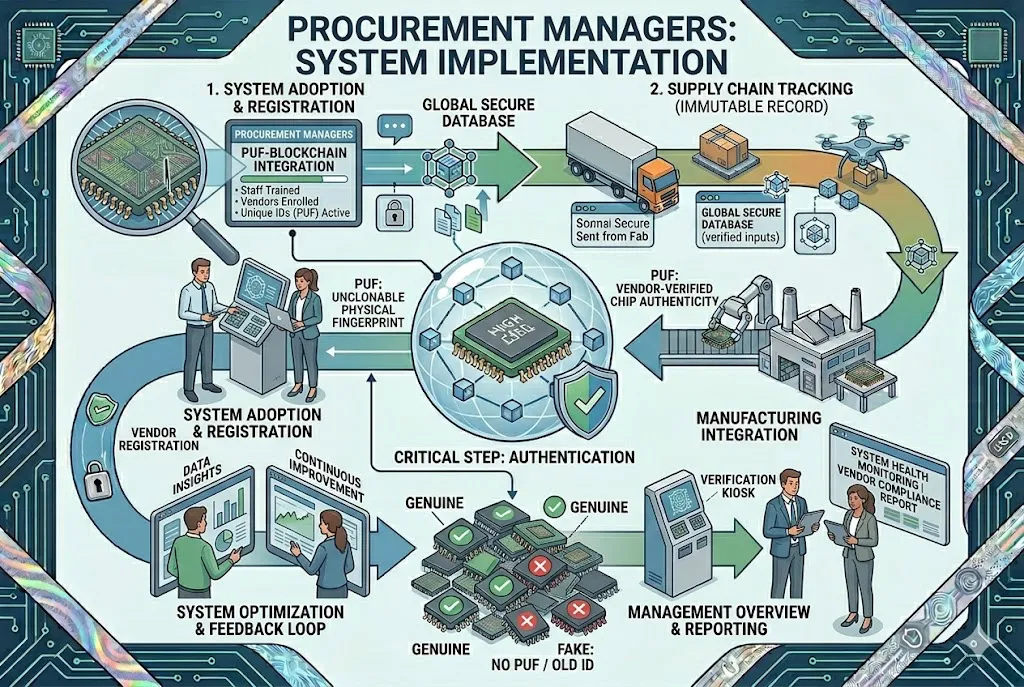
Taking Action in Your Supply Chain
You do not need to build a blockchain3 yourself. You do not need to invent PUF technology. You just need to change how you buy parts. At Nexcir10, we focus on sourcing from authorized channels that support these modern tracking methods. We help you navigate this change easily.
Your first step is to update your procurement policy13. You must demand better proof of life for your high-value parts14, like critical MCUs or PMICs. Start with the components that cause the most damage if they fail.
| Implementation Step | Action Required by Buyer | Expected Result |
|---|---|---|
| Step 1: Update BOM | Select chip models that include built-in PUF security. | Hardware is ready for unique identification. |
| Step 2: Vet Suppliers | Work only with distributors who support blockchain3 tracking. | Reduces exposure to grey market risks. |
| Step 3: Verification | Scan parts on arrival and check the blockchain3 ledger. | Instantly catches any fake or refurbished parts. |
| Step 4: Integration | Connect the blockchain3 ledger to your ERP system15. | Automates compliance and quality control records. |
| Step 5: Review | Regularly audit your supply chain data. | Keeps your procurement process highly secure. |
By taking these steps, you protect your company. You lower your procurement risks. You ensure your production lines never stop because of bad parts. The technology is ready today. We just need to use it to build a safer future.
Conclusion
Using PUF technology and blockchain3 creates a secure, full lifecycle anti-counterfeiting system. This stops refurbished chips11, protects your supply chain, and ensures you only receive 100% original components.
Understanding the impact of counterfeit chips can help you safeguard your production line and maintain product integrity. ↩
PUF technology offers a unique solution to chip identification, ensuring authenticity and preventing counterfeiting. ↩
Blockchain provides a secure, unalterable record of component history, crucial for verifying authenticity. ↩
Purchasing from grey market brokers can lead to acquiring counterfeit or refurbished components, risking system integrity. ↩
Scammers use laser marking to make old chips appear new, understanding this tactic can help in identifying fakes. ↩
Fake Certificates of Compliance can mislead buyers into purchasing counterfeit components, risking system failures. ↩
EEPROM can be easily read and copied, unlike PUF technology which offers secure, uncloneable chip IDs. ↩
Blockchain ensures a secure, unalterable record of component history, vital for maintaining trust in supply chains. ↩
These documents can be easily altered, leading to misinformation and potential counterfeit component issues. ↩
Nexcir focuses on sourcing from authorized channels, supporting modern tracking methods to prevent counterfeiting. ↩
Refurbished chips can lead to system failures and brand damage, understanding this threat is vital for supply chain security. ↩
Desperation during shortages can lead to increased counterfeit activity, understanding this risk is crucial. ↩
Updating procurement policies to include PUF and blockchain can significantly reduce the risk of counterfeit components. ↩
Ensuring authenticity for high-value parts prevents costly failures and protects brand reputation. ↩
Integrating blockchain with ERP systems automates compliance and quality control, enhancing security. ↩